
There is a strange rule many of us grew up watching.
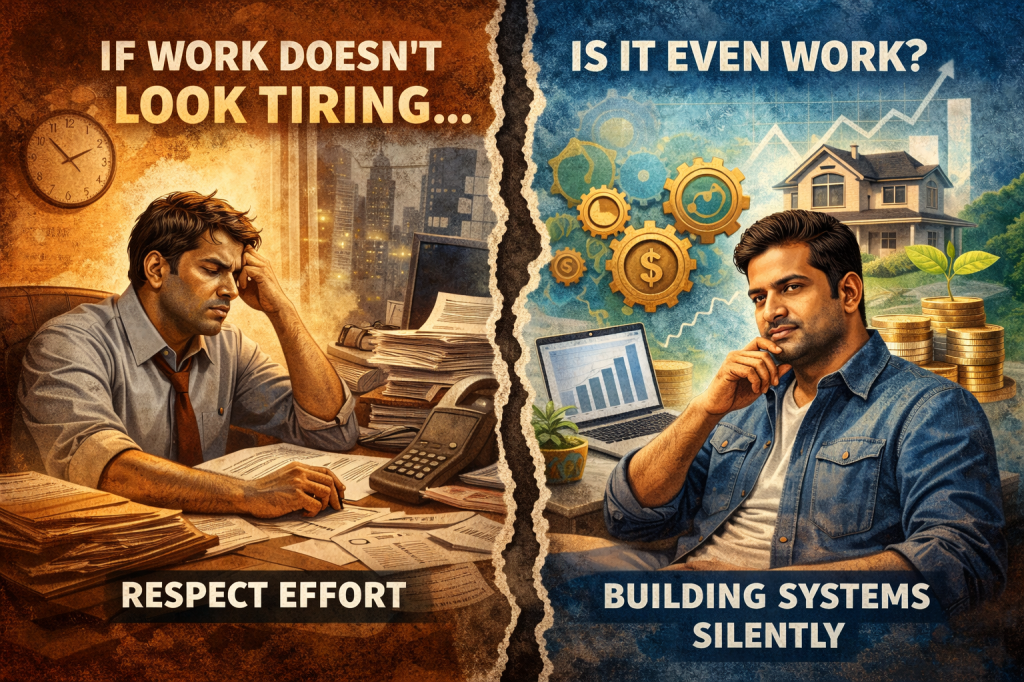
If work looks tiring, people respect it.
If work looks calm, people doubt it.
This is what I call the Effort Bias.
Older generations grew up in a world where hard work was always visible. A man would leave home early, go to office, sit at a desk all day, return tired in the evening and collect a salary at the end of the month.
That routine itself became proof of effort.
Government jobs, office work, shopkeeping, running a small business — all of these had one thing in common. They looked busy. They looked exhausting.
And because they looked exhausting, people respected them.
But the world of work has quietly changed.
Today a lot of wealth is created through thinking, planning and building systems.
Some people spend their time:
planning investments
structuring finances
negotiating deals
building rental assets
managing long-term investments
None of this looks dramatic from the outside.
There are no uniforms.
No punching attendance.
No visible rush every morning.
Sometimes it simply looks like someone is sitting quietly and thinking.
To someone who believes effort must look physically tiring, this can feel very confusing.
The conclusion they quickly jump to is simple:
“He is just sitting and doing nothing.”
But the irony is that some of the most powerful work happens exactly like this — quietly.
Instead of working every day for money, some people spend years building systems that make money work every day for them.
Assets are created.
Investments grow.
Income streams multiply.
And once those systems are built, they keep generating income even when the person is not physically working every day.
It may not look impressive to someone watching from the outside.
But sometimes the calmest looking work is the one doing the heaviest lifting behind the scenes.
The problem is not that the work is small.
The problem is that the effort is invisible.
 AnandNataraj