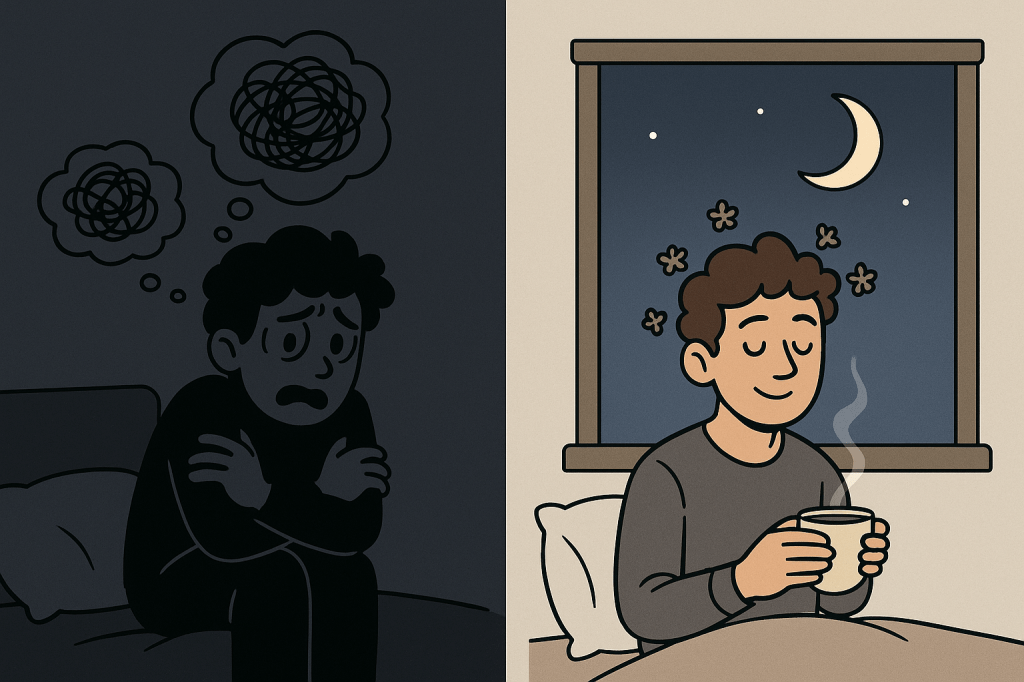
The Two Faces of Loneliness: How I Transformed Fear into Solitude


I met my scariest thoughts in silence. Later, I met my truest self there too.

Between 2010 and 2012, most of my close friends got married and slowly started moving to the US. I was still in India, watching my social circle shrink. Slowly, I started feeling a deep loneliness. It wasn’t just the absence of people; it was a heavy, unsettling silence that echoed inside me.

That loneliness didn’t feel like a quiet evening to rest. Instead, it created a voice inside me — a kind of invisible scare. I had sleepless nights and scary nights, but what exactly was I scared of? I couldn’t define it clearly.

Through my own reflection and reading, I understood that these were what psychologists sometimes call phantom threats. When our social support system breaks down, our brain starts scanning for danger, even if there isn’t any real external threat. It’s a leftover survival instinct from when being alone meant being vulnerable to wild animals or enemies. In modern life, this translates to vague fears, restlessness, or a feeling of being unsafe — even in the comfort of our own room.

Then, I got married. Suddenly, I had a partner, someone to share every small joy and every small fear with. That scary loneliness vanished. I didn’t feel that void anymore.

Fast forward to 2019–2025. Life had moved into another gear: kids, family commitments, work deadlines, responsibilities piling up. Ironically, there was no physical loneliness at all — I was constantly surrounded by people.

But deep inside, a new kind of loneliness crept in. This wasn’t the fear of being alone in an empty room; it was the exhaustion of never truly being alone with myself.

Every day felt like a marathon — waking up to attend to kids, squeezing in work calls, family discussions, endless errands. Even at night, when the world finally went quiet, my mind didn’t. It kept replaying unfinished tasks, small conflicts, worries about the kids, tomorrow’s to-do list.

I would close my eyes but feel half-awake, as if there was a hidden guard inside me who refused to let me fully rest. My dreams were crowded — sometimes about work, sometimes about family, sometimes random worries stitched together in confusing ways.

When I woke up, instead of feeling refreshed, I felt as if I had already lived an entire day in my mind. My body was stiff, my head heavy. It was like my brain never turned off, always on “alert mode,” scanning for the next responsibility.

There was no space for me. No silent cup of coffee alone. No lazy morning staring at the ceiling. No blank mental canvas. Just an endless wave of obligations crashing over me, one after another.

This was a loneliness that no one talks about — the loneliness inside a crowded life. You are surrounded by people, yet your inner self is starved for attention.

In June 2025, I moved to Chennai to focus on work, and for the first time in years, I got a lot of alone time. I was worried that the old fears would return, that those phantom threats would sneak back into my nights. But to my surprise, this loneliness felt completely different.

This time, it wasn’t scary. It was warm, healing. It felt like a solitude that I had long needed.

Now, instead of voices and scares, the silence felt like music. The quiet nights felt like gentle hugs from my own mind. I started enjoying small things again — watching the rain, making my own tea, sitting in silence without having to answer anyone.

I realized that this wasn’t loneliness; it was solitude — a conscious, chosen space to meet myself. It was no longer about being left out but about reconnecting inward.

Looking back, I realize loneliness and solitude are two sides of the same coin. One scares you when you don’t feel safe with yourself; the other heals you when you finally do.

As I write this today, I don’t feel the void I once did. Instead, I feel gratitude — for the noisy years, for the silent nights, and for the rare chance to meet my own mind in peace.

When Parenting Engulfs You: My Silent Struggle Raising Two Young Kids Alone


Finding joy, even in the hardest days.

When people see a smiling parent with a child on each arm, they often think of joy, completeness, and warmth. But behind that photo, there can be stories of exhaustion, frustration, and a kind of loneliness that’s hard to describe.

From the very beginning, even before our second child was born, there were challenges. My in-laws strongly believed that having a second child was a bad idea, and they convinced my wife the same. Every time there’s an argument between us now, this topic comes back: that she didn’t fully analyze the challenges ahead. It makes me angry because, in my heart, I always believed I didn’t want to raise a single pampered child. I wanted my first child to have a sibling, a lifelong companion. This decision was never just about me — it was about building a family with deeper bonds, even if it meant going through harder days.

From the day my second child was born, life changed completely. We had no support system. No parents or in-laws stepping in to help, no extended family to call on, no trusted house help to share the load. It was just us, and every day felt like a survival mission.

People often say, “it takes a village to raise a child.” With my first child, I had that village. My in-laws supported us, and those memories felt like heaven — a beautiful, light-filled chapter of parenting. But with my second child, that village was gone. I became everything: the caretaker, the cook, the cleaner, the comforter, the entertainer, the teacher. From sleepless nights to endless school preparations, every moment demanded my full energy and presence.

In the process, my professional life took a huge hit. I went into procrastination because of constant mind fog. Work deadlines felt heavier, focus slipped away, and important opportunities quietly passed me by. My business struggled, and while outsiders only saw the missed targets and failures, they didn’t see the mental battles and emotional exhaustion that led me there.

At home, the constant focus on the kids created a silent gap with my spouse. Conversations turned into pure logistics: who would handle which meltdown. The small, loving moments that kept our bond alive quietly faded, replaced by stress and quiet resentment.

Yet despite all the anxiety, frustration, and helplessness, I cherished every moment with my second child. Even in the chaos, I found joy. I built precious memories, laughed through exhaustion, and watched my child grow closely every single day. It truly felt like a heaven inside a hell — beautiful moments glowing in the middle of struggle and darkness.

With support, those years could have been even better, perhaps closer to the lightness I experienced with my first child. But despite everything, I wouldn’t trade those moments for anything.

Parenting is beautiful, but when done alone and without support, it can swallow you whole. If you’re going through this, I want you to know: you’re not alone. You deserve understanding, you deserve support, and you deserve to cherish those beautiful moments without the heavy weight of judgment.

When My World Shrunk to a Hospital Room: A Caregiver’s Silent Battle


Between 2012 and 2014, my entire world was confined to a hospital room. My father was in and out of coma during that time, and I practically lived in the hospital. Life outside those walls felt distant and almost unreal. Festivals came and went, and though friends called and offered support, I just couldn’t engage with them. I didn’t have the emotional space or words to share what I was really feeling.

I wasn’t just taking care of my father; I was battling intense anxiety, frustration, and helplessness every single day. I questioned everything from the doctors’ advice, the treatment decisions, my own ability to handle the situation. I felt like I was stuck in a loop, hoping for a sign of improvement, fearing the worst with every passing hour.

This is a state known as caregiver burnout, where your mind and body are pushed to the edge by constant stress and emotional weight. You run on autopilot, trying to stay strong for your loved one, while inside you feel like you’re drowning.

It took me a long time to process those years and find a sense of normalcy again. To learn that it was okay to step away for a moment, to accept help, and to acknowledge my own emotions without guilt.

If you’re in a similar situation, please remember: your feelings are valid. You’re not alone in your anxiety and helplessness. Take moments for yourself, reach out for support, and know that it’s okay to take care of yourself too.