
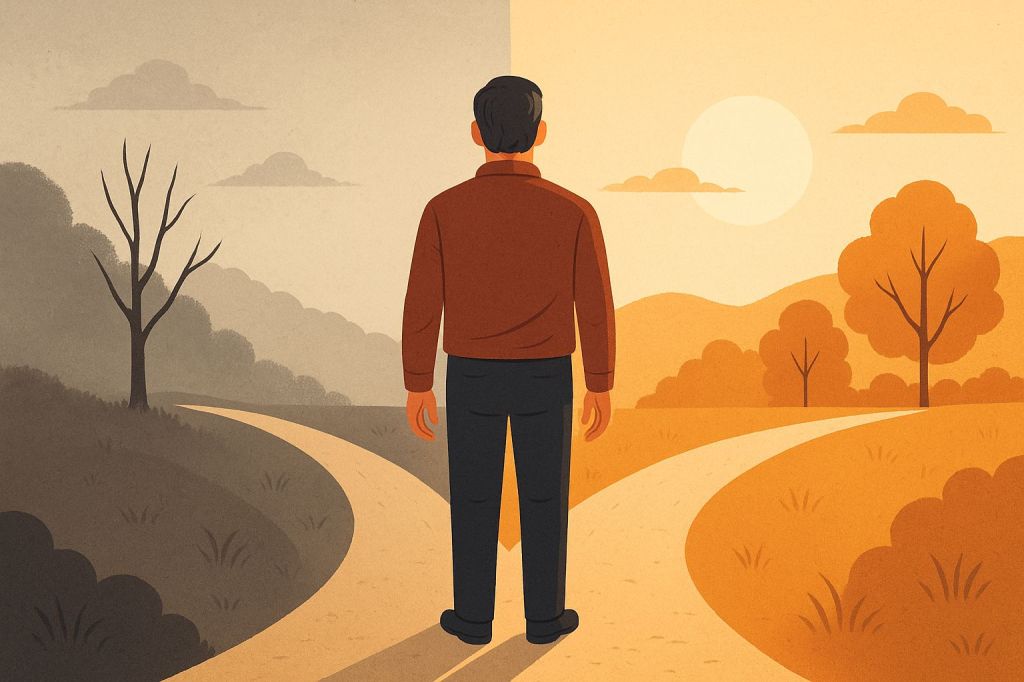
When I was young, fresh out of college, I leapt into entrepreneurship with no safety net. No big family backing, no golden spoon—just a mediocre boy’s dream and the stubbornness to break every dogma that came my way. And for a while, it worked. I tasted the thrill of proving people wrong, of showing my circle what dreams can really do when you chase them with 100% fire.
Then life happened.
Marriage, kids, bills, responsibilities. Somewhere in that transition, my dream got diluted. Not because I stopped caring, but because my energy started flowing toward being a husband, a father, a provider. And every time I tried to “chase my old self,” I failed miserably.
At first, I thought I was just rusty. That I only needed to “pick up where I left off.” But the truth hit me harder than failure: time had passed, and I had changed.
We often forget that chasing our old self is like chasing a ghost. The 25-year-old me who could burn 20 hours a day on a single idea doesn’t exist anymore. Today, I’m someone new—wiser, slower maybe, but richer in perspective. And it is unfair to drag myself back into old shoes that don’t fit anymore.
This realization is liberating. It tells us that midlife is not about “continuing an unfinished story,” but about writing a new one. Dreams don’t expire—but the dreamer evolves. If you’re above 40, reading this, and still trying to become the version of you that existed before kids, marriage, or setbacks—stop. That person no longer exists.
Instead, ask: Who am I today? What do I want now?
The truth is, life doesn’t punish us for changing—it punishes us for refusing to.
 AnandNataraj