
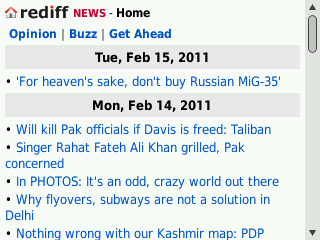
Now it is 2 PM Valentines day. Rediff’s WAP site started posting tomorrow’s news today itself ;)…
Here is a ScreenShot taken from my BlackBerry…
Now it is 2 PM Valentines day. Rediff’s WAP site started posting tomorrow’s news today itself ;)…
Here is a ScreenShot taken from my BlackBerry…
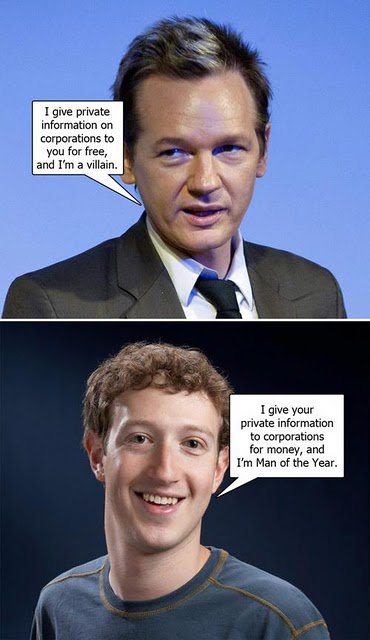
Corruption in India for last 2 decades if around 80 Lakh Crore… Though the list includes Private scams too we have to blame the government for the lapses to control those scams… Here is the list of scams…
This is the latest in medicine, effective for cancer!
Lemon (Citrus) is a miraculous product to kill cancer cells. It is 10,000 times stronger than chemotherapy.
Why do we not know about that?
Because there are laboratories interested in making a synthetic version that will bring them huge profits. You can now help a friend in need by letting him/her know that lemon juice is beneficial in preventing the disease. Its taste is pleasant and it does not produce the horrific effects of chemotherapy.
How many people will die while this closely guarded secret is kept, so as not to jeopardize the beneficial multimillionaires large corporations?
As you know, the lemon tree is known for its varieties of lemons and limes. You can eat the fruit in different ways: you can eat the pulp, juice press, prepare drinks, sorbets, pastries, etc.
It is credited with many virtues, but the most interesting is the effect it produces on cysts and tumors. This plant is a proven remedy against cancers of all types. Some say it is very useful in all variants of cancer. It is considered also as an anti microbial spectrum against bacterial infections and fungi, effective against internal parasites and worms, it regulates blood pressure which is too high and an antidepressant, combats stress and nervous disorders.
The source of this information is fascinating: it comes from one of the largest drug manufacturers in the world, says that after more than 20 laboratory tests since 1970, the extracts revealed that: It destroys the malignant cells in 12 cancers, including colon, breast, prostate, lung and pancreas.
The compounds of this tree showed 10,000 times better than the product Adriamycin, a drug normally used chemotherapeutic in the world, slowing the growth of cancer cells. And what is even more astonishing: this type of therapy with lemon extract only destroys malignant cancer cells and it does not affect healthy cells.
Groupon has changed the way we shop on the net and it has created a platform which benefits the vendor & the buyer… For thouse who have no idea about the concept here is how it works;
Groupon.com is a site where in a vendor can display his product or service for a massive discount on a commitment of getting specific number of purchase.
Example if I’m a Vendor selling Jeans… I post a discount of X percentage (most cases it is more than 80%… I commit for that percentage of discount if 100 people commit to buy the product… Deal succeeds if number of people reach 100 else it gets cancelled…
Also there are some vendors who give massive discounts even if there is no minimum guarantee of purchase…
Since I run a Web Development company I got lots of request to develop a site similar to Groupon… I’ve been waiting for a long time to get something similar in India… Also I was following couple of sites based on Groupon concept… For last two months this wave has caught up in India… Following are the sites which I’m aware of;
Latest sensation among those 3 sites is Sosasta.Com which is acquired by Groupon.com for $10 million… But SnapDeal.Com must be the market leader because he updates atleast 2 new deals per day for almost all major cities… This month I’ve purchased 4 deals & I’m happy about the the deal I got from Big Brands…
I’m very much thrilled for getting such massive discounts and I’m expecting more such offers in days to come…
Priya: I want to buy a Sony digital camera costing Rs.20,000, but I don?t have any cash right now.
Raj: Why don?t you use your ICICI Bank credit card? Never heard them say ? Hum Hain Na ??
Priya: I am quite skeptic about using these cards. I pay using the card, get a bill after 30 days and pay after another 20 days. This is a maximum of 50 days interest free loan. Why does any bank do it?
If I borrow Rs.20,000 on personal loan at 11%.
Interest to be paid for 50 days = Rs. 20,000 * 11% * (50/365) = Rs. 301.40.
Here the bank is giving me a loan without interest when I use the credit card. Something is wrong somewhere!
Raj: Well? let me tell you how it works when you use your card to pay for the camera.
At the end of day or at the end of some period Sony World chooses:
- sale value = 4% * 20,000 = Rs. 800
Priya: Interesting! So Sony World pays more than the interest that I should have paid for the loan that I take. I, as a cardholder have the following benefits
However what benefits does Sony World get for paying so much money?
Isn’t it more profitable for them to take cash?
They can save as much as Rs.1200.
Raj: Certainly. Some retail outlets offer you discounts if you pay by cash, don’t they?
However when you don?t count the money that you are spending, you tend to buy more! Cards encourage this ?
called impulse purchase .
If you did not have access to credit, you would not have bought the camera this month ? or may be not any time soon either. By accepting cards, the merchant is actually extending you credit at the risk of the card issuer. He pays money to the banks to carry that risk.
Priya: So ICICI Bank uses this money to pay back to us when they announce 5% cash back. They insist that the Sales draft that I sign at the retailer should also be from ICICI Bank. This means they are saving on the Interchange Fee and also pay me a part of the Merchant Discount that they get.
Raj: Exactly! If you have noticed, ICICI Bank gives you the cash back in the next credit card statement. They keep the ?cash back? money for a maximum of 60 days before passing on a part to you. This accrues them interest too.
Say if ICICI Bank earns an interest of 6% per annum for the cash they carry ?
they get Rs.1000 * 6% * (60/365) = Rs. 10
That is not huge, but money nevertheless. And when you consider that almost everyone in this city shops with a credit card these days, it is a big sum.
Priya: And that also explains why banks tie up with petrol pumps? like ICICI Bank has tied up with HPCL and I could re-fuel there without having to pay the fuel surcharge of 2.5%. The card issuer and the acquiring bank is the same and that saves interchange fees.
Raj: Good! You seem to have figured out how it all works! Let me summarize:
[All the numbers used to explain concepts in this article must be treated only as an example. Merchant Discounts may vary from bank to bank. Interchange Fee is regulated by VISA and MasterCard]
The wine industry has many industry-specific terms that can be a bit daunting, especially for newcomers to wine. In this article, I will provide brief explanations of key wine terms.
Source: Benny’s Wine Musings
In the late 30’s the Smirnoff Vodka makers was looking to increase sales. In general they were ‘ok’, they were surviving but not really thriving. The company decided to hire an outside consultant for creating new marketing message. This consultant studied the Smirnoff Vodka in and out. He tried to understand every aspect of the vodka and what makes it unique. By doing this – he would be able to launch an effective marketing campaign for Smirnoff Vodka focused on Smirnoff’s unique selling points.
In his research he discovered one thing that was very unique: When you drink the vodka – you don’t have the smell of vodka in your mouth afterwards.
Based on this discovery, Smirnoff launched a campaign promoting this message and the company became one of the top selling Vodka companies in the world.
Message : Its all about finding that one little thing in your business thats a little bit better then your competitors.
For those who can’t understand Tamil please excuse… I don’t have time to post transcript of this speech in English… I missed this program because I felt festivals are time to rest and enjoy it like we use to do it in our childhood days… I can understand this speech makes sense… But like any other normal man I’m putting it behind and preparing myself to run the rat race for tomorrow…
But there are two things I’ve realized from this guys speech;
For those who understand tamil and missed this program during Diwali… Understand the real position of todays youth…
 AnandNataraj