
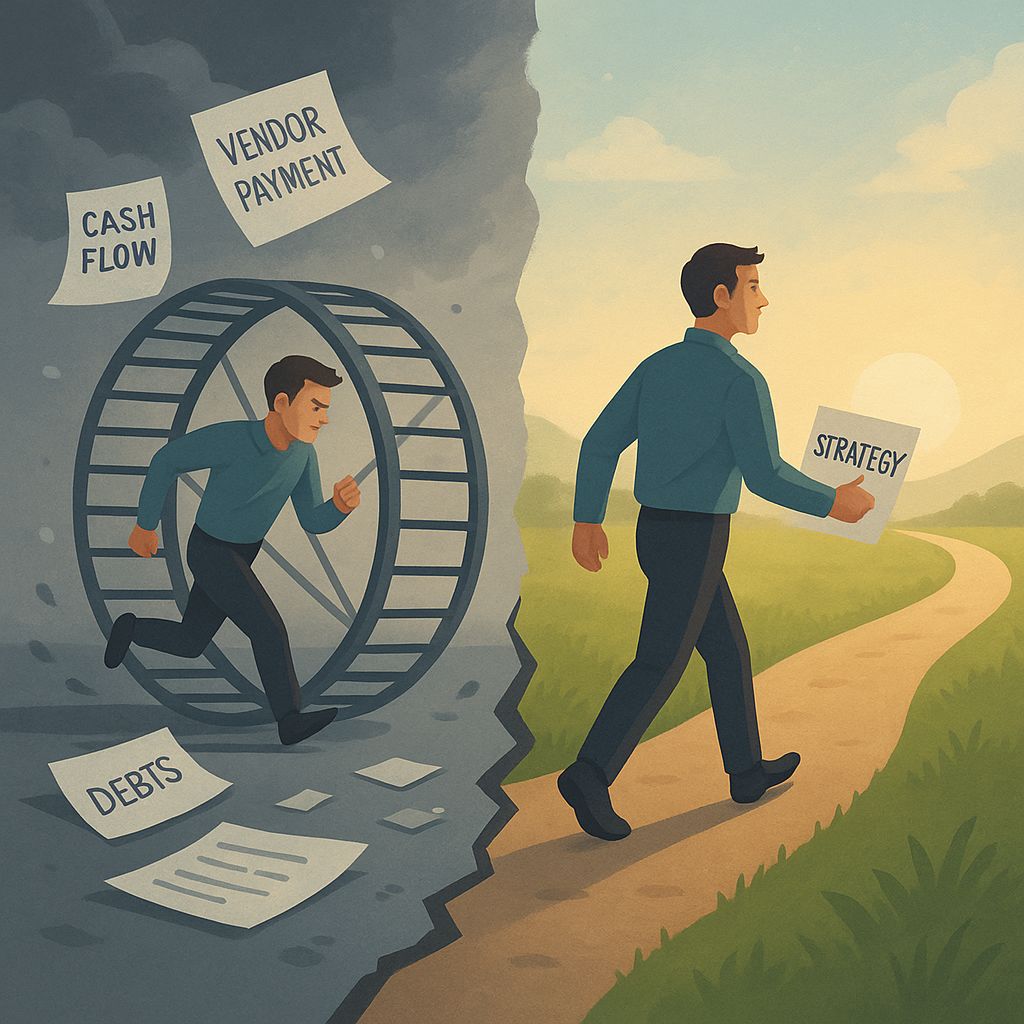
When you start out as an entrepreneur, people tell you to hustle, to keep moving, to “figure it out somehow.” But nobody warns you about the invisible trap that slowly consumes your mind and robs you of your creativity: the scarcity loop.
What is the scarcity loop?
The scarcity loop is not just about not having enough money. It’s a mental state where your entire bandwidth is consumed by one loud question: “How do I survive today?”
You start solving only for tomorrow’s cash flow, this week’s EMI, or this month’s vendor payment. You forget to look at the big picture because your mental windshield is fogged by immediate fires.
When survival mode hijacks your brain
I remember times when I had to figure out how to pay monthly vendor payments while also preparing the next sales pitch deck to keep future revenue coming in.
- Instead of thinking about building a long-term brand, I was stuck thinking, “How do I just stay afloat this month?”
- Instead of selecting ideal customers, I said yes to anyone who could pay, even if it drained our energy and diluted our vision.
- Instead of working on systems and team processes, I spent nights firefighting because every rupee felt like borrowed oxygen.
I was moving, but not growing. I was hustling, but not building.
The cost of staying in the loop
When you’re trapped in scarcity, you start:
- Making reactive decisions, not strategic ones.
- Accepting bad deals because cash today feels more important than sustainability tomorrow.
- Losing good team members who see chaos and no clear vision.
- Burning out emotionally and physically — coming home to your family as a shell, not a leader.
In my lowest phases, I realized that the mind, when stuck in scarcity, cannot dream. It cannot imagine a different future because it is busy scanning for immediate threats like a soldier in a battlefield.
Breaking out: From survival to strategy
I learned this the hard way: you can’t build an empire if you’re always patching holes in the roof.
How to step out of this loop?
✅ Build a small cash buffer, even if it means slower growth initially.
✅ Stop chasing clients or projects that only feed today’s cash flow but destroy tomorrow’s vision.
✅ Delegate more and trust systems — the mental relief is worth every penny.
✅ Surround yourself with people who see beyond next month’s revenue sheet.
✅ Shift your question from “How do I survive today?” to “How do I design tomorrow?”
A gentle perspective
If your current profits are going into paying off old mistakes or debts, it’s not failure. It’s healing.
It’s your mind and business paying karmic dues so you can eventually rise lighter and clearer.
A quiet closing thought
“A mind trapped in scarcity can’t build abundance — no matter how good the business plan is.”
Move slow if you must, but move with vision. Survival is necessary, but freedom is where the true magic happens.
 AnandNataraj