Karma vs Dharma: The Silent Tug-of-War Every Entrepreneur Faces


As entrepreneurs, we are wired to chase growth, break limits, and build legacies. We dream of freedom — financial, creative, emotional. But there’s a tug-of-war inside us that nobody talks about enough: Karma vs Dharma.

Let me break it down the way life taught me — not from a textbook or a spiritual discourse, but from those raw, sleepless nights when I sat alone questioning every move I ever made.

Karma: The Baggage You Carry

Karma isn’t just some cosmic scoreboard of good and bad deeds. For an entrepreneur, karma shows up as the invisible baggage we drag along:

  • Past business mistakes
  • Betrayals from partners or friends
  • Poor financial decisions made under pressure
  • Emotional debts with family and loved ones

It quietly shapes how we trust people, how we take risks, and how much we dare to dream again. We don’t always realize it, but karma sits in the boardroom with us, listens to investor pitches with us, and whispers into our ears when we think we’re making a “bold move.”

Dharma: The Duty That Grounds You

While karma pulls you into your past, dharma anchors you to your responsibility today.

For me, my dharma was clear: protect my family, provide a safety net, and keep them away from financial storms.

Every decision I made — be it launching a new venture, holding on to an old business despite losses, or taking on unexpected debts — was driven by this deep-rooted sense of duty. I wasn’t gambling for fame; I was fighting for my family’s dignity.

People on the outside see failed ventures or debts. But in my mind, those moves were never reckless bets — they were desperate attempts to shield the people I love.

The Clash: When Karma Tests Your Dharma

Sometimes, your karma and dharma go to war.

You act out of dharma, but karma turns it into a mess. You try to build a protective revenue stream for your family, but karma brings delays, unexpected losses, and betrayals that collapse your plans.

Then come the harsh judgments: “Why didn’t you pause?”, “Why didn’t you consult someone first?”, “Why did you jump into it?”

But nobody sees that, at that moment, you were acting from the purest intention possible — to protect, to uplift, to fulfill your dharma.

What I Learned (The Hard Way)

Your karma might twist your outcomes, but your dharma defines your character.

If your current business profits are going into paying off past mistakes or settling old loans, it’s not a failure. It’s karmic cleansing. It’s a debt paid not just in money, but in the form of maturity, resilience, and a stronger foundation for the future.

When the dust settles, the world may only remember balance sheets and success stories. But you — and your soul — will remember why you took each step.

A Quiet Conclusion

Karma tests you, dharma defines you.

If you’re an entrepreneur feeling weighed down by invisible debts — emotional or financial — don’t judge yourself only by the outcomes. Look at your intentions.

Maybe you didn’t build an empire (yet). But if you fought for your people, you didn’t really lose.

Still here. Still trying. And that, I believe, is the purest dharma.
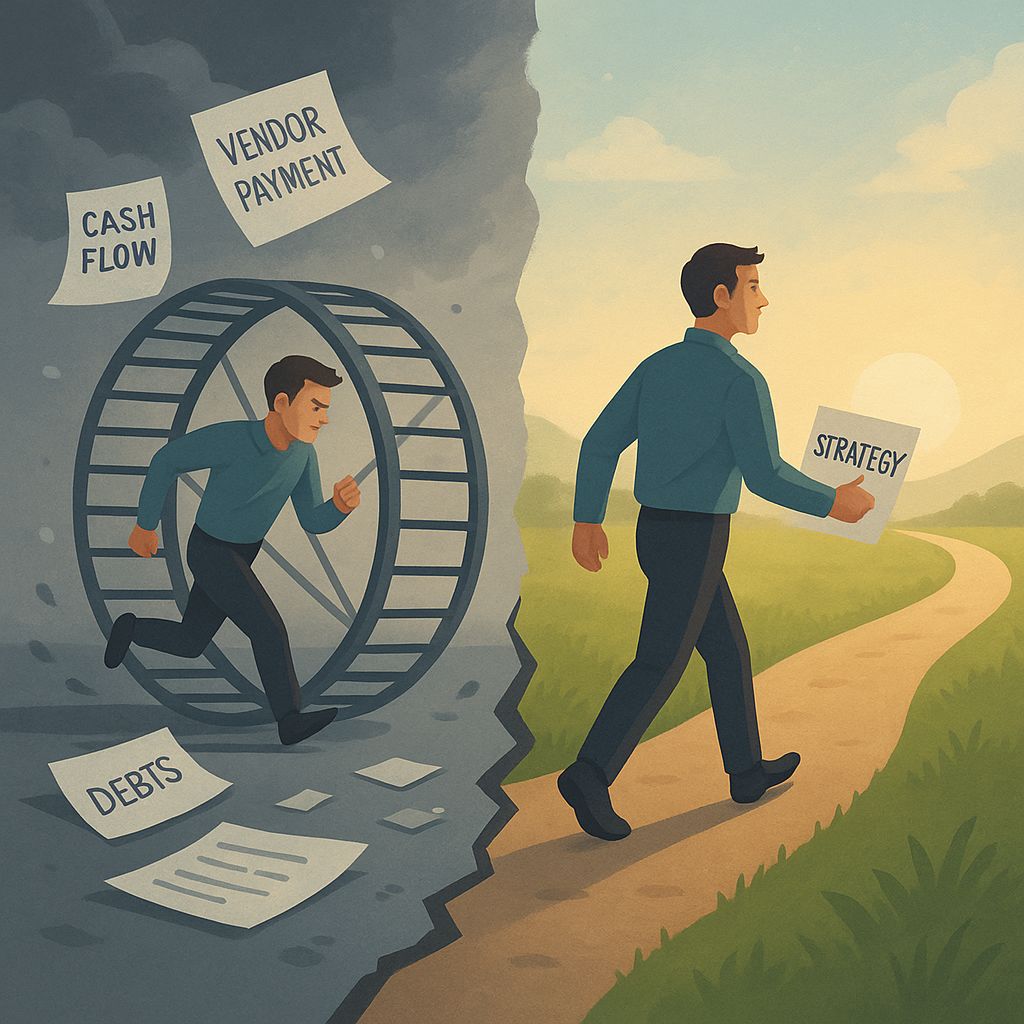
Breaking the Scarcity Loop: The Invisible Trap That Keeps Entrepreneurs Stuck


You can’t build tomorrow if you’re forever stuck surviving today.

When you start out as an entrepreneur, people tell you to hustle, to keep moving, to “figure it out somehow.” But nobody warns you about the invisible trap that slowly consumes your mind and robs you of your creativity: the scarcity loop.

What is the scarcity loop?

The scarcity loop is not just about not having enough money. It’s a mental state where your entire bandwidth is consumed by one loud question: “How do I survive today?”

You start solving only for tomorrow’s cash flow, this week’s EMI, or this month’s vendor payment. You forget to look at the big picture because your mental windshield is fogged by immediate fires.

When survival mode hijacks your brain

I remember times when I had to figure out how to pay monthly vendor payments while also preparing the next sales pitch deck to keep future revenue coming in.

  • Instead of thinking about building a long-term brand, I was stuck thinking, “How do I just stay afloat this month?”
  • Instead of selecting ideal customers, I said yes to anyone who could pay, even if it drained our energy and diluted our vision.
  • Instead of working on systems and team processes, I spent nights firefighting because every rupee felt like borrowed oxygen.

I was moving, but not growing. I was hustling, but not building.

The cost of staying in the loop

When you’re trapped in scarcity, you start:

  • Making reactive decisions, not strategic ones.
  • Accepting bad deals because cash today feels more important than sustainability tomorrow.
  • Losing good team members who see chaos and no clear vision.
  • Burning out emotionally and physically — coming home to your family as a shell, not a leader.

In my lowest phases, I realized that the mind, when stuck in scarcity, cannot dream. It cannot imagine a different future because it is busy scanning for immediate threats like a soldier in a battlefield.

Breaking out: From survival to strategy

I learned this the hard way: you can’t build an empire if you’re always patching holes in the roof.

How to step out of this loop?

✅ Build a small cash buffer, even if it means slower growth initially.
✅ Stop chasing clients or projects that only feed today’s cash flow but destroy tomorrow’s vision.
✅ Delegate more and trust systems — the mental relief is worth every penny.
✅ Surround yourself with people who see beyond next month’s revenue sheet.
✅ Shift your question from “How do I survive today?” to “How do I design tomorrow?”

A gentle perspective

If your current profits are going into paying off old mistakes or debts, it’s not failure. It’s healing.

It’s your mind and business paying karmic dues so you can eventually rise lighter and clearer.

A quiet closing thought

“A mind trapped in scarcity can’t build abundance — no matter how good the business plan is.”

Move slow if you must, but move with vision. Survival is necessary, but freedom is where the true magic happens.