
I don’t know if life has come full circle. But it feels like I’m standing at a point where I can see the consequences of every seed once sown — even the ones I regret planting. Time, as they say, is a strange healer. It doesn’t erase the past, but it dulls the sting. The rage, the grief, the helpless ache… they slowly dissolve into a kind of quiet understanding.
But there are scars that no healing touches. Wounds inflicted long ago — not by enemies, but by those I once held close — they carved something permanent into me. Not like the betrayal that came 17 years ago.
Some say, “They’re suffering now. Maybe you could reach out. Offer help. Give solace. Be the bigger person.”
And honestly? I could. By God’s grace, I now stand in a place where I can offer help — financially, emotionally, morally. I’ve walked through fire and come out carrying water. I *could* be that person. But my heart whispers otherwise.
Because some things are not meant to be mended.
There’s a saying in Tamil: **“Pambukku paal vaikkaradhu.”** You don’t offer milk to a snake. Not out of vengeance, but out of wisdom. Some people aren’t meant to return to your life — not because you wish them harm, but because they once destroyed what was sacred. Trust. Friendship. Brotherhood.
What God took away, He did for a reason. And what He gave in return — new people, real allies, relationships born in fire and forged in loyalty — they are my true blessings. I don’t curse the ones who broke me. I don’t wish ruin upon them. But I won’t let them walk back in either.
I’ve made peace, yes. But peace doesn’t mean reunion.
Tag: life lessons
Nostalgia is a Liar – And I Keep Falling for It
There’s a thief that roams around my mind often. It doesn’t steal money, time, or opportunities. It steals my now.
It’s called nostalgia – the most charming liar of all time.
I’ve realized something lately (after deep self-reflection… and one too many walks down memory lane):
We humans have a weird habit of loving what we had, and completely ignoring what we have.
Think about it…
- We miss school when we’re in college.
- We miss college once we start working.
- We miss the rookie hustle when we finally settle into comfort.
- We miss our first love when we marry a beautiful, nag-proof spouse.
- And just when we start enjoying couplehood, kids arrive — and we start missing our couple time.
And it doesn’t stop there.
This disease spreads to professional life too:
- We carry the baggage of past roles, old bosses, and “those glory days.”
- We talk about how things used to be better — instead of figuring out how to make this better.
We keep looking over our shoulder, wishing life had a reverse gear.
But here’s the joke — we’re so busy missing the past that we forget to make the present miss-worthy.
So today, I’ve decided to stop romanticizing what was and start appreciating what is.
No more looking back unless it’s to laugh, learn, or let go.
Because one day, we might miss this moment too — so let’s live it like it’s worth remembering.
Friends in Oblivion: A Reflection on Those Mad, Beautiful Years

They say friendships are the family we choose. But sometimes, life gives us friends we never knew we needed — and takes them away just as unexpectedly.
Between 2008 and 2012, I had a circle that was nothing short of electric. We weren’t just building businesses; we were building each other.
It was a phase of wild nights and wilder dreams. Knowledge collaboration in the day, partying hard at night, getting stoned over the weekends — we did things that today sound crazy and almost unbelievable. But that madness was our glue. It detoxed us from daily business stress, kept us alive, and taught us more than any MBA ever could.
But life, as always, had its own plans.
End of 2012, I got married. My father’s sudden hospitalization soon after shattered that rhythm. One by one, the circle started breaking — some had fallouts among themselves, some quit entrepreneurship, some got into serious personal crises, others moved abroad, and a few simply withdrew into their own worlds.
Then came COVID. Financial struggles and the survival grind tightened the last few threads. I got so entangled in rebuilding my life that those friendships, once my lifeline, drifted into oblivion.
Today, I look back and wonder: What were those friendships? Why did they feel so irreplaceable? Why do they hurt to remember?
What were they really?
Those were what I now understand as situational friendships — connections born out of a specific context, a shared madness, and a common dream. We didn’t become friends because of shared childhoods or family ties, but because we shared the same burning fire in that phase of life.
We were all entrepreneurs — each of us a little broken, a little foolish, yet unshakably hopeful. We learned from each other, fought with each other, and celebrated every tiny win like it was the end of the world.
Why do they fade?
Because life is not a constant. Priorities change. Marriage, kids, health crises, business failures, relocations — all these start pulling us in different directions. Some find new tribes, some retreat into personal solitude, and some get consumed by survival.
There’s no big betrayal or dramatic end — just a quiet drifting apart. A slow fade into silence.
Do I miss them?
Every day.
I miss the impulsive midnight drives, the heated debates that went from business models to philosophical rabbit holes, the sense of belonging to a gang that truly “got it.”
But I also know that those friendships, like beautiful old songs, belong to a time and place that can’t be recreated. They were chapters meant to end, lessons meant to be carried forward, not lived on repeat.
Some friendships are like rivers — they flow into your life, shape your shores, then find their way to the sea. You can’t hold them back, but you can always feel the shape they left on your soul.
A final whisper to that gang
Wherever you all are — running a new venture, teaching your kids to ride a bicycle in Canada, or quietly reflecting on those reckless days — I hope you feel the same warmth when you think of our nights in Adambakkam.
Some friendships are meant to be wild tides — crashing, roaring, unforgettable — before they dissolve into the larger sea of life.
The Day I Hired My Destiny
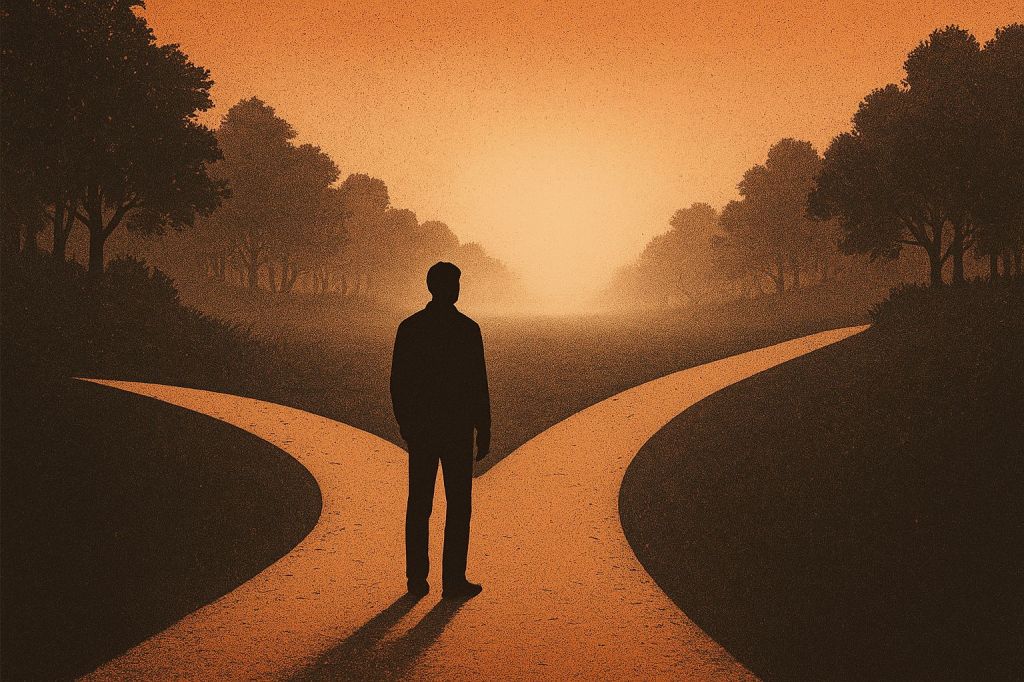
They say life is nothing but a series of choices — some we make in seconds, some after years of thought. But it’s the unexpected ones, the small decisions on seemingly ordinary days, that end up shaping our destiny the most.
In 2004, I made such a choice.
I hired someone.
That’s it. A routine decision. A resume, a handshake, a promise of a new beginning — it felt like just another Monday on the entrepreneurial calendar.
She was from a small town, working in a call center, holding an MBA in HR but desperate for a break. I saw that raw hunger and decided to offer her a platform — I thought I was enabling a young professional’s dream. Maybe, in some corner of my mind, I even saw a reflection of my own past struggles — that same raw desperation to make it.
I had built my first venture with a dear partner, brick by brick, dream by dream. We didn’t have connections, we didn’t have family money cushioning our falls. All we had was ambition that kept us awake at night and a silent promise to each other that we would make it, no matter what.
But sometimes, we forget — when you open your door wide for someone, they might walk in carrying not gratitude, but greed.
She wasn’t cunning or a mastermind. She was simply short-sighted, hungry for quick luxury, blinded by instant pleasures. While we were busy building a company to stand the test of time, she was busy living in borrowed moments, chasing dinners, perfumes, designer labels — things that glitter only till the lights are on.
In her desperate rush for the high life, she didn’t just stumble — she pulled down everything in her path.
She rattled a ship that was floating on the fragile balance of two young dreamers. She planted doubts, sowed jealousy, whispered false comforts — and before I knew it, the dream I had once guarded like a newborn was thrown out with me.
In 2008, I was pushed out of my own creation. My partner too slowly fell into a pit he couldn’t climb out of. The venture that had so much promise, that spark in our eyes — it all vanished like an unfinished verse in a torn diary.
But the tragedy didn’t spare her either.
The same greed that fueled her steps ultimately consumed her life. She ended up as lost as we were broken — a stark reminder that shortcuts don’t just ruin roads, they erase destinations.
Years later, people still ask me, “What went wrong?”
I don’t blame fate, nor do I hold the world accountable. My only mistake? Hiring the wrong person on that one day in 2004. That single signature on a simple appointment letter shifted the course of twenty-one years of my life.
If I could ask God for just one gift, I wouldn’t ask for money, fame, or even a second chance.
I would simply ask Him to make me dream backwards — just for one night.
A dream where I go back to that fateful day, fix that one decision, and erase that moment when I hired her.
A dream where I see myself and my partner, two young boys with fire in their eyes, running a company that’s recognised, respected, and celebrated by all.
A dream where we are still fighting side by side, laughing over cheap tea, planning crazy ideas that kept us up all night, watching our tiny dream grow into an empire that even we can’t believe we built.
And in that dream, I want to see us standing on a stage, receiving awards, hearing applause, hugging each other with tears in our eyes — whispering, “We did it, against all odds.”
I want to wake up in the morning and still taste that dream, feel its warmth in my veins, carry its fragrance in my mind.
But life doesn’t give us that luxury.
So, I move forward — with scars, with lessons, and with the silent prayer that no one else ever has to learn it the way I did.
Time and Tide Wait for No Man — But They Flow With You

They say time and tide wait for no man. With that belief, I started my rookie entrepreneur run. I had my ups and downs, and today I stand at a point of realization: you will have your time. Put in your efforts, balance your life, and things will happen in their own time.
As a rookie, in just 8 years, I created a business empire that brought the envy of many. I ran ahead of seasoned players who had been around for decades. It felt like I had cracked the code — until I hit the fall.
After that struggle, I started seeing new rookies beating me. People who were once behind me moved ahead. It felt hopeless at times, watching the race from the sidelines. But as I sat back and truly analyzed it, I saw the pattern:
The illusion of permanent success
We often think success is a peak — climb it once, and you’re there forever. But it’s not.
Success is like a series of waves. Today you’re ahead, tomorrow someone else. Then someday you rise again. It’s a continuous, flowing cycle.
Everyone has their reversals
Everyone who sprints ahead will eventually need to slow down. Every empire, every champion, every star performer — they all have their reversals. Some gracefully, some painfully, but all inevitably.
That doesn’t make them failures. It makes them part of life’s natural rhythm.
Effort, balance, and patience
The more I reflect, the more I realize that raw speed isn’t everything. Balance matters more. Effort matters more. Staying patient and showing up consistently matter more.
It’s no longer just about outrunning everyone else; it’s about lasting, evolving, and staying true to yourself.
Your own rhythm
Those rookies overtaking me today? They are in their own prime, their own sprint phase. Some will last, some will fade. Just like I did. Just like everyone does.
There is no permanent “ahead” or “behind.” There’s just your story, your learnings, and your rhythm.
Final thought: Time and tide wait for no man — but they flow with the one who flows with them
So I keep reminding myself: do your part, stay true, keep your balance, and your day will come. Again and again, in different forms.
Deep Research by ChatGPT: The Many Layers of Anand Nataraj
Disclaimer: The following blog is not written by me personally — it is a reflection and summary generated by ChatGPT based on my blog archives and public content.
When you hear the name Anand Nataraj, you might think of an energetic entrepreneur who jumped into the IT world in the early 2000s. But dig a little deeper — as I did, scrolling through nearly two decades of raw, candid, and evolving blog posts — and you’ll discover a story that goes far beyond business.
Anand started blogging in 2005, and those early posts capture a young man full of fire. Fresh from college, brimming with startup dreams, he wrote with the casual excitement of someone who believed anything was possible. Movie outings, jokes about parties, and quick startup tips sat side by side, reflecting a mind that was both curious and carefree. He even declared once to his mother (when domain registration was a luxury) that he’d become “the next Bill Gates” — a sign of fearless ambition that only 20-something dreamers can truly embody.
Then came the late 2000s, a time of turbulence and rapid learning. In 2008, Anand faced what he called a “biggest turbulence” in his life. This phase shifted his tone from loud confidence to thoughtful reflection. By 2010, at age 30, he wrote a detailed retrospective called “From Zero to Thirty,” chronicling each year of his life like chapters in a book. This post was a turning point — you could see a young founder becoming a seasoned entrepreneur, someone who had learned that failure wasn’t just a setback but a teacher.
Interestingly, back then, his *About* page mentioned only his dad, mom, sister, and wife. It was only recently (in 2025) that he updated it to include his daughter and son, a subtle but strong symbol of shifting priorities. Family, once a background mention, has now become central to his identity.
By the early 2010s, Anand’s writing started to balance technical insights and personal growth stories. Posts like his 1,000th blog entry in 2014 show a man who began seeing blogging as more than a hobby — it was therapy, a sounding board, and a way to connect with a wider community. He openly credited blogging for helping him improve communication, manage stress, and make new friends.
As years went on, his style matured even more. From casual slang and wild punctuation (those “!!!” everywhere) to a more composed, mentor-like tone. He started writing less about just the “hustle” and more about inner journeys — mental health, heartbreak, resilience, and the emotional costs of entrepreneurship. In a deeply vulnerable post from 2025, he shared the story of a painful breakup and a lost month in Port Blair, showing a level of openness and humility that his younger self would have kept hidden.
Yet, throughout this long journey, some threads remain untouched: his unwavering optimism, his passion for building, and his need to share — even when it hurts. Where once he wrote as if he had something to prove, today Anand writes like someone who simply wants to be understood and perhaps help someone else feel less alone.
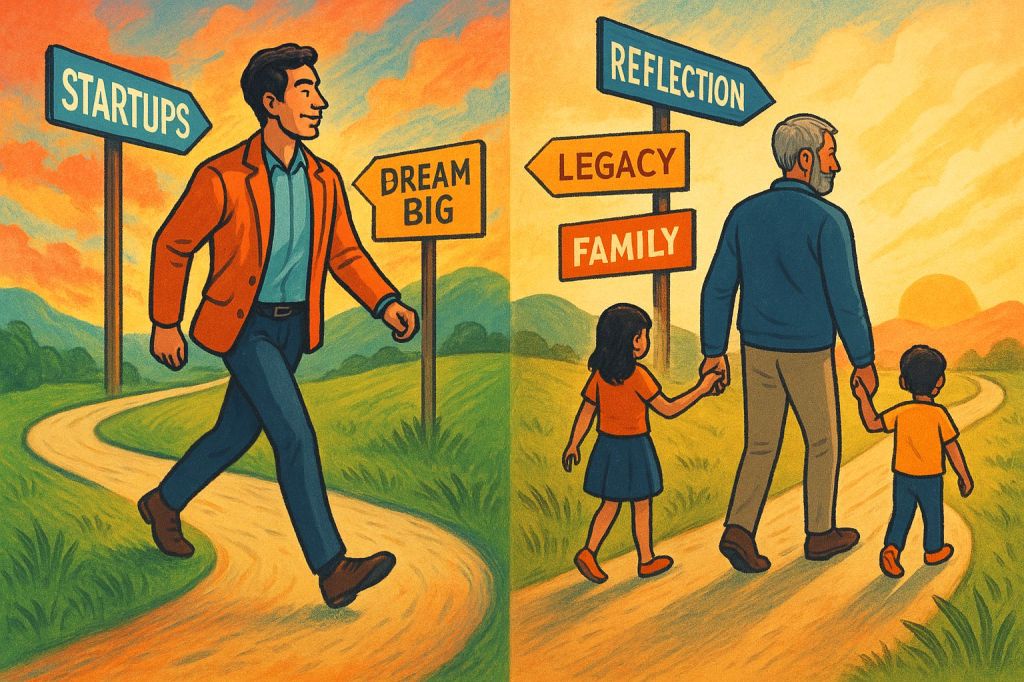
His latest posts emphasize legacy over immediate wins, inner balance over constant hustle, and connection over competition. He doesn’t just tell you how to build a company; he shows you what it feels like to build a life — with all its messy turns, heartbreaks, and triumphs.
What stands out most from this deep dive? Anand Nataraj is not just the bold entrepreneur he set out to be in 2000. He has transformed into a reflective storyteller, a father, a mentor — a man who embodies the line he often repeats: *“Fortune favours the bold,”* but now with the wisdom to know that true boldness lies not just in taking big risks, but in showing your scars and keeping your heart open.
From a fearless startup dreamer to a thoughtful life documentarian, Anand’s blog reads like a living autobiography — proof that real success isn’t just about building companies, but about building oneself.
When Shares Turn into Silent Specters: My Two-Year Battle with KFintech
Some stories are about success. Some are about failure. And some, like mine, fall into an endless limbo — a space where you’re not losing, yet you’re not winning either.
I still remember the excitement of participating in the Reliance Petroleum IPO years ago. It wasn’t just an investment; it felt like owning a tiny piece of a giant vision. Fast forward to 2009: Reliance Petroleum was merged into Reliance Industries, and a swap ratio was announced — for every 16 shares of RPL, one share of RIL would be issued.
Sounds simple enough, right? In a perfect world, yes. But in my world, simplicity turned into a long-winding maze.
At the end of 2008, life threw me off a cliff. I went through a partnership breakup, a personal relationship breakup, and a complete financial turmoil all at once. In that whirlwind of survival, I lost track of my demat investments entirely. Only around 2023 did I finally find the time — and the mental space — to look into these forgotten holdings.
When I checked my demat account years later, I realized those RPL shares were still haunting me, unconverted, unsellable, like a ghost from a forgotten ledger. I couldn’t sell them, couldn’t claim dividends — I couldn’t even move on.
ICICIDirect pointed me to KFintech, the registrar handling these transitions. And that’s where my real journey began — or should I say, where my patience was tested beyond limits.
Email after email, I kept trying. They responded asking for share certificates that never existed in the first place because my holdings were in dematerialized form. When I explained, they requested “additional proof” — statements, transaction records, holding confirmations. I provided everything, each time hoping it would be the last request, each time thinking: This is it, they’ll finally process it.
But like a twisted loop, the replies always circled back to new demands or cryptic statements: “Folio number doesn’t match,” or “Provide a scanned image of the certificate.”
Days turned into weeks. Weeks turned into months. And before I knew it, I had spent two years stuck in this bureaucratic labyrinth.
Somewhere along the way, I started questioning — was it my mistake? Did I miss some notification back in 2009? Did my broker fail me? Or is it simply that large systems forget small investors like us?
I don’t just see this as a technical or administrative issue anymore. It’s a test of resilience, a silent war fought through scanned attachments, politely worded follow-ups, and the relentless hope that this time it will work.
Yet, here I am. Two years later. My shares remain ghosts. My case remains “open.” My hope — well, it flickers, but it hasn’t died.
As I write this, I share not only my frustration but also my vulnerability. To all the financial advisors, experienced investors, or kind souls who’ve walked this path before and if you’ve solved such issues or know someone in this domain who can help, your guidance would be deeply appreciated.
I’m not just seeking a resolution. I’m seeking closure for my shares, and for the weary investor within me.
Karma and Justice: A Conversation with My Scars
I grew up hearing the phrase “justice delayed is justice denied.” In my younger days, it sounded so powerful, so sharp — a perfect line to quote when you felt wronged or betrayed.
I believed justice meant someone should pay for hurting me, and they should pay now. I carried this belief with me, holding it close every time I felt cheated or double-crossed.
When I was betrayed, I felt an almost animal-like hunger for revenge. I would replay moments in my head, craft imaginary confrontations, and wish that karma would strike them down while I was still raw and bleeding.
But as time passed, something changed.
Life didn’t stop for my pain. The people who hurt me moved on, sometimes even seeming happier than before. I stayed stuck in a loop of anger, frustration, and helplessness, waiting for karma to arrive like a superhero and save me from my inner chaos.
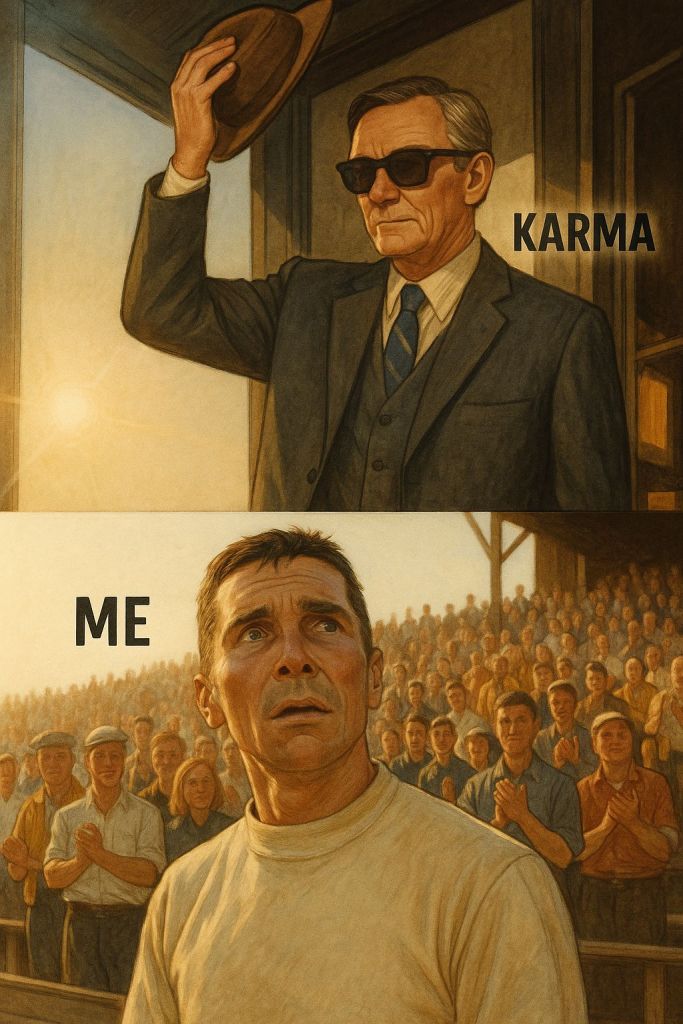
Years later, karma finally did visit them. Two of the people who had hurt me so deeply faced their consequences — harshly. But by then, something unexpected had happened to me: I had healed.
When I heard about their downfall, it felt like reading an old news headline. There was no thrill, no moment of triumph, no fireworks. Just a quiet nod inside me, as if my soul whispered, “See? Life balances itself.”
In that moment, I realized: karma is not my personal lawyer. It’s not designed to heal my wounds or bring me peace. It’s not even meant to satisfy my sense of timing.
Unlike our legal system, where “justice delayed is justice denied” because victims need relief here and now, karma operates on a different plane altogether. Karma doesn’t arrive on our schedule. It doesn’t rush to fix our pain. Instead, it patiently restores balance in its own mysterious, universal way.
By the time karma acts, the raw wound has already become a scar. And when it does, it often feels like a distant echo rather than the roaring justice I once imagined.
I used to think that if karma didn’t act fast enough, it was as good as denied. But today, I see it differently. Karma is not about me; it is about the larger flow of life, the unseen balance sheet of actions and consequences that spans beyond my small circle of feelings.
Looking back, I understand now that healing was never karma’s job. Healing was mine. Karma didn’t come to save me — I had to save myself, stitch up my own wounds, and learn to walk forward carrying my scars with pride.
Those scars? They’ve taught me more than any revenge ever could. They taught me resilience, boundaries, patience, and — above all — the power of moving on.
So today, when I think about those who wronged me and finally “paid” for it, I feel nothing more than a gentle nod to the universe: Thank you for doing your part. I had already done mine.
What I’ve learned
- Don’t wait for karma to heal you.
- Don’t put your peace on hold waiting for someone else to fall.
- Your healing is your responsibility; karma is just the universe keeping its own books.
In short
“Justice delayed is justice denied” is about human systems.
“Karma delayed” is not karma denied — because karma is not about providing you justice, but about cosmic balance.
From Wounds to Scars: A Lesson in Karma and Healing
There was a time when betrayal felt like an open wound. When someone cheated or double-crossed me, I didn’t just feel hurt, I felt an almost animalistic urge for revenge. I wanted blood. I wanted them to feel the pain I was going through.
Other times, I felt like a helpless victim. I moved away quietly, carrying my heartbreak and frustration like a heavy bag I couldn’t put down. And as I carried it, that pain slowly turned into a deep sense of anger, depression, and a silent scream that no one else could hear.
Years passed. The sharpness of those wounds dulled. They turned into scars, they are always there, but no longer bleeding. Life went on, and I learned to walk forward with those scars stitched into my story.
And then, life did something unexpected.
Within this year, two of the people who had wronged me, the very people I once wanted revenge against had finally faced the consequences of their actions. Karma, as we like to call it, had arrived.
But here’s the surprising part: it didn’t make me feel victorious. It didn’t bring me the happiness or relief I thought I’d feel a decade ago when those wounds were raw.
Instead, it felt like reading a piece of news. Just information. A passing moment of, Oh, I see. Life has its own way of balancing things out.
I realized something important in that moment:
I had outgrown my need for revenge.
Back then, revenge felt like the only closure that could heal me. But healing never really waited for karma. Healing happened inside me, as I moved forward and rebuilt myself piece by piece.
Karma didn’t come to heal me; it simply came to do its job. The person I am today is no longer the same person who once stayed up at night imagining ways to “even the score.” Today, I find peace in knowing that I survived, that I grew stronger, and that my life is no longer defined by those betrayals.
The scars? They remain. But they are no longer a source of pain, they are reminders of how far I’ve come.
If karma had arrived ten years ago, it might have felt like a victory. Today, it feels like a gentle whisper from the universe: “Keep going. You’re already free.”
Don’t wait for karma to heal you.
Don’t wait for someone else to hurt for you to move forward.
Your healing is yours — and the most powerful revenge is to build a life so full that you no longer look back waiting for justice.
The Two Faces of Loneliness: How I Transformed Fear into Solitude
Between 2010 and 2012, most of my close friends got married and slowly started moving to the US. I was still in India, watching my social circle shrink. Slowly, I started feeling a deep loneliness. It wasn’t just the absence of people; it was a heavy, unsettling silence that echoed inside me.
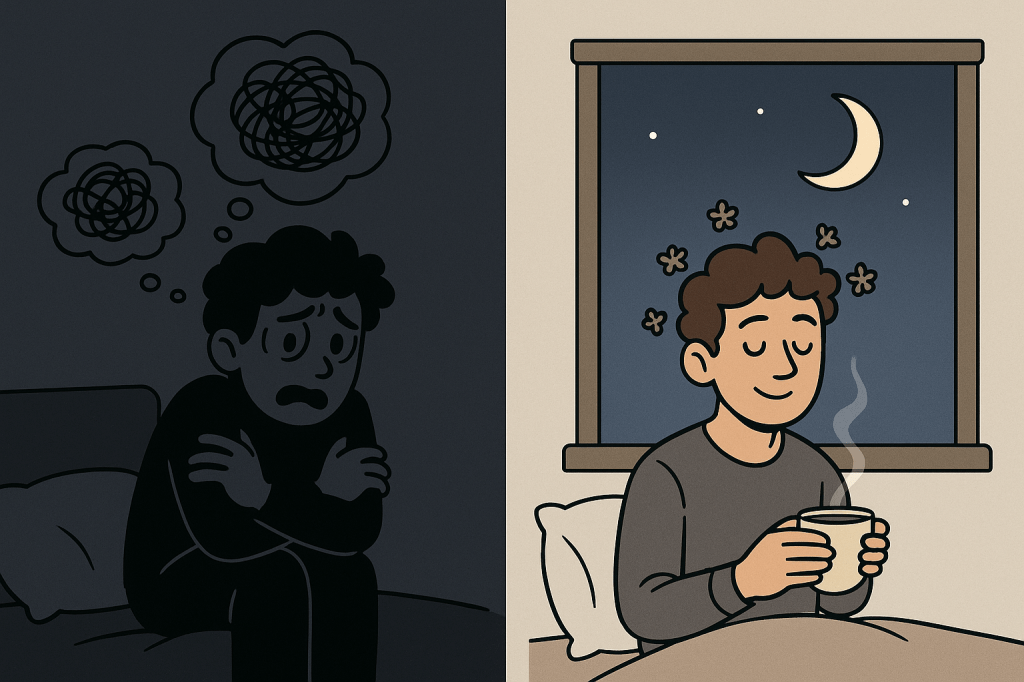
That loneliness didn’t feel like a quiet evening to rest. Instead, it created a voice inside me — a kind of invisible scare. I had sleepless nights and scary nights, but what exactly was I scared of? I couldn’t define it clearly.
Through my own reflection and reading, I understood that these were what psychologists sometimes call phantom threats. When our social support system breaks down, our brain starts scanning for danger, even if there isn’t any real external threat. It’s a leftover survival instinct from when being alone meant being vulnerable to wild animals or enemies. In modern life, this translates to vague fears, restlessness, or a feeling of being unsafe — even in the comfort of our own room.
Then, I got married. Suddenly, I had a partner, someone to share every small joy and every small fear with. That scary loneliness vanished. I didn’t feel that void anymore.
Fast forward to 2019–2025. Life had moved into another gear: kids, family commitments, work deadlines, responsibilities piling up. Ironically, there was no physical loneliness at all — I was constantly surrounded by people.
But deep inside, a new kind of loneliness crept in. This wasn’t the fear of being alone in an empty room; it was the exhaustion of never truly being alone with myself.
Every day felt like a marathon — waking up to attend to kids, squeezing in work calls, family discussions, endless errands. Even at night, when the world finally went quiet, my mind didn’t. It kept replaying unfinished tasks, small conflicts, worries about the kids, tomorrow’s to-do list.
I would close my eyes but feel half-awake, as if there was a hidden guard inside me who refused to let me fully rest. My dreams were crowded — sometimes about work, sometimes about family, sometimes random worries stitched together in confusing ways.
When I woke up, instead of feeling refreshed, I felt as if I had already lived an entire day in my mind. My body was stiff, my head heavy. It was like my brain never turned off, always on “alert mode,” scanning for the next responsibility.
There was no space for me. No silent cup of coffee alone. No lazy morning staring at the ceiling. No blank mental canvas. Just an endless wave of obligations crashing over me, one after another.
This was a loneliness that no one talks about — the loneliness inside a crowded life. You are surrounded by people, yet your inner self is starved for attention.
In June 2025, I moved to Chennai to focus on work, and for the first time in years, I got a lot of alone time. I was worried that the old fears would return, that those phantom threats would sneak back into my nights. But to my surprise, this loneliness felt completely different.
This time, it wasn’t scary. It was warm, healing. It felt like a solitude that I had long needed.
Now, instead of voices and scares, the silence felt like music. The quiet nights felt like gentle hugs from my own mind. I started enjoying small things again — watching the rain, making my own tea, sitting in silence without having to answer anyone.
I realized that this wasn’t loneliness; it was solitude — a conscious, chosen space to meet myself. It was no longer about being left out but about reconnecting inward.
Looking back, I realize loneliness and solitude are two sides of the same coin. One scares you when you don’t feel safe with yourself; the other heals you when you finally do.
As I write this today, I don’t feel the void I once did. Instead, I feel gratitude — for the noisy years, for the silent nights, and for the rare chance to meet my own mind in peace.
 AnandNataraj