Founder Wellness Framework: The Asset We Forget to Protect


The founder’s true hustle: balancing the dream and the self.

When we talk about entrepreneurship, we love to throw around big words — hustle, grind, passion, risk. We romanticize late nights, skipped meals, endless meetings, and that elusive “big win.”

But here’s the bitter truth I learned the hard way: the biggest asset in your startup isn’t your product, your team, or even your funding — it’s you.

As founders, we become our startup’s first sacrifice. We skip meals, work until we doze off at our desk or in the car, ditch workouts, and pile up stress like it’s a badge of honor. We tell ourselves, “Once I close this round… Once we hit this milestone… Then I’ll fix my health.” But that day rarely comes.

I’ve been there — poor eating habits, no fixed sleeping schedule, mind always racing at 200 km/h, pulling my family into a life of constant uncertainty. I realized one thing: building a business shouldn’t mean breaking myself down.

So, I decided to flip the narrative. Here’s my simple Founder Wellness Framework — a survival kit for anyone crazy enough to chase a dream and bold enough to protect themselves in the process.

Treat your health like an investor meeting

If you wouldn’t miss a call with your top investor, don’t skip your health appointments or workouts.
Block time in your calendar for walks, workouts, or at least a few stretches. Move like your runway depends on it — because it does.

Eat to fuel, not just to fill

No one expects gourmet meals or fancy diets, but choose real food over packet snacks.
Keep fruits, nuts, or home-cooked options at arm’s reach instead of biscuits and chips.
Remember: a well-fed founder thinks better, decides better, lives better.

Protect your sleep like your IP

Your mind is your most valuable intellectual property. Sleep is the best free maintenance service for it.
No “just one more mail.” No working till you doze off at your desk or in your car. Shut it down. Recharge. Next day, show up like a human, not a zombie.

Build your emotional safety net

Talk to friends, mentors, or even a professional if needed.
Don’t carry every failure and every setback like a private burden. Share it, release it. You’ll be surprised how many others are silently going through the same.

Protect your close ones from your chaos

Entrepreneurship is your chosen roller coaster, not theirs. Be mindful not to drag them into every loop and drop.
Check in with your family. Show up at dinners. Put the phone down and listen — truly listen. You’ll build more than a company; you’ll build a legacy they’ll want to be part of.

The real hustle

The real hustle isn’t just about 100-hour weeks or raising millions. The real hustle is building something without losing yourself in the process.
We can’t pour from an empty cup. Our dreams are big, but they deserve a founder who’s strong enough to see them through.

So to every founder out there: build your product, scale your team, delight your customers — but above all, build and protect yourself.

That’s the only way the story you’re writing today becomes the legend you’ll tell tomorrow.

“The founder is the first investor, the first employee, and the last line of defense. Protect that asset at all costs.”

The Entrepreneur’s Curse: When the Dream Becomes the Cage


Built to break free, but chained by our own ambition.

“I started to escape the 9-5. But now, I work 24/7 for a boss called ‘my dream’.”

Every entrepreneur starts with a fire in their belly. We tell ourselves, “I’ll be my own boss. I’ll build something meaningful. I’ll find freedom.”

But somewhere along the way, that freedom becomes a mirage. We become prisoners to our own creation — locked inside a cage we proudly built brick by brick.

The never-ending chase

Entrepreneurs are wired to keep moving. The moment we achieve a milestone, we don’t celebrate — we set a new, bigger one.

Your startup gets its first 100 customers? You think, “Why not 1,000?”
You close a big deal? You’re already eyeing the next.

Ambition is our superpower. But it’s also our slow poison.

The idea overdose

Our minds don’t stop. We’re cursed with constant ideation — new products, new pivots, new “next big things.”

We often leave half-built bridges behind, chasing the next shiny island on the horizon. And each unfinished idea weighs on us like a ghost of potential.

The loneliness paradox

Surrounded by a team, admired by peers, loved by family — yet feeling utterly alone.

Why? Because the final decisions, the late-night worries, the quiet fears — they’re all yours.

Success has many fathers, but failure is an orphan — and that orphan usually lives in the entrepreneur’s heart.

The financial and emotional rollercoaster

Some months feel like flying private jets; other months feel like you’re holding on to a falling kite in a storm.

You burn cash, energy, and sometimes your own sanity to keep things alive. Meanwhile, friends in stable jobs post pictures from their vacations, and your blood boils — not from envy, but from the realization that your hustle never really sleeps.

The silent sacrifice

Family dinners become “quick calls.” Gym sessions become “next month.” Sleep? A mythical creature you read about in productivity books.

The worst part? You justify it all in the name of “passion.”

The identity trap

Your business becomes your identity. Wins feel like personal validation; losses feel like public humiliation.

The line between *who you are* and *what you do* blurs until you can’t find yourself outside your pitch deck.

“We wanted freedom, but we got shackles made of ambition.”

The entrepreneur’s curse isn’t just about work stress. It’s about the emotional tax no one talks about. It’s about fighting invisible wars within your mind, every single day.

Yet, we keep going. Why? Because despite the curse, we love the game.

We love building, dreaming, and living on the edge. Because deep down, even our suffering is a story we want to own.

The Two Faces of Loneliness: How I Transformed Fear into Solitude


I met my scariest thoughts in silence. Later, I met my truest self there too.

Between 2010 and 2012, most of my close friends got married and slowly started moving to the US. I was still in India, watching my social circle shrink. Slowly, I started feeling a deep loneliness. It wasn’t just the absence of people; it was a heavy, unsettling silence that echoed inside me.

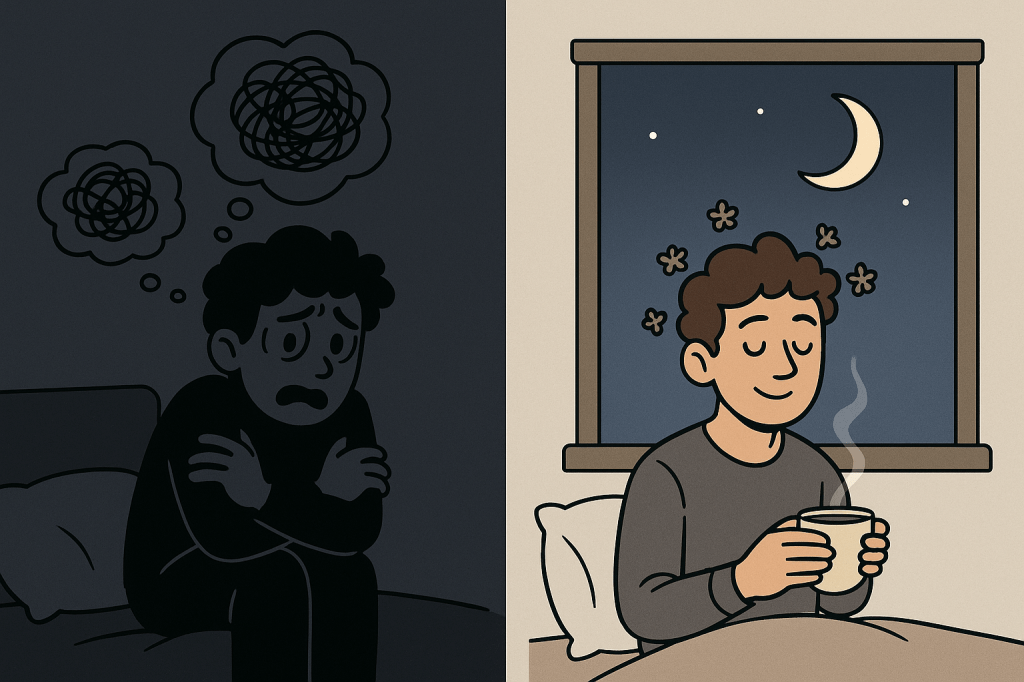
That loneliness didn’t feel like a quiet evening to rest. Instead, it created a voice inside me — a kind of invisible scare. I had sleepless nights and scary nights, but what exactly was I scared of? I couldn’t define it clearly.

Through my own reflection and reading, I understood that these were what psychologists sometimes call phantom threats. When our social support system breaks down, our brain starts scanning for danger, even if there isn’t any real external threat. It’s a leftover survival instinct from when being alone meant being vulnerable to wild animals or enemies. In modern life, this translates to vague fears, restlessness, or a feeling of being unsafe — even in the comfort of our own room.

Then, I got married. Suddenly, I had a partner, someone to share every small joy and every small fear with. That scary loneliness vanished. I didn’t feel that void anymore.

Fast forward to 2019–2025. Life had moved into another gear: kids, family commitments, work deadlines, responsibilities piling up. Ironically, there was no physical loneliness at all — I was constantly surrounded by people.

But deep inside, a new kind of loneliness crept in. This wasn’t the fear of being alone in an empty room; it was the exhaustion of never truly being alone with myself.

Every day felt like a marathon — waking up to attend to kids, squeezing in work calls, family discussions, endless errands. Even at night, when the world finally went quiet, my mind didn’t. It kept replaying unfinished tasks, small conflicts, worries about the kids, tomorrow’s to-do list.

I would close my eyes but feel half-awake, as if there was a hidden guard inside me who refused to let me fully rest. My dreams were crowded — sometimes about work, sometimes about family, sometimes random worries stitched together in confusing ways.

When I woke up, instead of feeling refreshed, I felt as if I had already lived an entire day in my mind. My body was stiff, my head heavy. It was like my brain never turned off, always on “alert mode,” scanning for the next responsibility.

There was no space for me. No silent cup of coffee alone. No lazy morning staring at the ceiling. No blank mental canvas. Just an endless wave of obligations crashing over me, one after another.

This was a loneliness that no one talks about — the loneliness inside a crowded life. You are surrounded by people, yet your inner self is starved for attention.

In June 2025, I moved to Chennai to focus on work, and for the first time in years, I got a lot of alone time. I was worried that the old fears would return, that those phantom threats would sneak back into my nights. But to my surprise, this loneliness felt completely different.

This time, it wasn’t scary. It was warm, healing. It felt like a solitude that I had long needed.

Now, instead of voices and scares, the silence felt like music. The quiet nights felt like gentle hugs from my own mind. I started enjoying small things again — watching the rain, making my own tea, sitting in silence without having to answer anyone.

I realized that this wasn’t loneliness; it was solitude — a conscious, chosen space to meet myself. It was no longer about being left out but about reconnecting inward.

Looking back, I realize loneliness and solitude are two sides of the same coin. One scares you when you don’t feel safe with yourself; the other heals you when you finally do.

As I write this today, I don’t feel the void I once did. Instead, I feel gratitude — for the noisy years, for the silent nights, and for the rare chance to meet my own mind in peace.

When Parenting Engulfs You: My Silent Struggle Raising Two Young Kids Alone


Finding joy, even in the hardest days.

When people see a smiling parent with a child on each arm, they often think of joy, completeness, and warmth. But behind that photo, there can be stories of exhaustion, frustration, and a kind of loneliness that’s hard to describe.

From the very beginning, even before our second child was born, there were challenges. My in-laws strongly believed that having a second child was a bad idea, and they convinced my wife the same. Every time there’s an argument between us now, this topic comes back: that she didn’t fully analyze the challenges ahead. It makes me angry because, in my heart, I always believed I didn’t want to raise a single pampered child. I wanted my first child to have a sibling, a lifelong companion. This decision was never just about me — it was about building a family with deeper bonds, even if it meant going through harder days.

From the day my second child was born, life changed completely. We had no support system. No parents or in-laws stepping in to help, no extended family to call on, no trusted house help to share the load. It was just us, and every day felt like a survival mission.

People often say, “it takes a village to raise a child.” With my first child, I had that village. My in-laws supported us, and those memories felt like heaven — a beautiful, light-filled chapter of parenting. But with my second child, that village was gone. I became everything: the caretaker, the cook, the cleaner, the comforter, the entertainer, the teacher. From sleepless nights to endless school preparations, every moment demanded my full energy and presence.

In the process, my professional life took a huge hit. I went into procrastination because of constant mind fog. Work deadlines felt heavier, focus slipped away, and important opportunities quietly passed me by. My business struggled, and while outsiders only saw the missed targets and failures, they didn’t see the mental battles and emotional exhaustion that led me there.

At home, the constant focus on the kids created a silent gap with my spouse. Conversations turned into pure logistics: who would handle which meltdown. The small, loving moments that kept our bond alive quietly faded, replaced by stress and quiet resentment.

Yet despite all the anxiety, frustration, and helplessness, I cherished every moment with my second child. Even in the chaos, I found joy. I built precious memories, laughed through exhaustion, and watched my child grow closely every single day. It truly felt like a heaven inside a hell — beautiful moments glowing in the middle of struggle and darkness.

With support, those years could have been even better, perhaps closer to the lightness I experienced with my first child. But despite everything, I wouldn’t trade those moments for anything.

Parenting is beautiful, but when done alone and without support, it can swallow you whole. If you’re going through this, I want you to know: you’re not alone. You deserve understanding, you deserve support, and you deserve to cherish those beautiful moments without the heavy weight of judgment.

When My World Shrunk to a Hospital Room: A Caregiver’s Silent Battle


Between 2012 and 2014, my entire world was confined to a hospital room. My father was in and out of coma during that time, and I practically lived in the hospital. Life outside those walls felt distant and almost unreal. Festivals came and went, and though friends called and offered support, I just couldn’t engage with them. I didn’t have the emotional space or words to share what I was really feeling.

I wasn’t just taking care of my father; I was battling intense anxiety, frustration, and helplessness every single day. I questioned everything from the doctors’ advice, the treatment decisions, my own ability to handle the situation. I felt like I was stuck in a loop, hoping for a sign of improvement, fearing the worst with every passing hour.

This is a state known as caregiver burnout, where your mind and body are pushed to the edge by constant stress and emotional weight. You run on autopilot, trying to stay strong for your loved one, while inside you feel like you’re drowning.

It took me a long time to process those years and find a sense of normalcy again. To learn that it was okay to step away for a moment, to accept help, and to acknowledge my own emotions without guilt.

If you’re in a similar situation, please remember: your feelings are valid. You’re not alone in your anxiety and helplessness. Take moments for yourself, reach out for support, and know that it’s okay to take care of yourself too.

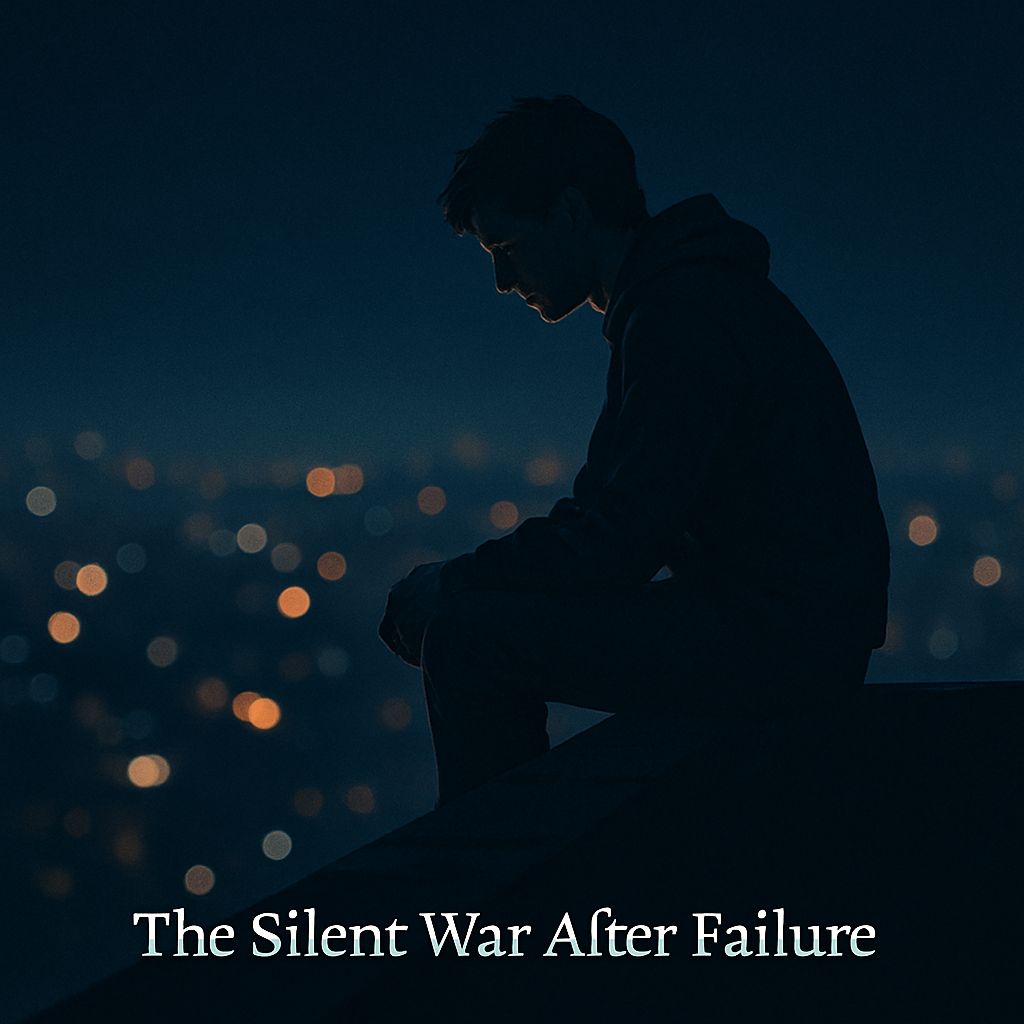
The Silent War After Failure


Sometimes the loudest battles are the ones no one sees.

I used to think failure was about numbers like losing money, shutting down a company, or missing targets. But real failure? It’s when you lose yourself.

After my own setback, I noticed something strange. It wasn’t just that I didn’t have work. It was that I couldn’t feel like working anymore. The spark that once lit me up like brainstorming at midnight, building teams, scaling products — it didn’t even create a flicker inside me.

I kept asking myself: Why can’t I just pick up something small and start? Why can’t I push through?

The truth hit me like a late-night punch: I had evolved. What excited me before simply didn’t feel meaningful anymore.

When you’ve built something big, your mind builds an invisible yardstick. You unconsciously measure every new idea against your past success. You remember the energy of a big team, the rush of growth charts, the adrenaline of new hires and expansions.

Now, when you try to start something small — a side gig, a consulting call, a tiny digital product — it feels like throwing pebbles after you’ve once launched rockets. You feel silly, almost embarrassed to call it “work.”

But it doesn’t stop there. Your entire identity gets woven into your career. Your “I am” statement was always followed by what you built or led. When that structure crumbles, it cracks you right at the core. You’re not just jobless; you feel nameless.

The worst part? You can’t even explain it to anyone. Friends and family might say, “Do something small! Just start anywhere!” They mean well. But they don’t realize you’re battling an invisible ghost inside — a ghost that constantly whispers, “You’re not enough anymore.”

I lived this. Every single hour felt heavy, every day felt like pushing through fog. I knew I should act, but the energy just wasn’t there.

I’m still figuring it out. I don’t have a grand conclusion yet. Maybe one day I will.

Sometimes the hardest comeback isn’t in the world outside — it’s in the quiet corner of your mind where your old self still lives.