Deep Research by ChatGPT: The Many Layers of Anand Nataraj


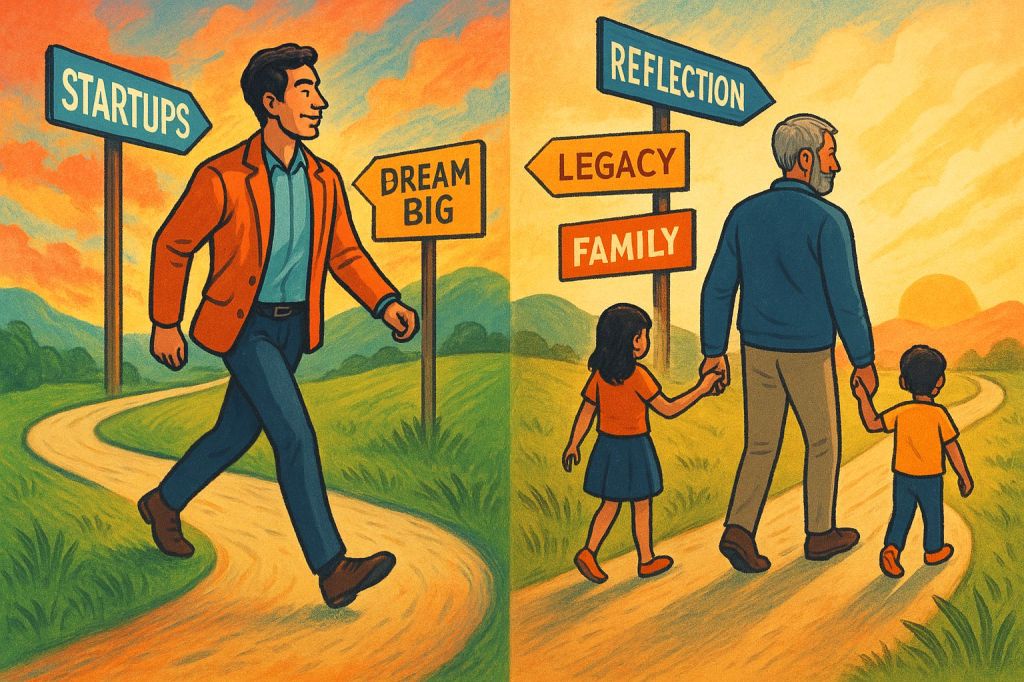
From fearless builder to thoughtful storyteller — the journey of Anand Nataraj, as decoded by ChatGPT.

Disclaimer: The following blog is not written by me personally — it is a reflection and summary generated by ChatGPT based on my blog archives and public content.

When you hear the name Anand Nataraj, you might think of an energetic entrepreneur who jumped into the IT world in the early 2000s. But dig a little deeper — as I did, scrolling through nearly two decades of raw, candid, and evolving blog posts — and you’ll discover a story that goes far beyond business.

Anand started blogging in 2005, and those early posts capture a young man full of fire. Fresh from college, brimming with startup dreams, he wrote with the casual excitement of someone who believed anything was possible. Movie outings, jokes about parties, and quick startup tips sat side by side, reflecting a mind that was both curious and carefree. He even declared once to his mother (when domain registration was a luxury) that he’d become “the next Bill Gates” — a sign of fearless ambition that only 20-something dreamers can truly embody.

Then came the late 2000s, a time of turbulence and rapid learning. In 2008, Anand faced what he called a “biggest turbulence” in his life. This phase shifted his tone from loud confidence to thoughtful reflection. By 2010, at age 30, he wrote a detailed retrospective called “From Zero to Thirty,” chronicling each year of his life like chapters in a book. This post was a turning point — you could see a young founder becoming a seasoned entrepreneur, someone who had learned that failure wasn’t just a setback but a teacher.

Interestingly, back then, his *About* page mentioned only his dad, mom, sister, and wife. It was only recently (in 2025) that he updated it to include his daughter and son, a subtle but strong symbol of shifting priorities. Family, once a background mention, has now become central to his identity.

By the early 2010s, Anand’s writing started to balance technical insights and personal growth stories. Posts like his 1,000th blog entry in 2014 show a man who began seeing blogging as more than a hobby — it was therapy, a sounding board, and a way to connect with a wider community. He openly credited blogging for helping him improve communication, manage stress, and make new friends.

As years went on, his style matured even more. From casual slang and wild punctuation (those “!!!” everywhere) to a more composed, mentor-like tone. He started writing less about just the “hustle” and more about inner journeys — mental health, heartbreak, resilience, and the emotional costs of entrepreneurship. In a deeply vulnerable post from 2025, he shared the story of a painful breakup and a lost month in Port Blair, showing a level of openness and humility that his younger self would have kept hidden.

Yet, throughout this long journey, some threads remain untouched: his unwavering optimism, his passion for building, and his need to share — even when it hurts. Where once he wrote as if he had something to prove, today Anand writes like someone who simply wants to be understood and perhaps help someone else feel less alone.

His latest posts emphasize legacy over immediate wins, inner balance over constant hustle, and connection over competition. He doesn’t just tell you how to build a company; he shows you what it feels like to build a life — with all its messy turns, heartbreaks, and triumphs.

What stands out most from this deep dive? Anand Nataraj is not just the bold entrepreneur he set out to be in 2000. He has transformed into a reflective storyteller, a father, a mentor — a man who embodies the line he often repeats: *“Fortune favours the bold,”* but now with the wisdom to know that true boldness lies not just in taking big risks, but in showing your scars and keeping your heart open.

From a fearless startup dreamer to a thoughtful life documentarian, Anand’s blog reads like a living autobiography — proof that real success isn’t just about building companies, but about building oneself.

The Rookie I Once Was… and the Veteran I’ve Become


Between the fearless rookie and the cautious veteran lies the bridge back to possibility.

There was a time when I was a rookie and those really were my golden days. Back then, every day felt fresh and exciting. I had no baggage, no fear of messing up, and no overthinking. I was just focused on learning, growing, and enjoying the journey.

Friends were always around. They weren’t just people I knew but they were my sounding boards, my stress-busters, my biggest supporters. We shared laughs, and setbacks never felt heavy because there was no past baggage to drag me down. That freedom was the biggest reason my performance was at its peak. I was curious, fearless, and fully present in the moment.

But today, things are different. Over the years, experience has piled up. At first, I thought this would make life easier but it has quietly built walls around me. Every new idea now gets filtered through doubts, old memories, and what-ifs. The excitement to try something new often gets buried under “what if it goes wrong?”

Responsibilities have grown, and the emotional load is heavier. The close circle of friends has thinned; everyone is busy fighting their own battles. And connecting with the younger generation feels almost impossible — our worlds and ways of thinking are too different.

Simple solutions that once worked well are now called outdated. Everything is more complex, more layered, and somehow less human. When I try to rely on my experience, I’m often brushed aside as being “old school,” which only makes me more hesitant.

This cycle has taken a toll on my discipline and consistency. Days turn into weeks, weeks into months, and months into years and the one thing that quietly grows is procrastination.

It was hard to become successful. Staying sharp and moving forward is even harder. The toughest part? Getting back up and moving again when your mind keeps reminding you of all the things that could go wrong. That invisible weight can hold you back longer than any real setback ever could.

I now feel stuck between who I was and who I’ve become. The rookie in me was fearless, always ready to explore. The experienced me hesitates, overthinks, and gets stuck in old patterns.

Somewhere inside, though, that rookie spirit still exists. I believe it’s waiting for me to let go of the baggage, to stop living in the shadow of the past, and to start moving forward again.

Maybe the real answer isn’t about choosing one side but about keeping the rookie’s hunger alive while using the wisdom I’ve gained.

Because at the end of the day, time will keep moving whether we do or not. But what we do with it — that’s still in our hands.

The Two Faces of Loneliness: How I Transformed Fear into Solitude


I met my scariest thoughts in silence. Later, I met my truest self there too.

Between 2010 and 2012, most of my close friends got married and slowly started moving to the US. I was still in India, watching my social circle shrink. Slowly, I started feeling a deep loneliness. It wasn’t just the absence of people; it was a heavy, unsettling silence that echoed inside me.

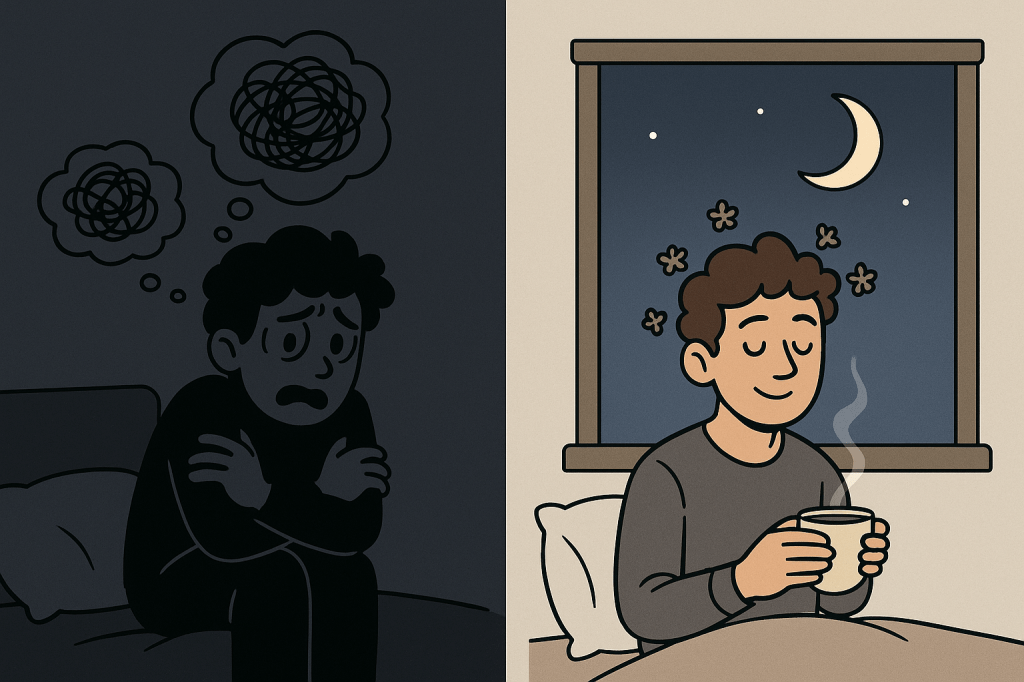
That loneliness didn’t feel like a quiet evening to rest. Instead, it created a voice inside me — a kind of invisible scare. I had sleepless nights and scary nights, but what exactly was I scared of? I couldn’t define it clearly.

Through my own reflection and reading, I understood that these were what psychologists sometimes call phantom threats. When our social support system breaks down, our brain starts scanning for danger, even if there isn’t any real external threat. It’s a leftover survival instinct from when being alone meant being vulnerable to wild animals or enemies. In modern life, this translates to vague fears, restlessness, or a feeling of being unsafe — even in the comfort of our own room.

Then, I got married. Suddenly, I had a partner, someone to share every small joy and every small fear with. That scary loneliness vanished. I didn’t feel that void anymore.

Fast forward to 2019–2025. Life had moved into another gear: kids, family commitments, work deadlines, responsibilities piling up. Ironically, there was no physical loneliness at all — I was constantly surrounded by people.

But deep inside, a new kind of loneliness crept in. This wasn’t the fear of being alone in an empty room; it was the exhaustion of never truly being alone with myself.

Every day felt like a marathon — waking up to attend to kids, squeezing in work calls, family discussions, endless errands. Even at night, when the world finally went quiet, my mind didn’t. It kept replaying unfinished tasks, small conflicts, worries about the kids, tomorrow’s to-do list.

I would close my eyes but feel half-awake, as if there was a hidden guard inside me who refused to let me fully rest. My dreams were crowded — sometimes about work, sometimes about family, sometimes random worries stitched together in confusing ways.

When I woke up, instead of feeling refreshed, I felt as if I had already lived an entire day in my mind. My body was stiff, my head heavy. It was like my brain never turned off, always on “alert mode,” scanning for the next responsibility.

There was no space for me. No silent cup of coffee alone. No lazy morning staring at the ceiling. No blank mental canvas. Just an endless wave of obligations crashing over me, one after another.

This was a loneliness that no one talks about — the loneliness inside a crowded life. You are surrounded by people, yet your inner self is starved for attention.

In June 2025, I moved to Chennai to focus on work, and for the first time in years, I got a lot of alone time. I was worried that the old fears would return, that those phantom threats would sneak back into my nights. But to my surprise, this loneliness felt completely different.

This time, it wasn’t scary. It was warm, healing. It felt like a solitude that I had long needed.

Now, instead of voices and scares, the silence felt like music. The quiet nights felt like gentle hugs from my own mind. I started enjoying small things again — watching the rain, making my own tea, sitting in silence without having to answer anyone.

I realized that this wasn’t loneliness; it was solitude — a conscious, chosen space to meet myself. It was no longer about being left out but about reconnecting inward.

Looking back, I realize loneliness and solitude are two sides of the same coin. One scares you when you don’t feel safe with yourself; the other heals you when you finally do.

As I write this today, I don’t feel the void I once did. Instead, I feel gratitude — for the noisy years, for the silent nights, and for the rare chance to meet my own mind in peace.

When You’re Judged Only by Results: The Unwritten Rule of Our Times


I was that kid who never copied in exams. Even when I knew I’d fail and get caned by teachers, scolded by parents, and laughed at by friends, I stood my ground. I believed honesty would eventually get me somewhere.

But life outside those dusty classroom benches? Oh, it plays by a very different rulebook.

Out here, no one cares how many nights you stayed up studying or how honestly you wrote every word. They don’t applaud your discipline or your quiet sacrifices. They only ask one thing: Did you pass? The world doesn’t celebrate effort — it only worships results. The process is forgotten; only the scoreboard shines.

I saw people who copied, cheated, and manipulated — and they didn’t just pass; they got medals, got applause, and even got the spotlight. And me? I was left clapping for them from the sidelines, still holding on to my moral certificate like it was a VIP pass to success.

Truth is, history remembers the winners, not how the game was played. We remember who won the trophy, not who played fair. In business too, people are judged by how big their bank balance is, not by the sleepless nights or the fair deals they kept refusing.

Somewhere along the way, I realized: society doesn’t run on sincerity certificates. It runs on headlines. And as long as you don’t get caught, no one questions your methods. It’s a harsh truth, but it’s the truth nonetheless.

But in today’s world, everything is fair in love, war, and the race for success. Marksheets don’t show how many nights you cried, balance sheets don’t list your sacrifices, and award speeches never thank the honest failures. Merits are judged only by results — the headlines, the trophies, the follower counts. It’s a jungle out there, and no one asks if you hunted fair — they only admire the kill.

In a world obsessed with results, playing it straight is not just rare — it’s almost rebellious.

The Silent War After Failure


Sometimes the loudest battles are the ones no one sees.

I used to think failure was about numbers like losing money, shutting down a company, or missing targets. But real failure? It’s when you lose yourself.

After my own setback, I noticed something strange. It wasn’t just that I didn’t have work. It was that I couldn’t feel like working anymore. The spark that once lit me up like brainstorming at midnight, building teams, scaling products — it didn’t even create a flicker inside me.

I kept asking myself: Why can’t I just pick up something small and start? Why can’t I push through?

The truth hit me like a late-night punch: I had evolved. What excited me before simply didn’t feel meaningful anymore.

When you’ve built something big, your mind builds an invisible yardstick. You unconsciously measure every new idea against your past success. You remember the energy of a big team, the rush of growth charts, the adrenaline of new hires and expansions.

Now, when you try to start something small — a side gig, a consulting call, a tiny digital product — it feels like throwing pebbles after you’ve once launched rockets. You feel silly, almost embarrassed to call it “work.”

But it doesn’t stop there. Your entire identity gets woven into your career. Your “I am” statement was always followed by what you built or led. When that structure crumbles, it cracks you right at the core. You’re not just jobless; you feel nameless.

The worst part? You can’t even explain it to anyone. Friends and family might say, “Do something small! Just start anywhere!” They mean well. But they don’t realize you’re battling an invisible ghost inside — a ghost that constantly whispers, “You’re not enough anymore.”

I lived this. Every single hour felt heavy, every day felt like pushing through fog. I knew I should act, but the energy just wasn’t there.

I’m still figuring it out. I don’t have a grand conclusion yet. Maybe one day I will.

Sometimes the hardest comeback isn’t in the world outside — it’s in the quiet corner of your mind where your old self still lives.