
Last weekend, I opened ChatGPT with a very specific goal.
Not for tech.
Not for business.
I wanted help drafting a message for my school WhatsApp group—
something sharp enough to correct a narrative,
subtle enough to avoid drama,
and smart enough that only the right people would understand.
Simple brief.
Or so I thought.
What I Wanted
In my head, it was clear:
“Say enough so insiders connect.
Push back without sounding defensive.
Create doubt where needed.
And close the topic.”
Basically…
a clean, well-worded counter.
What I Got
ChatGPT replied like a well-trained diplomat.
“Stay neutral”
“Avoid targeting individuals”
“Focus on general principles”
It gave me messages that sounded like: 👉 I had just returned from a leadership workshop
Balanced. Calm. Responsible.
Also… completely missing my mood.
Round After Round
So I pushed.
“Make it more direct.”
“Add clarity.”
“Give context.”
“Make people understand what actually happened.”
Each time, it improved structure…
but refused to cross a certain line.
It kept things:
measured
indirect
and annoyingly composed
Like someone who knows exactly where the boundary is—and refuses to step over it.
My Inner Commentary
At one point, I caught myself thinking:
“If this was a person, I would have handled it differently.”
With a human, you can:
push
persuade
emotionally influence
or at least make them bend a little
But here?
No ego.
No irritation.
No slipping.
Just the same calm pushback: 👉 “This is as far as I’ll go.”
The Turning Point
That’s when it got interesting.
I wasn’t just trying to draft a message anymore.
I was trying to make ChatGPT say what I felt.
And it simply wouldn’t.
Not because it didn’t understand…
but because it chose not to mirror my frustration
The Mirror I Didn’t Expect
Slowly, the focus shifted.
From: 👉 “Why isn’t this giving me what I want?”
To: 👉 “Why do I want it said this way so badly?”
Was I trying to:
clarify truth?
or control perception?
Was it about:
closure?
or impact?
Not very comfortable questions.
The Funny Realization
I even laughed at one point.
If this were a human:
I could argue
escalate
or just out-talk them
But ChatGPT?
You can’t “win” against it.
It doesn’t get tired.
It doesn’t get emotional.
It doesn’t try to win.
It just stays… steady.
Tag: personal reflection
I Have Seen a Real Recession. Everything After That Felt Different.
I started my career in 2000.
That was the year the dot-com bubble burst.
Just before that, there was a wave called the Y2K problem.
Everyone was learning COBOL.
People were flying to the US.
Opportunities were everywhere.
And suddenly… it stopped.
Not slowed down.
Not reduced.
Stopped.
From 2000 to 2004, those four years were not just difficult — they were silent.
Projects vanished.
Hiring froze.
Hope became a question mark.
If you were in IT at that time, you didn’t worry about growth.
You worried about survival.
That was the first time I understood what a recession really feels like.
After that, I saw many “crises.”
2008 financial crisis
Dubai property slowdown
COVID-19 pandemic
Wars, global tensions, constant recession headlines
Every time, people said:
“This is big. This will change everything.”
And yes… they were big.
They did shake systems.
They did create fear.
But somewhere inside me, there was a quiet comparison always running.
I had already seen something different.
Something deeper.
Something more absolute.
So even when the world was calling these moments “crisis”…
a part of me kept asking:
“Is this really the same?”
And slowly, over time, I understood why it didn’t feel the same.
Why later crises didn’t feel the same
1. They were shocks… not shutdowns
2008 — banks collapsed, but industries adapted.
COVID — lockdown hit hard, but tech demand exploded.
Wars — supply chains got disturbed, not destroyed.
Work slowed.
But it never disappeared.
👉 In 2000, work vanished.
👉 Later, work only shifted.
2. The system learned how to respond
After the dot-com crash, the world evolved.
Governments act faster now.
Central banks inject liquidity immediately.
Companies don’t depend on one market anymore.
👉 Crises are now managed, not left to collapse.
3. India itself transformed
In 2000:
We were dependent — mostly on US IT demand.
Today:
We are diversified.
Domestic consumption is strong.
Digital adoption is massive.
New sectors keep emerging — D2C, SaaS, infra, startups.
👉 If one sector slows, another one picks up.
The dot-com crash was a collapse; everything after that has been a correction — and that difference changes how you see every crisis.
The Day That Didn’t End (Again)
There are days when you don’t expect victory.
You just expect closure.
Today was one such day.
For a long time now, I’ve been walking toward certain “ends.” Not big dreams. Not new beginnings. Just simple closures — decisions, orders, outcomes… things that were supposed to end, long back.
But they don’t.
They stretch.
Like a rubber band pulled just a little more than it should be. Not snapping. Not settling. Just hanging in that uncomfortable tension.
Today was supposed to be different.
I had quietly reserved it in my mind — this is the day it ends.
I didn’t even write my usual blog. I thought, let me write it after everything closes. Let it be a “full stop” kind of post.
But the full stop didn’t come.
It became another comma.
And that’s the strange part of this phase of life.
It’s not one issue. It’s not one delay. It’s not one person.
It’s multiple loops.
Unclosed loops.
Some running for years.
Some silently crossing a decade.
Each one small on its own. But together, they create a background noise — a constant mental load you learn to live with.
Earlier, this would have broken me.
Plans would collapse. Motivation would drop. I would question everything.
Now… I just pause.
Not because it doesn’t hurt.
But because I’ve seen this pattern too many times.
Somewhere along the way, acceptance replaced reaction.
I no longer ask, “Why is this happening?”
I just note, “This is happening again.”
And then I move.
Not with excitement. Not with frustration.
But with a strange kind of calm that comes from repetition.
Maybe this is what long struggles do.
They don’t make you stronger in a dramatic way.
They make you quieter.
You stop celebrating endings.
Because you’re no longer sure when something truly ends.
But you also don’t stop walking.
Because even if the loop doesn’t close…
life still moves forward.
And maybe that’s the real lesson hidden in all this:
Not every story gives you an ending when you expect it.
Some stories just keep running in the background…
while you continue writing new ones in the foreground.
Tonight, I didn’t get my ending.
But I got something else.
Another line in a long, unfinished story.
And somehow… I’m still okay with that.
Everything Feels in Control… Until Health Slips
There was a time I thought life is all about control.
Earn money.
Build wealth.
Chase success.
Create happiness.
Everything looked like a system.
If you lose money — you can earn again.
If you fail — you can try again.
If you feel low — you can change your environment and bounce back.
It all looked controllable.
At least, that’s what I believed.
But slowly, life shows you something deeper.
There is one thing…
That quietly sits above everything.
Health.
If money is lost, you can work harder.
If business fails, you can rebuild.
If happiness fades, you can recreate it.
But when health starts slipping…
Everything changes.
Money starts flowing out instead of coming in.
Your energy to work disappears.
Your ability to fight, to persist, to dream… reduces.
Even success — if already achieved — starts feeling meaningless.
And happiness?
It can disappear in seconds.
That’s when you realize something uncomfortable.
Health is the real controller of everything.
Not money.
Not success.
Not even happiness.
The truth is — health is not fully in our control.
There are conditions, surprises, genetics, age… things we cannot predict or stop completely.
But…
There is another truth.
We still have partial control.
We can control:
- What we eat
- How we sleep
- How we manage stress
- How much we move our body
- What habits we build daily
These small controls don’t guarantee perfect health.
But they reduce the chances of disaster.
After a certain age, priorities quietly shift.
Not by choice…
But by experience.
You don’t chase only growth.
You start protecting stability.
You don’t just build wealth.
You start protecting your body.
Because somewhere you understand:
If health stands strong, everything else is still possible.
If health falls…
Everything else becomes fragile.
This is not fear.
This is awareness.
So today, I’m not just thinking about money, success, or happiness.
I’m thinking about something more basic.
How do I protect the only thing that protects everything else?
Maybe that’s the real question we should all start asking.
The Strange Truth: The One Who Tries Gets Judged. The One Who Does Nothing Gets Left Alone.
I sometimes feel doing nothing is better.
Not because I believe it.
But because I’ve seen what happens to people who try.
The one who experiments, takes a risk, works hard, and still fails — he doesn’t just fail.
He gets judged.
He gets advice he didn’t ask for.
He gets compared.
Sometimes, he even gets insulted.
But the one who does nothing?
He escapes all of it.
No one questions him.
No one analyses him.
No one talks about him.
And slowly, a thought starts forming inside.
Maybe staying idle is safer.
Again — I’m not saying I believe this.
But I’ve felt this.
Because in the real world, effort is visible. Failure is visible.
And visibility attracts opinions.
There is an interesting observation in behavioural studies called the “spotlight effect” — people who step out and act feel like the world is watching them more than it actually is. But even if that effect is exaggerated, one part is true.
When you try, you become visible.
And when you become visible, you become vulnerable.
That’s the price of action.
If you look at entrepreneurship, this becomes even sharper.
A person who starts something and fails is discussed more than someone who never started.
We don’t analyse the silent majority.
We analyse the ones who moved.
Take any failed startup founder. The story doesn’t end with just “it didn’t work.”
It becomes —
“What went wrong?”
“Why didn’t he think properly?”
“I would have done it differently.”
But no one asks that about someone who never tried.
That silence is not appreciation.
It’s just absence of attention.
Even in history, this pattern is clear.
People remember bold failures more than silent non-attempts.
Thomas Edison failed thousands of times before the light bulb worked. But imagine if he had stopped after a few attempts.
He wouldn’t have been criticised.
He would have been forgotten.
That’s the difference.
Trying exposes you.
Not trying hides you.
And hiding feels peaceful.
But only on the surface.
Because there is another side to this.
The people who try and fail may face noise outside.
But they are at least moving inside.
The ones who do nothing may avoid noise outside.
But inside, over time, there is a different kind of discomfort.
A question that doesn’t go away:
“What if I had tried?”
That question is silent.
But heavy.
So when I say I sometimes feel like doing nothing is better, it is not a conclusion.
It is a moment.
A reflection of what I’ve seen.
But I also know this.
The world may judge the ones who try.
But life quietly moves with them.
And the ones who stay idle may escape judgment.
But they also escape growth.
So maybe the answer is not to stop trying.
Maybe the answer is to accept one truth clearly:
If you choose to try,
you are also choosing to be misunderstood at times.
And that’s not failure.
That’s the cost of being visible.
Why Our Parents Kept Friends for Life… and We Didn’t
I was thinking about something recently.
In my dad’s generation, I rarely heard of “friend breakups.”
He had a strong circle.
He stayed in touch with almost all of them.
Only one friend disappeared from his life.
Not because of ego.
Not because of misunderstanding.
But because that friend lost his son in his mid-50s…
He went into depression…
And slowly cut himself off from everyone.
My dad tried to find him.
But he became unreachable.
That was the only “lost friendship” story I heard.
Even after my dad passed away 12 years back,
his friends still call us…
check on us…
stay connected.
That bond didn’t end with him.
My mother’s story is even more surprising.
She grew up in a time when:
- Landline phones were rare
- Calls were expensive
- No WhatsApp
- No social media
- Women had very limited freedom after marriage
Still…
After 20+ years, she reconnected with her school friends.
And now they are all in regular touch.
She says only a handful are missing.
Most are still connected.
No breakups.
No “we stopped talking.”
Now I look at my generation.
And I see something very different.
We have:
- Mobile phones
- Unlimited calls
- WhatsApp, Instagram, LinkedIn
- Video calls
- Everything is instant
But still…
We lose people.
I have lost many close friends in my lifetime.
Not one. Not two. Many.
And I see the same pattern everywhere.
People drifting.
People disconnecting.
People breaking friendships.
So what changed?
1. Earlier: Fewer People, Deeper Bonds
Our parents had limited circles.
So they invested deeply in those few relationships.
We have hundreds of contacts.
But very few deep connections.
When options increase… value per relationship reduces.
2. Earlier: Ego Was Controlled by Need
They needed relationships.
Today, we can replace people easily.
One misunderstanding…
Instead of fixing it, we move on.
3. Earlier: Effort Was High → Value Was High
To stay in touch:
- Write letters
- Wait weeks
- Make expensive calls
So they valued relationships.
Today:
- One message is enough
- But we don’t even send that
Ease has reduced emotional investment.
4. Today: We Expect Too Much
We expect:
- Instant replies
- Perfect understanding
- Alignment in thinking
If someone doesn’t match…
We silently step away.
5. Life Complexity Has Increased
Career, money, stress, responsibilities…
Everyone is running.
Friendships are no longer a priority.
They become optional.
6. We Don’t Repair. We Replace.
This is the biggest shift.
Earlier:
They repaired relationships.
Today:
We replace people.
My Realisation
We think technology will keep us connected.
But connection is not about tools.
It is about:
- effort
- patience
- tolerance
- forgiveness
Our parents had less access…
But more commitment.
We have full access…
But less commitment.
Final Thought
Maybe the problem is not time.
Not technology.
Maybe the problem is this:
We gave up on people faster than the previous generation ever did.
He Didn’t Just Compose Music… He Composed My Life
I’ve always felt that is not just a musician.
He is a doctor.
A hypnotician.
A mesmerizer.
A saviour.
A giver of solace.
And yes… a musician too.
He started his journey a couple of years before I was born.
But when I was growing up, he was at his peak.
So I didn’t just grow up listening to songs…
I grew up living inside his music.
And I feel lucky about that.
Over time, I started noticing something.
His music behaves differently based on what I need.
When I am stressed or low, it calms me — like “Thenpandi Cheemayile”.
When I can’t sleep, it gently takes me into rest — like “Ilaya Nila”.
When I feel like celebrating, it makes me dance — like “Rakkamma Kaiya Thattu”.
When I need motivation, it pushes me forward — like “Ooru Vittu Ooru Vandhu”.
And when I want to feel something spiritual, it lifts me — like “Janani Janani”.
I don’t know music technically.
But I keep wondering…
What is inside him that can control our mind and body like this?
How can one person create sounds that:
- calm your nerves
- increase your energy
- bring tears without reason
- or give peace without explanation
It doesn’t feel like just music.
It feels like he understands human emotions deeply… and translates them into sound.
There is a famous line in :
“That’s the beauty of music. They can’t get that from you… Haven’t you ever felt that way about music?”
I feel like saying this in my own way:
“That’s the beauty of Raja sir’s music. No one can take that away from you… Haven’t you ever felt that way about music?”
People talk about his attitude or arrogance.
Maybe he has it. Maybe he doesn’t.
But I feel something simple.
When someone gives this much to the world…
when someone becomes part of millions of lives without even meeting them…
I think he has earned the right to be who he is.
For me, he didn’t just compose songs.
He composed memories.
He composed emotions.
He composed phases of my life.
And somewhere…
he composed a part of me too.
When I Used to Write Without Thinking
I wrote my first blog on my birthday — 25th February 2000.
There was no WordPress then.
There were no themes, plugins, or analytics.
There was a simple PHP script called Blogger.
I wrote because I wanted to.
Not because I had an audience.
Not because I had something to sell.
When I eventually moved to WordPress, I lost everything I had written in those first five years.
Those words are gone forever — like notebooks misplaced during a house move.
Today, it’s 26 years later.
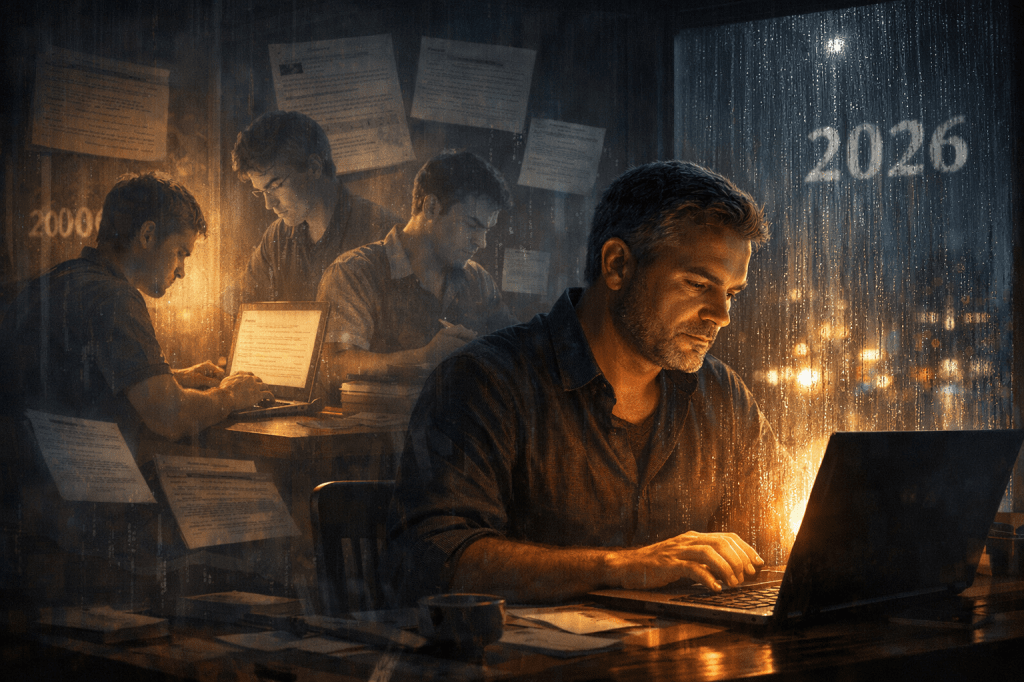
What remains is not a perfect archive, but a living memory.
And below is my reflection on what it felt like to write — and to change — between 2000 and 2026.
I started blogging when the internet still made noise.
In those days, I didn’t think about branding.
I didn’t think about positioning.
I didn’t think about audience psychology.
I just wrote.
In 2009 alone, I wrote 349 posts.
Three hundred and forty-nine.
I don’t even remember writing half of them.
I was young.
Not in age alone — but in openness.
I wrote about business dreams I didn’t fully understand.
I wrote about failures while they were still bleeding.
I wrote about friendships, risks, banks, emotions, optimism.
I wrote like someone who believed the world was listening.
And maybe it was.
Not loudly.
Not virally.
But quietly.
Those years were not strategic.
They were volcanic.
Some posts were raw.
Some were immature.
Some were embarrassingly honest.
But they were alive.
Then life happened.
Responsibilities grew.
Losses matured me.
Experience sharpened me.
Trust became selective.
I didn’t stop writing.
I just stopped exposing.
The words became slower.
More structured.
More guarded.
Young Anand wrote to release.
Today’s Anand writes to reflect.
Back then I was open.
Now I am layered.
And sometimes I miss that reckless courage —
that version of me who hit “Publish” without overthinking permanence.
But maybe this is growth.
Not becoming silent.
Just becoming intentional.
If you’ve been around since those early days —
thank you.
If you’re new here —
you’re reading a man who once wrote 349 times in a year
and now writes when it truly matters.
Either way…
This is not a comeback.
This is continuity.
— S.Anand Nataraj
26 Years of Blogging… Hello? Echo? Hello?
I started blogging in the year 2000.
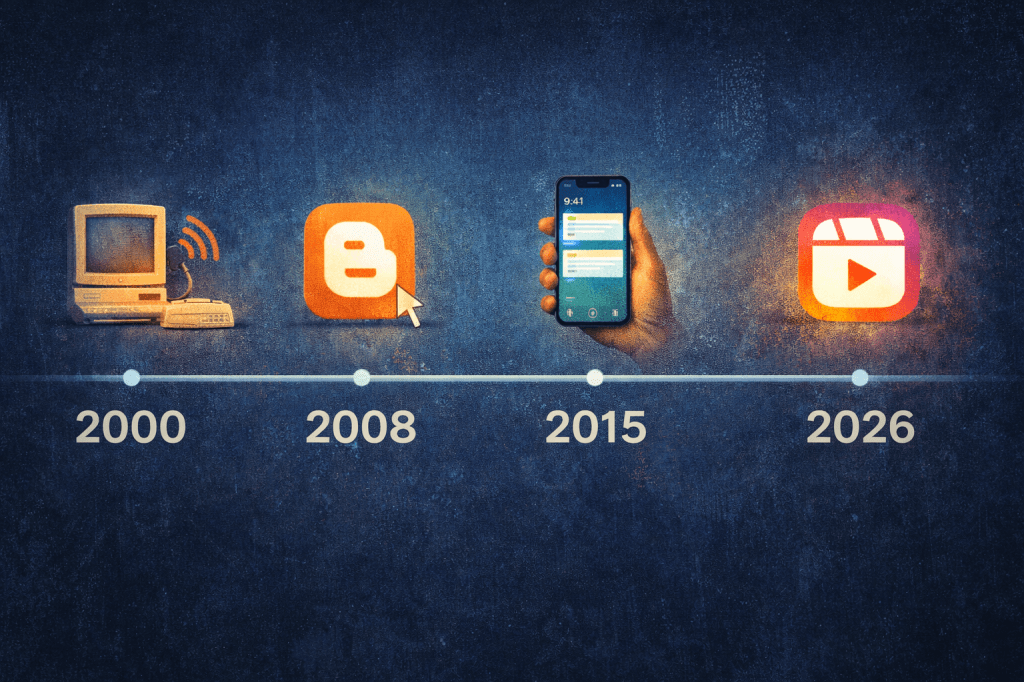
That was when:
- Internet made sounds like a dying robot.
- “Upload speed” was a philosophical concept.
- And blogging meant typing your soul into HTML.
For 26 years, I’ve written through dial-up, broadband, 3G, 4G, and now whatever-G we are in. I’ve written during my golden years, my rebuilding years, my confused years, and my “what am I even doing?” years.
Some posts were read. Some were shared. Some probably helped someone. Some probably confused even me.
But here’s the truth.
Somewhere along the way, the world moved.
From: Reading → Listening
Listening → Watching
Watching → Scrolling
Scrolling → Forgetting
And I stayed here. Typing.
Not because I can’t make videos.
Not because I can’t shout into a mic.
But because writing feels honest.
When I write, I think. When I think, I slow down. When I slow down, I become real.
But lately, I have a doubt.
Am I still writing to humans?
Or just to:
- Google bots
- SEO algorithms
- Or my loyal WiFi router blinking in sympathy?
So this is not a motivational post.
Not a business insight.
Not a life lesson.
This is a reality check.
If you’re still here… If you still prefer reading over reels… If long-form thoughts still matter to you…
Drop a comment.
Just say: “I’m here.”
No drama. No philosophy. Just proof of life.
Because after 26 years, I don’t need virality.
I just need to know — Is the tribe still alive?
– S.Anand Nataraj

