I’ve seen this time and again — in business, in relationships, and especially in entrepreneurship:
People judge outcomes. Not journeys.
Success? You’re celebrated. Failure? You’re forgotten. Still trying? You’re questioned.
Why is it this way?
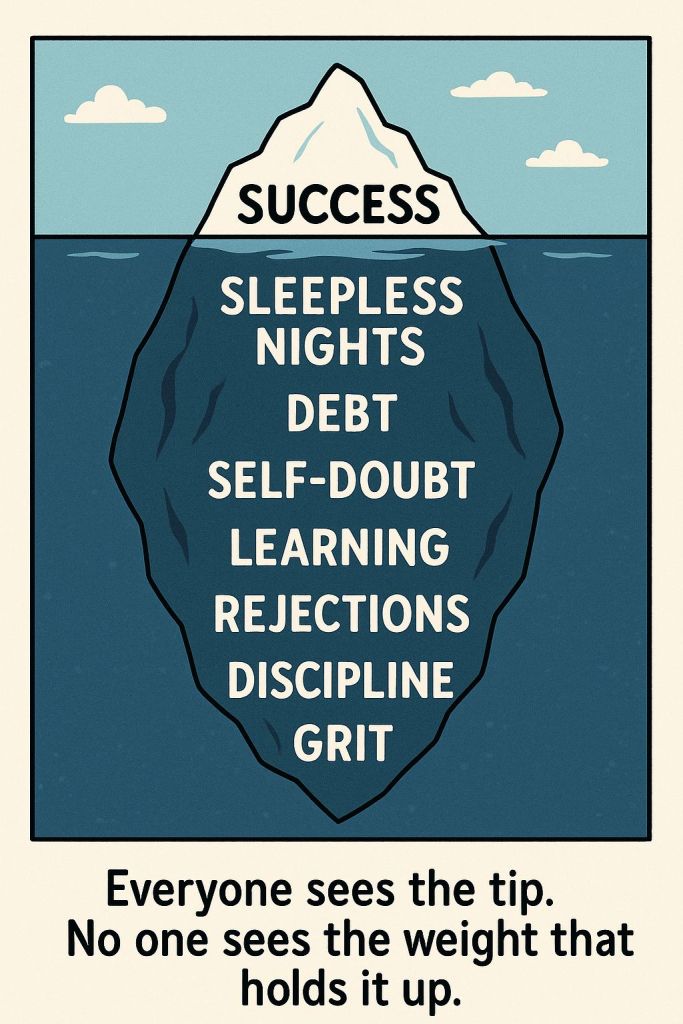
Because outcomes are visible, journeys are not.
Nobody sees the 3 a.m. self-doubt. The loan EMIs. The silent sacrifices. They only see whether you “made it” — or didn’t.
Society has become obsessed with results. We’ve built a culture where IPOs trend, but unpaid dues don’t. Where LinkedIn posts shine, but emotional breakdowns stay hidden.
The cost of this mindset for entrepreneurs?
1.)Emotional burnout
You start believing you’re only as good as your last “win.” The effort, grit, and growth mean nothing if the scoreboard shows zero.
2.)Judgment from close ones
The toughest hits often come not from strangers, but from family and friends:
“Still chasing your dream?” “When will you settle down?” “Why not take up something stable?”
Their concern is real, but their understanding is rare.
3.)Fear of failure
You start making safe bets. You drop ideas too soon. You avoid risks just to avoid ridicule.
4.)Validation over vision
You chase vanity metrics. You post curated wins. You start performing entrepreneurship instead of living it.
But here’s the truth no one talks about:
The journey builds you, whether or not the startup succeeds.
Failure isn’t the opposite of success — it’s a phase of it.
Your worth isn’t tied to revenue charts. It’s tied to resilience.
Let’s change the narrative:
Instead of asking:
“What’s your valuation?” Let’s ask: “What have you learned?” “What’s keeping you going?” “How can I help?”
Because some journeys deserve standing ovations — even without a trophy.
From fearless builder to thoughtful storyteller — the journey of Anand Nataraj, as decoded by ChatGPT.
Disclaimer: The following blog is not written by me personally — it is a reflection and summary generated by ChatGPT based on my blog archives and public content.
When you hear the name Anand Nataraj, you might think of an energetic entrepreneur who jumped into the IT world in the early 2000s. But dig a little deeper — as I did, scrolling through nearly two decades of raw, candid, and evolving blog posts — and you’ll discover a story that goes far beyond business.
Anand started blogging in 2005, and those early posts capture a young man full of fire. Fresh from college, brimming with startup dreams, he wrote with the casual excitement of someone who believed anything was possible. Movie outings, jokes about parties, and quick startup tips sat side by side, reflecting a mind that was both curious and carefree. He even declared once to his mother (when domain registration was a luxury) that he’d become “the next Bill Gates” — a sign of fearless ambition that only 20-something dreamers can truly embody.
Then came the late 2000s, a time of turbulence and rapid learning. In 2008, Anand faced what he called a “biggest turbulence” in his life. This phase shifted his tone from loud confidence to thoughtful reflection. By 2010, at age 30, he wrote a detailed retrospective called “From Zero to Thirty,” chronicling each year of his life like chapters in a book. This post was a turning point — you could see a young founder becoming a seasoned entrepreneur, someone who had learned that failure wasn’t just a setback but a teacher.
Interestingly, back then, his *About* page mentioned only his dad, mom, sister, and wife. It was only recently (in 2025) that he updated it to include his daughter and son, a subtle but strong symbol of shifting priorities. Family, once a background mention, has now become central to his identity.
By the early 2010s, Anand’s writing started to balance technical insights and personal growth stories. Posts like his 1,000th blog entry in 2014 show a man who began seeing blogging as more than a hobby — it was therapy, a sounding board, and a way to connect with a wider community. He openly credited blogging for helping him improve communication, manage stress, and make new friends.
As years went on, his style matured even more. From casual slang and wild punctuation (those “!!!” everywhere) to a more composed, mentor-like tone. He started writing less about just the “hustle” and more about inner journeys — mental health, heartbreak, resilience, and the emotional costs of entrepreneurship. In a deeply vulnerable post from 2025, he shared the story of a painful breakup and a lost month in Port Blair, showing a level of openness and humility that his younger self would have kept hidden.
Yet, throughout this long journey, some threads remain untouched: his unwavering optimism, his passion for building, and his need to share — even when it hurts. Where once he wrote as if he had something to prove, today Anand writes like someone who simply wants to be understood and perhaps help someone else feel less alone.
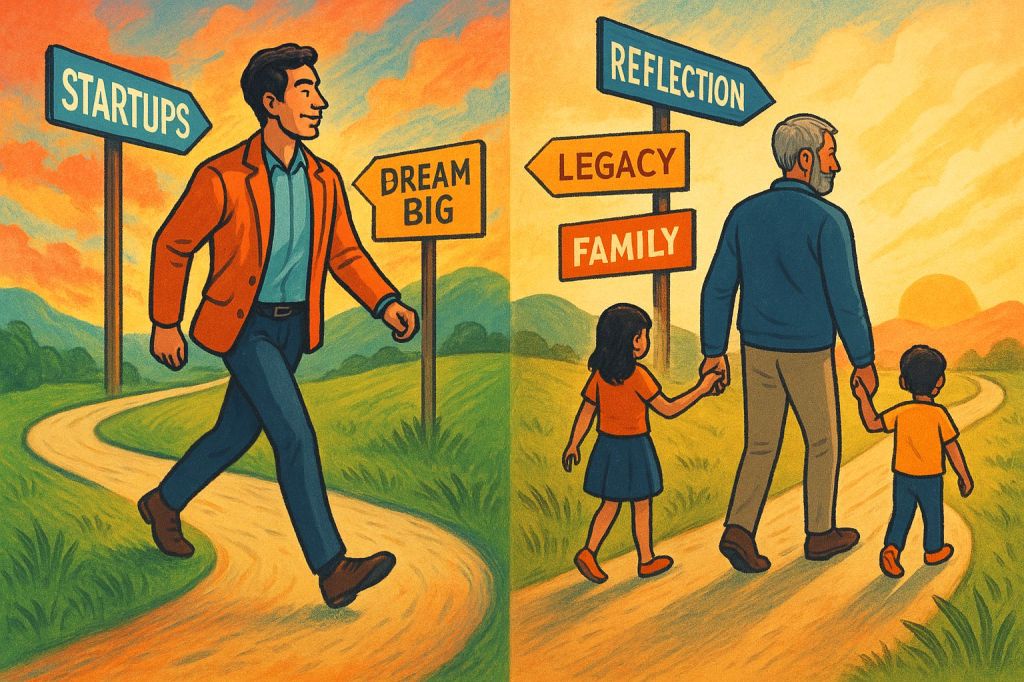
His latest posts emphasize legacy over immediate wins, inner balance over constant hustle, and connection over competition. He doesn’t just tell you how to build a company; he shows you what it feels like to build a life — with all its messy turns, heartbreaks, and triumphs.
What stands out most from this deep dive? Anand Nataraj is not just the bold entrepreneur he set out to be in 2000. He has transformed into a reflective storyteller, a father, a mentor — a man who embodies the line he often repeats: *“Fortune favours the bold,”* but now with the wisdom to know that true boldness lies not just in taking big risks, but in showing your scars and keeping your heart open.
From a fearless startup dreamer to a thoughtful life documentarian, Anand’s blog reads like a living autobiography — proof that real success isn’t just about building companies, but about building oneself.
Some stories are about success. Some are about failure. And some, like mine, fall into an endless limbo — a space where you’re not losing, yet you’re not winning either.
I still remember the excitement of participating in the Reliance Petroleum IPO years ago. It wasn’t just an investment; it felt like owning a tiny piece of a giant vision. Fast forward to 2009: Reliance Petroleum was merged into Reliance Industries, and a swap ratio was announced — for every 16 shares of RPL, one share of RIL would be issued.
Sounds simple enough, right? In a perfect world, yes. But in my world, simplicity turned into a long-winding maze.
At the end of 2008, life threw me off a cliff. I went through a partnership breakup, a personal relationship breakup, and a complete financial turmoil all at once. In that whirlwind of survival, I lost track of my demat investments entirely. Only around 2023 did I finally find the time — and the mental space — to look into these forgotten holdings.
When I checked my demat account years later, I realized those RPL shares were still haunting me, unconverted, unsellable, like a ghost from a forgotten ledger. I couldn’t sell them, couldn’t claim dividends — I couldn’t even move on.
ICICIDirect pointed me to KFintech, the registrar handling these transitions. And that’s where my real journey began — or should I say, where my patience was tested beyond limits.
Email after email, I kept trying. They responded asking for share certificates that never existed in the first place because my holdings were in dematerialized form. When I explained, they requested “additional proof” — statements, transaction records, holding confirmations. I provided everything, each time hoping it would be the last request, each time thinking: This is it, they’ll finally process it.
But like a twisted loop, the replies always circled back to new demands or cryptic statements: “Folio number doesn’t match,” or “Provide a scanned image of the certificate.”
Days turned into weeks. Weeks turned into months. And before I knew it, I had spent two years stuck in this bureaucratic labyrinth.
Somewhere along the way, I started questioning — was it my mistake? Did I miss some notification back in 2009? Did my broker fail me? Or is it simply that large systems forget small investors like us?
I don’t just see this as a technical or administrative issue anymore. It’s a test of resilience, a silent war fought through scanned attachments, politely worded follow-ups, and the relentless hope that this time it will work.
Yet, here I am. Two years later. My shares remain ghosts. My case remains “open.” My hope — well, it flickers, but it hasn’t died.
As I write this, I share not only my frustration but also my vulnerability. To all the financial advisors, experienced investors, or kind souls who’ve walked this path before and if you’ve solved such issues or know someone in this domain who can help, your guidance would be deeply appreciated.
I’m not just seeking a resolution. I’m seeking closure for my shares, and for the weary investor within me.
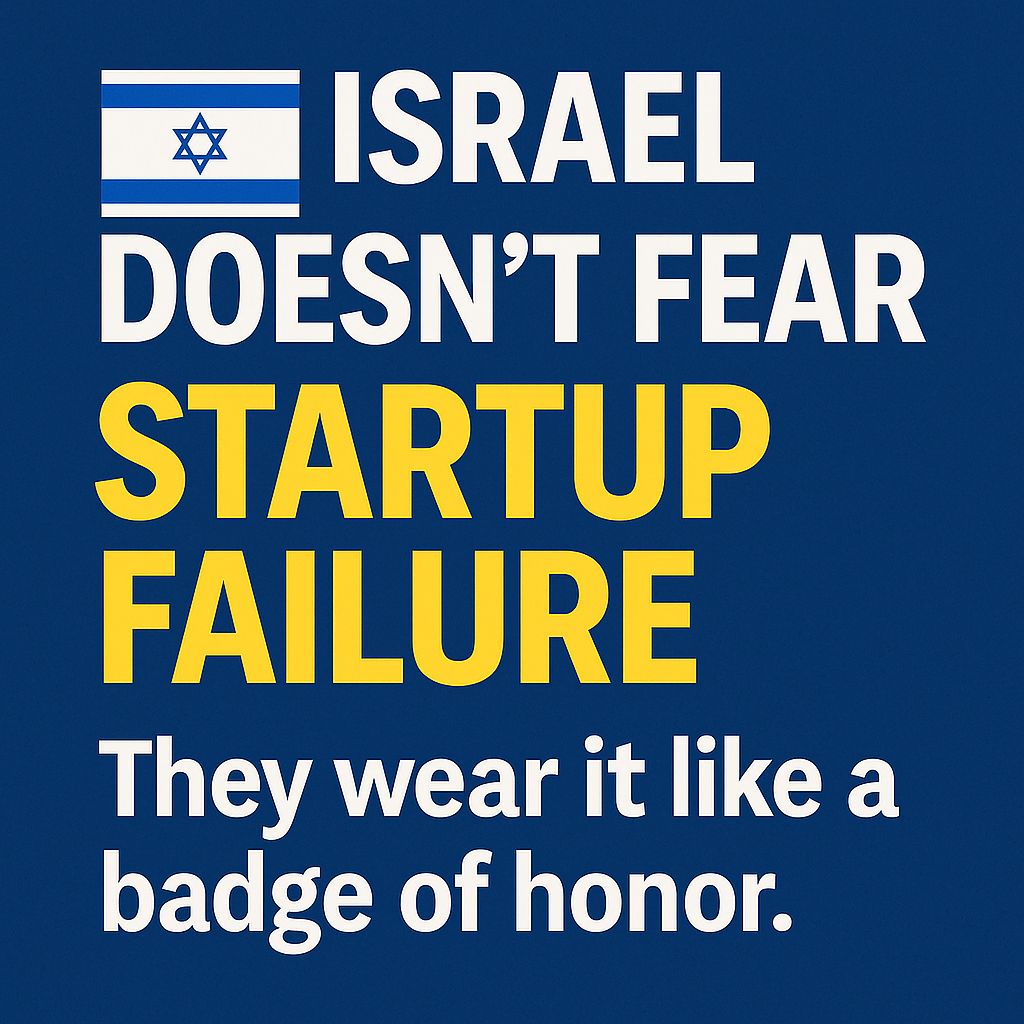
In Israel, failure isn’t feared — it’s your startup badge of courage.
When we think of failure in India, it usually comes with a long line of unsolicited advice from relatives, worried glances from parents, and that unspoken label — “loser.” But if you zoom out to Israel, famously known as the Startup Nation, you’ll see something very different.
I’ve been diving into articles, founder interviews, and global startup reports — and one thing is crystal clear: failure isn’t just accepted in Israel, it’s almost celebrated.
In Israel, if your startup fails, people don’t write you off. They ask, “So, what’s next?” Investors don’t shy away from you; they lean in closer. It’s as if failure is your badge of honor, proof that you had the guts to play in the arena instead of watching from the sidelines.
Why? Because in Israel, they believe that if you haven’t failed, you probably haven’t aimed big enough. You didn’t push hard enough. You didn’t swing for the fences.
A huge part of this mindset comes from their military culture. Israeli youth go through mandatory army service, where experimentation, rapid problem-solving, and facing unexpected challenges are everyday routines. Mistakes aren’t punished — they’re analyzed and turned into future strategies.
Add to that a society built on survival and constant innovation. When you’re turning deserts into green farms and defending your borders every day, you learn fast that trial and error isn’t optional — it’s how you stay alive.
What really blew my mind is that many Israeli VCs actually prefer founders who have tasted failure. They believe these founders have “paid their tuition fees” and know what not to do. Imagine pitching to an investor in India after a failed venture — chances are you’ll get a lecture on “safe government jobs” instead of funding.
Israel’s startup ecosystem treats failure like a pivot, not a funeral. It’s a milestone, not a tombstone. And that’s exactly why they keep producing unicorns and game-changing technologies, even with a population smaller than some Indian cities.
As founders and dreamers, maybe it’s time we bring this “fail forward” attitude home. Because the real failure isn’t falling — it’s refusing to get back up.
Israel doesn’t bury failed startups; it recycles them into stronger founders.
When people see a smiling parent with a child on each arm, they often think of joy, completeness, and warmth. But behind that photo, there can be stories of exhaustion, frustration, and a kind of loneliness that’s hard to describe.
From the very beginning, even before our second child was born, there were challenges. My in-laws strongly believed that having a second child was a bad idea, and they convinced my wife the same. Every time there’s an argument between us now, this topic comes back: that she didn’t fully analyze the challenges ahead. It makes me angry because, in my heart, I always believed I didn’t want to raise a single pampered child. I wanted my first child to have a sibling, a lifelong companion. This decision was never just about me — it was about building a family with deeper bonds, even if it meant going through harder days.
From the day my second child was born, life changed completely. We had no support system. No parents or in-laws stepping in to help, no extended family to call on, no trusted house help to share the load. It was just us, and every day felt like a survival mission.
People often say, “it takes a village to raise achild.” With my first child, I had that village. My in-laws supported us, and those memories felt like heaven — a beautiful, light-filled chapter of parenting. But with my second child, that village was gone. I became everything: the caretaker, the cook, the cleaner, the comforter, the entertainer, the teacher. From sleepless nights to endless school preparations, every moment demanded my full energy and presence.
In the process, my professional life took a huge hit. I went into procrastination because of constant mind fog. Work deadlines felt heavier, focus slipped away, and important opportunities quietly passed me by. My business struggled, and while outsiders only saw the missed targets and failures, they didn’t see the mental battles and emotional exhaustion that led me there.
At home, the constant focus on the kids created a silent gap with my spouse. Conversations turned into pure logistics: who would handle which meltdown. The small, loving moments that kept our bond alive quietly faded, replaced by stress and quiet resentment.
Yet despite all the anxiety, frustration, and helplessness, I cherished every moment with my second child. Even in the chaos, I found joy. I built precious memories, laughed through exhaustion, and watched my child grow closely every single day. It truly felt like a heaven inside a hell — beautiful moments glowing in the middle of struggle and darkness.
With support, those years could have been even better, perhaps closer to the lightness I experienced with my first child. But despite everything, I wouldn’t trade those moments for anything.
Parenting is beautiful, but when done alone and without support, it can swallow you whole. If you’re going through this, I want you to know: you’re not alone. You deserve understanding, you deserve support, and you deserve to cherish those beautiful moments without the heavy weight of judgment.
Between 2012 and 2014, my entire world was confined to a hospital room. My father was in and out of coma during that time, and I practically lived in the hospital. Life outside those walls felt distant and almost unreal. Festivals came and went, and though friends called and offered support, I just couldn’t engage with them. I didn’t have the emotional space or words to share what I was really feeling.
I wasn’t just taking care of my father; I was battling intense anxiety, frustration, and helplessness every single day. I questioned everything from the doctors’ advice, the treatment decisions, my own ability to handle the situation. I felt like I was stuck in a loop, hoping for a sign of improvement, fearing the worst with every passing hour.
This is a state known as caregiver burnout, where your mind and body are pushed to the edge by constant stress and emotional weight. You run on autopilot, trying to stay strong for your loved one, while inside you feel like you’re drowning.
It took me a long time to process those years and find a sense of normalcy again. To learn that it was okay to step away for a moment, to accept help, and to acknowledge my own emotions without guilt.
If you’re in a similar situation, please remember: your feelings are valid. You’re not alone in your anxiety and helplessness. Take moments for yourself, reach out for support, and know that it’s okay to take care of yourself too.
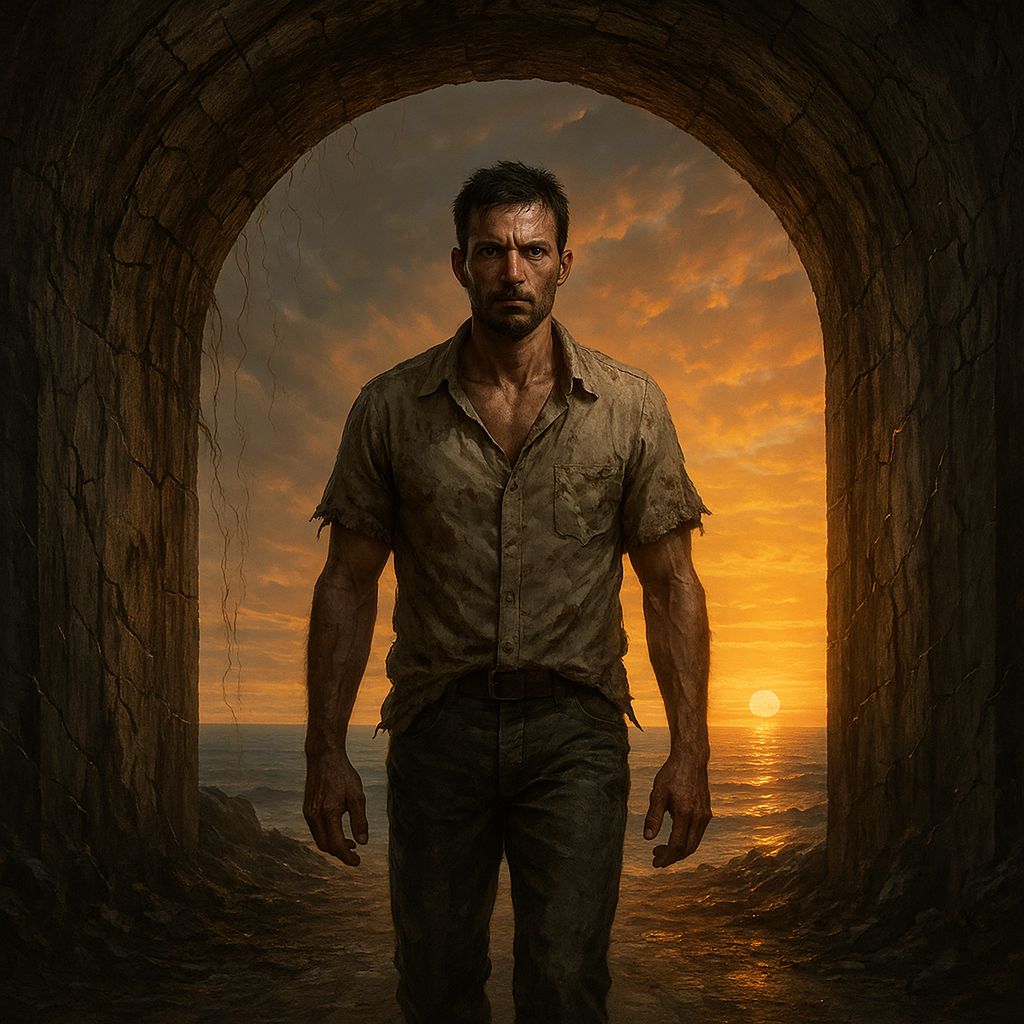
I walked through the darkness alone, not to escape the past, but to reclaim my future.
In the early 2000s, I built a life from scratch, brick by brick, hour by hour. While others partied and dreamed, I worked. 20-hour days. No shortcuts. No favours. By 2004, the tide had turned in my favour.
I had a growing business. I had a beautiful woman by my side. I had the pride of building something real, something enviable.
From the outside, life looked perfect. Inside, I felt invincible.
Then came the collapse.
In 2008, the two people I trusted most, my partner and my lover — destroyed me. Their affair wasn’t just a personal betrayal; it was surgical. They pushed me out of the very company I had built. Overnight, I lost my wealth, my name, my identity, my peace.
I was cast out! while they wore my success like a crown.
What followed wasn’t drama. It was silence. The kind of silence where you scream, but no one hears. Friends disappeared. Society judged. I was labelled the loser. The discarded one. They said he was the brain. That I was a fluke.
But I endured. Every single day. With nothing but grit, and a memory of what I once was.
I watched them from a distance. Their lives looked glittering with new homes, vacations, laughter. But time has its own justice.
A decade later, the cracks appeared.
The marriage fell apart. The money dried up. He spiraled into addiction. She into loneliness.
While they scattered, I stayed still. I had nothing left to lose and everything to rebuild.
Now, nineteen years later, I am stepping out.
Not just into light. Into freedom. Into peace.
I am no longer the man who lost everything. I am the man who survived everything.
Some journeys don’t need a crowd. Just courage, time, and a quiet fire inside.


 AnandNataraj