
The Year I Stopped Chasing and Started Compounding
For most of my life, I was chasing something.
Chasing revenue.
Chasing validation.
Chasing the next big idea.
Chasing people who didn’t even know they were being chased.
And I thought that was ambition.
If you are reading this from New York, Texas, California or even from a small Midwest town, you know this culture. Hustle. Scale. Optimize. 10X. Exit. Repeat.
We celebrate velocity.
But nobody talks about durability.
The American Dream vs The Compounding Dream
The American Dream is powerful. Build something from scratch. Work hard. Make it big.
But somewhere along the way, “make it big” quietly replaced “make it sustainable.”
I learned this the hard way.
There was a time in my life when everything collapsed at once. Business, relationships, reputation. It felt like falling from the sky without a parachute. And what shocked me was not the fall.
It was the realization that I had built speed, not strength.
Speed impresses.
Strength survives.
The Quiet Power of Compounding
Compounding is boring.
It does not trend on Twitter.
It does not go viral on Instagram.
It does not get you invited to podcasts.
But it changes everything.
Compounding is:
Writing one thoughtful post every week
Investing small amounts consistently
Showing up for your family even when you are tired
Learning one concept deeply instead of ten concepts superficially
In finance, compounding turns 100 dollars into millions over decades.
In character, compounding turns small discipline into unshakeable confidence.
In relationships, compounding turns simple trust into lifelong loyalty.
Why This Matters in 2026
We live in a time of:
AI shortcuts
Overnight creators
Instant monetization
Algorithm driven fame
But the world is also quietly rewarding consistency again.
Businesses that survive are not the loudest. They are the most resilient.
Creators who last are not the most viral. They are the most authentic.
Leaders who endure are not the flashiest. They are the most grounded.
Compounding does not care about geography.
It works the same in Silicon Valley and in a small town in India.
That is the beauty of it.
My Shift
The year I stopped chasing:
I stopped saying yes to everything
I stopped trying to prove my worth
I stopped running behind fast money
Instead:
I built systems
I reduced unnecessary risk
I invested in health
I rebuilt trust
I chose fewer, deeper relationships
Nothing dramatic happened overnight.
But something powerful happened slowly.
Stability.
The day you stop chasing and start compounding is the day your life begins to feel less fragile and more intentional.
Category: Uncategorized
Why Israel Doesn’t Fear Startup Failure — And What We Can Learn
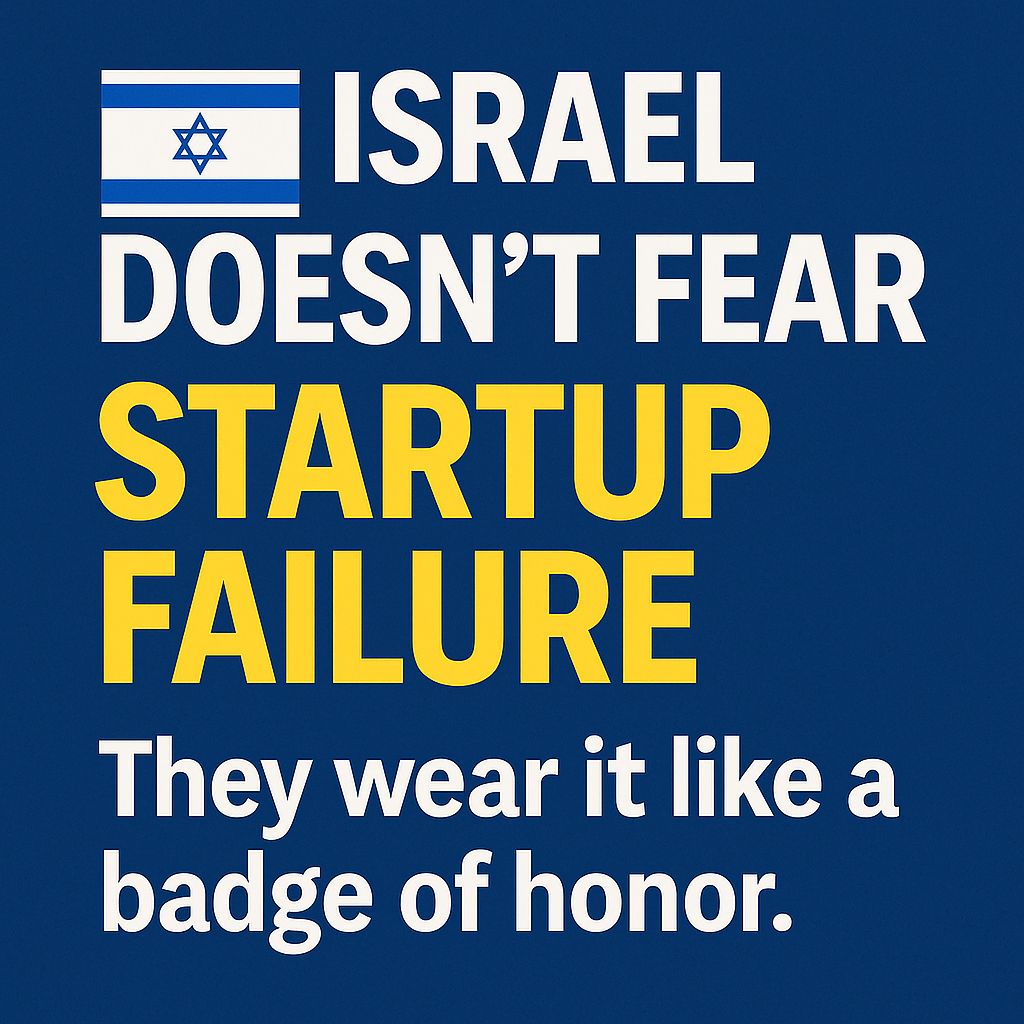
When we think of failure in India, it usually comes with a long line of unsolicited advice from relatives, worried glances from parents, and that unspoken label — “loser.” But if you zoom out to Israel, famously known as the Startup Nation, you’ll see something very different.
I’ve been diving into articles, founder interviews, and global startup reports — and one thing is crystal clear: failure isn’t just accepted in Israel, it’s almost celebrated.
In Israel, if your startup fails, people don’t write you off. They ask, “So, what’s next?” Investors don’t shy away from you; they lean in closer. It’s as if failure is your badge of honor, proof that you had the guts to play in the arena instead of watching from the sidelines.
Why? Because in Israel, they believe that if you haven’t failed, you probably haven’t aimed big enough. You didn’t push hard enough. You didn’t swing for the fences.
A huge part of this mindset comes from their military culture. Israeli youth go through mandatory army service, where experimentation, rapid problem-solving, and facing unexpected challenges are everyday routines. Mistakes aren’t punished — they’re analyzed and turned into future strategies.
Add to that a society built on survival and constant innovation. When you’re turning deserts into green farms and defending your borders every day, you learn fast that trial and error isn’t optional — it’s how you stay alive.
What really blew my mind is that many Israeli VCs actually prefer founders who have tasted failure. They believe these founders have “paid their tuition fees” and know what not to do. Imagine pitching to an investor in India after a failed venture — chances are you’ll get a lecture on “safe government jobs” instead of funding.
Israel’s startup ecosystem treats failure like a pivot, not a funeral. It’s a milestone, not a tombstone. And that’s exactly why they keep producing unicorns and game-changing technologies, even with a population smaller than some Indian cities.
As founders and dreamers, maybe it’s time we bring this “fail forward” attitude home. Because the real failure isn’t falling — it’s refusing to get back up.
Israel doesn’t bury failed startups; it recycles them into stronger founders.
Between Present Love and Ghostly Past
Synopsis of my friends story!!
The story follows a wealthy young man who leaves his village to pursue a career in IT in Chennai. He falls in love, enjoys his new friends and decides to settle down in the city by purchasing a newly constructed apartment in a community in OMR. However, he soon discovers that he is the only occupant of the entire community. After some intriguing events, he decides to move out and relocate to his old mansion. Eventually, people begin to move in and he reconsiders his decision, deciding to stay in the community. He becomes close to his neighbors and is happy until he discovers that they are all ghosts. To his surprise, they are his own family, former love, and neighbors from his past life who perished in a building collapse. As the only one to be reborn, he is faced with a dilemma: stay with his ghostly loved ones or return to his present family and love. The story explores his ultimate decision and the consequences that follow.
Sightglass Coffee!! Client meetup experience
Went to Sightglass Coffee at 7th Street, SFO to meet a client!!!
I was simply wowed by the rustic looks, the environment they provide for Startups & Hackers and finally their coffee!!!
This place gave me the experience and thanks to Steven to showing this place to me.
This is going to be my frequently visited spots!!


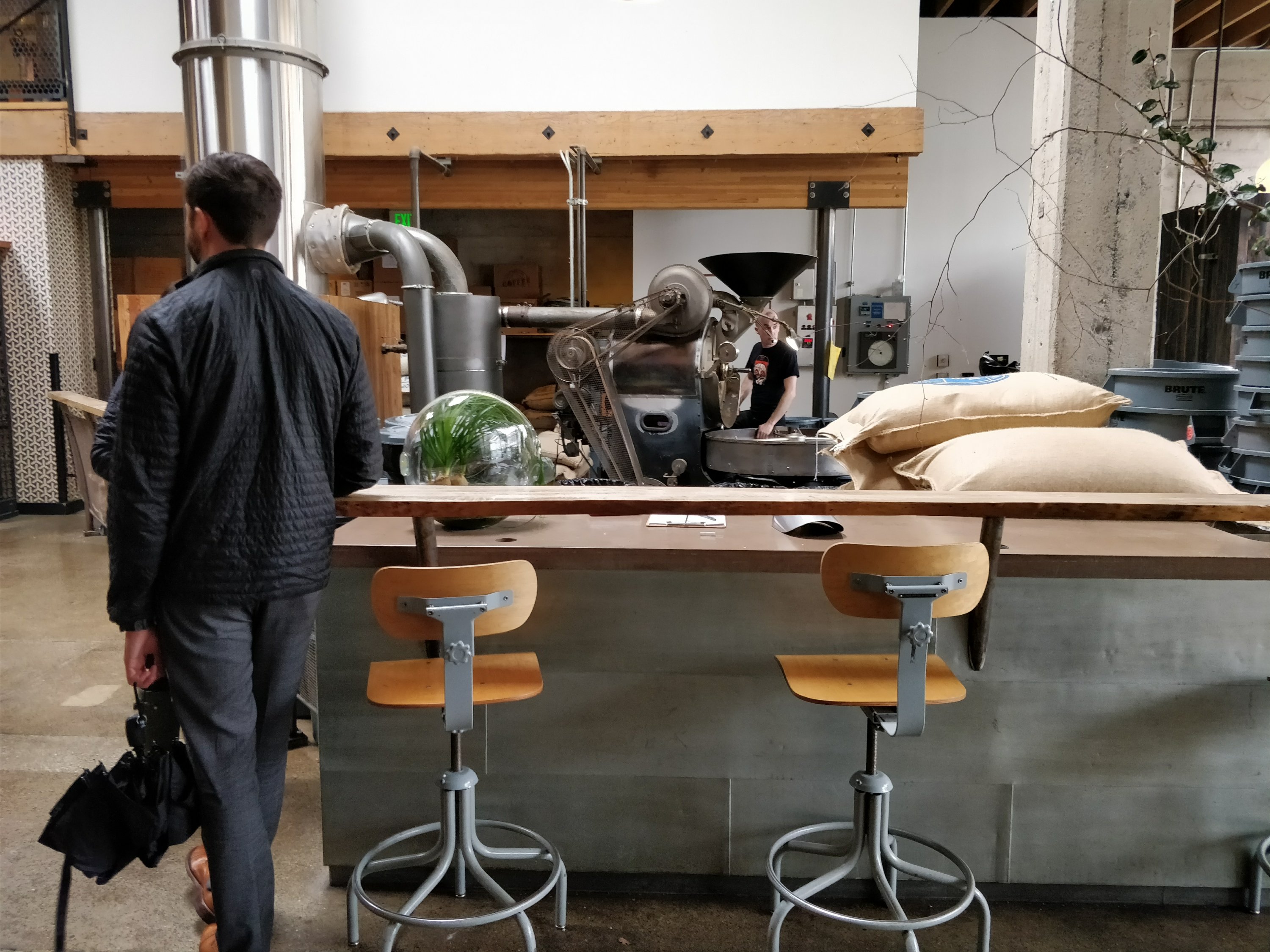

Nice to catchup with Senthil the Geek!!

- We live & do Business almost on same city Madurai & Bangalore.
- We were friends on FB for a long time.
But we never met when we were close. Now we have travelled 14,000 KM to meet each-other.
I’ve been following Senthil and been inspired by his community build activity and his social cause of giving back to the society.
But came to know more about his skills and accomplishments. I’m simply wowed and you have made my day Dude.
Let’s together make Madurai a vibrant Tech & Entrepreneurship HUB!!
Our Thala is Back!!!

Yes, our Thala Dhoni is back to CSK!!! Let’s put a whistle to Chennai Super Kings & MSD!!
Nice representation of 2017 & 2018

Clear representation of 2017 and wish my dream girls 2018 gesture brings everybody good Luck, Health, Wealth & Prosperity!!
Can You Manage Sales?!


Cogzidel, a young & vibrant company backed up a seasoned management team, is onto providing solutions to its customer on Web, Mobile & Wearable Technology. We are industry leaders on the rental management platform. As we scale our global brand, there’s plenty of space for you to grow alongside us and simplify solutions for our customers around the world.
Our sales team shares businesses of all sizes around the world and helps them make their dream a reality. We’re a collaborative and empathetic sales team, focused on understanding what businesses need to work better together.
This is a high impact role, you will help develop strategies to break into new markets and empower a team of high caliber Account Executives to help prospects understand what simplified solutions Cogzidel can offer to their business. We are looking to hire a smart, driven, high-caliber individual who is passionate about tech and works…
View original post 183 more words
Is CHENNAI a Telegu Name??? That’s what Historians say
What does Chennai mean? The question troubled Paris-based historian J B P More quite a lot. After painstaking research, he found the answer.
In his recently released book, titled ‘Origin and Foundation of Madras’, More says, “Chinapatnam and Chennapatnam were the other names for Madras used by Tamil and Telugu settlers in the area. Chennapatnam was ‘Tamilised’ as Chennai but the word didn’t mean anything in Tamil. It’s undoubtedly a Telugu word.”
Madraspatnam was derived from Medu Rasa Patnam, said More, who was in Chennai on Saturday to release his book. “When Nayak Venkatappa (a local chieftain) issued a grant (a portion of the area where subsequently Fort St George came up) in favour of the English in 1639, only Madraspatnam was mentioned in it. But during the 1640s, two new names for Madraspatnam or for the area inhabited by Tamils and Telugus around Fort St George seems to have come into existence. They were Chinapatnam and Chennapatnam,” he said.
Chinapatnam would have been the first name that would have come into existence in the Tamil-Telugu quarters to signify the Black Town of Madraspatnam. “‘Chenna’ in Telugu means fair and is not to be confused with the Tamil ‘Chinna’, which means small. In Tamil, ‘Chenna’ is meaningless,” said More.
He said in the Tamil Lexicon, the Tamil word ‘Cennai’ has been mentioned which would signify ‘a drum announcing religious procession of an idol’. More said there was no reference in documents and literature of the period to ‘Chennai’ as a drum.
“In the document of Beri Timanna, we find ‘Chenna’ written as ‘Chennai’. Thus Chenna Kesava Perumal became Chennai Kesava Perumal and Chennapatnam became Chennai Pattanam.
This seems to be purely the work of a translator of the 19th century who had preferred to Tamilise the Telugu word ‘Chenna’ into ‘Chennai’ so it sounded more Tamil,” said More. “The word ‘Chennai’ seems to have been born to designate Madras town. Its origin is Telugu. There is nothing Tamil in it,” he added.
Source: Times Of India
Sales Presenting our Products & Services
Our Sales Folks gave a wonderful presentation about our Products & Services;

Selva gives a presentation on SEO

Nagarjun gives a presentation on Sedio – Vine clone

Naveen gives a presentation on VfundU -KickStarter Clone
 AnandNataraj