What Is Karma Cleansing? And Why Do Good People Get Cheated?


Why do bad things happen to good people?
Why do cheaters prosper and the loyal ones suffer?

Enter: Karma cleansing, a spiritual and emotional practice that doesn’t erase the past, but helps free you from its grip.

What Is Karma Cleansing?

Karma cleansing is the process of releasing negative emotional, mental, and spiritual baggage from past actions, yours or others, so you stop carrying cycles of pain into your future. It doesn’t mean ignoring what happened. It means you don’t let it define you anymore.

Just like physical detox clears toxins, karma cleansing is about cutting karmic ties to those who wronged you — not to forgive them for their sake, but to free yourself from them.

Why Are There Cheaters and Cheated?

In a fair world, you’d expect balance. But reality isn’t always fair, it’s karmic.
   > Some people cheat because they haven’t evolved yet.
   > Some people get cheated on because they’re strong enough to grow through it.

It doesn’t justify betrayal. But it gives it context. Sometimes, your pain is not your punishment — it’s your push toward transformation. You’re clearing something deeper than just this life.

How Karma Cleansing Helps

  • Breaks emotional loops of revenge or resentment
  • Brings clarity: “It was their lesson, not my worth”
  • Helps stop attracting the same pain again
    Creates space for better relationships and energy.

You don’t have to “let it go” overnight. But you can begin to let it go from you.

Final Thought

If you’re reading this and you’ve been betrayed or hurt by someone who had no reason to hurt you, know this:

Their karma is theirs. Yours is how you rise, heal, and stop carrying their poison in your heart.

Let karma cleanse, not consume. 🌙
The Garage Dream by the Sea: Two Years That Built a Legacy


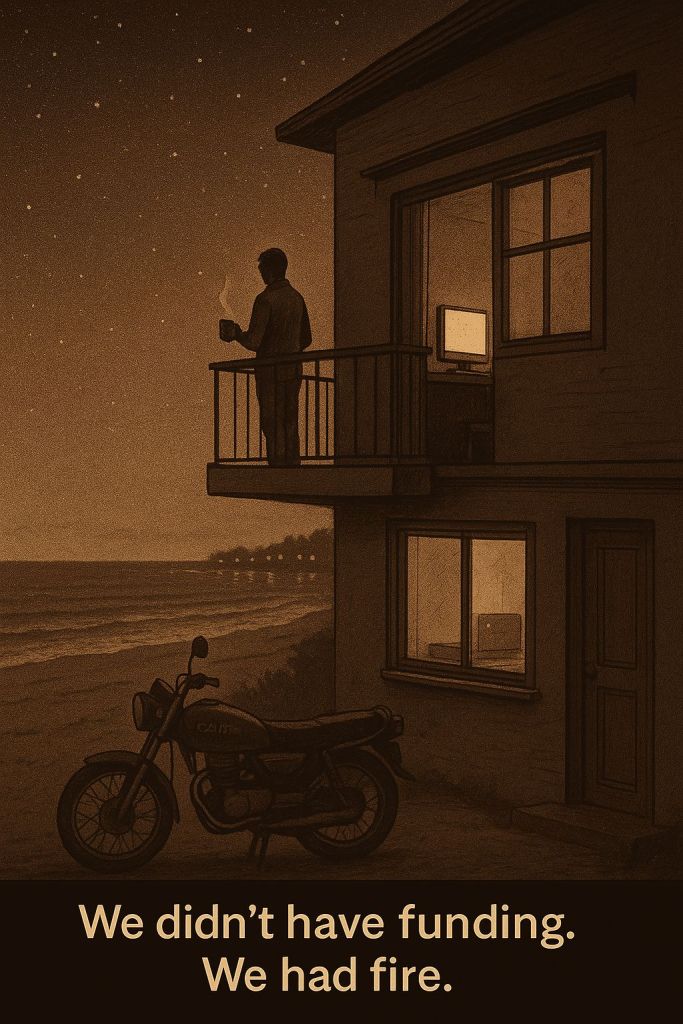
Between September 2002 and September 2004, we built something unforgettable. Our office wasn’t in a fancy building or a posh tech park. It was tucked inside a TNHB quarters apartment in Valmiki Nagar, Kottivakkam. But for us, it felt like Silicon Valley.

Renting that space with self-earned money brought a satisfaction that can’t be fully put into words—it was something only a hustler’s heart could feel.

We began as a humble team of 8, packed with energy, grit, and ideas. Within two years, we had grown into a 40-member unit that breathed ambition. We set up everything ourselves—our very own Samba server, our desks, our dreams. Vel Sir stood by us, offering assembled computers on credit when funds were tight. We didn’t have an air conditioner when we started; the heat from the Chennai sun and CRT monitors turned the place into a furnace. But we endured.

We hustled in sweat, but not in despair.

Slowly, we upgraded—one A/C at a time. We set up a tiny kitchen for tea and coffee. We insisted that everyone must volunteer to prepare coffee or tea in that kitchen. Many resisted in the beginning. But soon, everyone took their turn—each cup brewed with pride, with patience. That pantry transformed into our bonding zone, our ritual, our daily pause between lines of code.

Every milestone—big or small—was celebrated with team lunches. From every corner restaurant in Besant Nagar to the iconic joints in Adyar, we made those places our own.

I practically lived in that office. My routine? Wake up at 5 AM, dash home to shower, and be back by 7:30. The location was a dream in itself—sea-facing, serene, and soul-fueling. The Sindoor Sea Club next door lit up weekends, Diwalis, and New Year’s Eves. I walked the beach to stay fit. I walked it again at midnight to clear my mind.

There were nights I rode solo on my Calibre bike from Valmiki Nagar to Mahabalipuram. Back then, ECR after 8 PM was a ghost road—no streetlights, no traffic, no cops, not even open tea stalls. But I needed that silence. That solitude was therapy.

Night shows at Prarthana or Mayajaal were my release. The rest of the time, we were a silent storm—working with focus, building in stealth. No one believed in us yet, but we did. We learned to smile through the struggle, to lead without applause, to hustle without hashtags.

There were times when the weight of challenges felt unbearable. But that location, that ocean breeze, those midnight drives—they helped me breathe, helped me bounce back.

Those two years weren’t just about building a company. They were about building character.

Where is my Madras?


I was born in Madras. Not Chennai. Madras.

Chennai is just the name. Madras — that is my emotion. It wasn’t just a city. It was the BGM of my childhood, the stage of my teenage dreams, and the silent witness to my becoming. But today, as I walk through these same streets, I search for my Madras — and I can’t find her. What I see now is a city that has transformed so much, it’s almost as if it forgot who it used to be.

I remember the theatres first. They were temples of wonder.

Alankar Theatre — where I watched every Jackie Chan movie as a wide-eyed kid, snuggled between my parents. From King Solomon’s Mines to Thunderbolt, it was our Sunday ritual, our adventure time. Then came Anand & Little Anand, where I saw Nayagan and Jallikattu with my dad, and Malabar Police with my college buddies. Every show had a memory etched beside it.

Melody Theatre — if it was a Hindi movie, that’s where we went. My mom adored Hindi films, and my dad made sure we saw them all. From Dil to Hum to Baazi, Melody was a family tradition. The last I remember watching there was in 2007 — and then, like everything else, it quietly disappeared.

Then came the dream that never faded: Prarthana Drive-in. As a kid, I heard stories about watching movies from a car. I never went. But once I started my own company near Thiruvanmiyur, I finally did — Kadhal Konden and Anbe Sivam. I didn’t have a car then. I sat on a plastic chair and watched, envious of those inside cars, feeling like I had arrived late to a dream. When I was stressed, I would go there alone, escape for a while, then return to work. A year later, things changed. I went there in a car, and took my cousins too — because they deserved to live that dream.

Udayam. Chandran. Sooriyan: These theatres were where I watched movies solo, with schoolmates, with my parents. They were razed just three months ago — like someone ripped out a part of my diary.

But Madras wasn’t just cinema. It was culture, bookstores, summer escapes.

Landmark: My hideout since 1995. I went there to beat the heat, to explore music, to touch books, to discover authors who sowed the seeds of entrepreneurship in me. It wasn’t a store — it was a sanctuary.

The Park Sheraton: Youthful nights at Dublin, celebrating Dhoni’s T20 World Cup win. That place was our escape, our celebration spot.

Luz Shanthi Sagar for chats. Dasa Prakash for cherry milk and green-pea sandwiches. The roadside podi dosa at Brilliant Tutorials. These weren’t just eateries — they were memories made edible.

I grew up on North Parade Road, in my grandmother’s house. The Malai Thiruvizha was a grand celebration then. Shops would stretch from Kathipara all the way to the Cantonment marriage hall. Today, that grand procession is reduced to the narrow streets around St. Thomas Mount. The horse stud at Alandur, where my parents would walk me, feed me snacks, and let me play — now stands a metro station.

The park where I once learned how to swing? It’s a turf now — professional, synthetic, and soulless.

Chennai has grown. Expanded. Boomed. But in doing so, it has wiped clean the chalkboard of memories. It has replaced nostalgia with glass towers, warmth with air-conditioning, and stories with speed.

I’m not against progress. But what do you do when progress forgets its past?

I don’t want a Madras frozen in time. I just want a city that remembers.

Because I remember. And I still miss her.

Where is my Madras?

In search of gold, I lost my diamond.

She was never just a city. She was my story, my Madras.

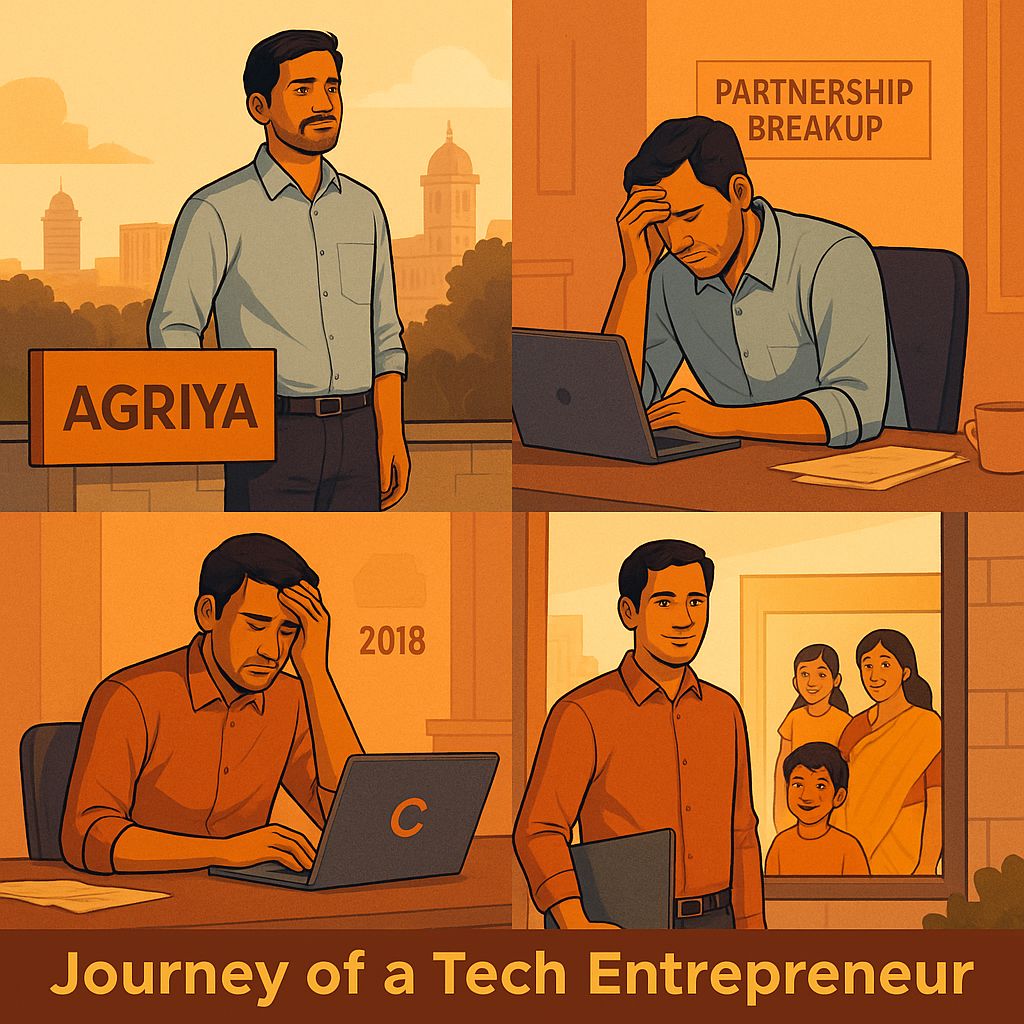
The Longest Tunnel: My 25-Year Journey of Building, Falling, and Rising Again


Karma cleaned what I was never meant to carry. Now I walk lighter.

In the year 2000, I was just like any other young dreamer — ambitious, hungry, and fiercely determined to make something out of nothing. With no background, no safety nets, and no rich godfathers, I dived headfirst into entrepreneurship. The odds were stacked high against me, but my passion was louder than my doubts.

For the next four years, I worked relentlessly — often 20 hours a day — building my business from scratch. There was no playbook, no shortcut, only sweat and stubborn discipline. Slowly, things began to move. Projects started flowing in, my team grew, my confidence soared. Life was unfolding like a dream.

Then came a phase where everything sparkled. I found success not just in my business, but also in my personal life. There was companionship, laughter, travels, late-night talks, dreams shared under starlit skies, and moments that seemed timeless. Money flowed easily; lifestyle followed. People admired the empire I was building, and secretly envied the life I was living. It felt like I had finally arrived.

But life — or rather, karma — has its own clock.

In 2008, the very foundation I had built with years of devotion cracked overnight. The people I trusted most, professionally and personally, made choices that blindsided me. It was not just the collapse of a company; it was the collapse of trust, of friendship, of dreams shared, and of innocence itself. The empire I built was no longer mine. My reputation was questioned. I was left watching my life’s work slip through my fingers, powerless.

And that’s when the real test began.

The years that followed were brutal. The world, which once cheered me on, now whispered behind my back. Some said I was a fluke, that my success was never mine to begin with. Society is strangely cruel to the ones who fall — they romanticize rise stories but quietly enjoy the falls. I was no longer the hero in people’s eyes — just another “lesson” they discussed at dinner tables.

But here’s what many didn’t see: while the world was mocking, life was cleansing me. Karmic debts have strange ways of collecting. Every bit of pain, betrayal, and humiliation was part of a larger cleansing — one that stripped me of all ego, all illusions, all attachments.

The betrayal of trusted people was painful, yes. But in hindsight, they were simply playing their part in my karmic script. They were not my enemies; they were my catalysts. My breaking wasn’t my end — it was my purification.

As years passed, my life kept shrinking — financially, emotionally, and socially. I lost most of my investments. Debts piled up. Credit cards defaulted. Even my family, who once celebrated my wins, started losing hope. I could feel their judgment — the silent disappointment that weighed heavier than any words they could say.

Between 2020 and 2022, things hit rock bottom. The financial strain was suffocating. The mental fog was worse. I couldn’t think clearly. Ideas wouldn’t stick. Words wouldn’t form. Some days I couldn’t even gather the strength to explain what I was going through. I was sinking — and I knew it.

But somewhere inside, a small flame refused to die.

In 2023, that flame finally found its way back to air. A property I had invested in years ago — my studio apartments — started generating steady rental income. For the first time in years, I felt breath returning to my lungs. Slowly, I began clearing debts that once seemed impossible to handle. The suffocating grip of money started to loosen.

I started small again — tiny investments into markets, baby steps into rebuilding my financial base. It wasn’t dramatic. It wasn’t glamorous. But it was real. With every small repayment, with every small win, I could feel my mind returning, my clarity sharpening.

Now, as I stand in 2025, I’m not the man I was in 2004. I’m not even the man I was in 2008. I carry scars, yes — but I carry wisdom too. The kind of wisdom you don’t get from books or mentors, but only from walking through your personal hell.

I learned that wealth built without wisdom will collapse. I learned that relationships built on illusions will betray. I learned that real strength comes from standing alone when no one claps for you.

And most importantly — I learned that hope is a good thing.

Because no matter how dark the tunnel is, no matter how long it stretches, if you keep walking, the light always finds you.

I’m 45 now. The world would say I’m starting late. But I know better.

I’m not starting late.
I’m starting clean.

Hope is a good thing.
And good things never die.

How I Navigated a Legal Summon: A Learning Experience


In the course of our lives, especially in business or public dealings, we may encounter situations that test our understanding of law and procedure. I recently faced one such situation that offered deeper insights into how our legal system functions.

A few months ago, I received a police summon asking me to appear for an enquiry. Such summons naturally create anxiety. It was issued under Sections 91 and 160 of the Criminal Procedure Code (CrPC). While I have always respected legal processes, I wanted to fully understand the basis of this summon before responding.

After consulting legal experts and doing some personal research, I learned:

Section 91 CrPC allows the police or court to request documents or objects necessary for an investigation. It’s a tool to gather evidence, not to summon individuals for questioning unless specific documents are needed.

Section 160 CrPC permits police to summon witnesses for questioning only after an FIR (First Information Report) is registered. Without an FIR, this section cannot be used to call individuals for enquiry.

In my case, no FIR had been registered. The summon was purely based on a complaint filed by a third party, without any formal case initiated.

With this understanding, I approached the Madurai Bench of the Madras High Court. My counsel cited relevant legal precedents, including a 2004 judgment (Prakash Transports vs. Inspector of Police), which clearly states that without an FIR, police summons under these sections are invalid.

The Hon’ble Judge reviewed the facts and ruled in my favor. The summon was quashed, and the matter was closed. This reaffirmed a simple principle: law provides protection when we are aware of our rights and act within the system.

Legal systems exist to protect, but we must stay informed. This experience, while unsettling at first, became a valuable learning milestone.

Stay aware. Stay prepared.

Rajinikanth Horoscope Analysis: The Cosmic Secret Behind “En Vazhi Thani Vazhi”


Born on December 12, 1950, at 11:49 PM in Bangalore, India, Rajinikanth stepped into this world under the powerful Leo (Simha) ascendant. This birth detail alone reveals so much: a fiery spirit, kingly aura, and magnetic charm that cannot be taught or replicated.

His Sun and Moon both reside in Scorpio in the 4th house, a combination that grants deep emotional strength and an almost mystical intensity. While the Moon in Scorpio can sometimes cause emotional ups and downs, it also fuels raw courage and an inner resilience — qualities Rajinikanth has demonstrated time and again on and off the screen.

Jupiter in his 2nd house (Virgo) is a blessing for wealth, powerful speech, and family prosperity. No wonder his voice and his dialogues carry such unmatched weight and inspire millions.

Mars and Venus together in the 5th house (Sagittarius) spark his unstoppable creativity and stage presence. This celestial alignment explains his fiery energy, charismatic screen performances, and enduring appeal across generations.

Saturn and Ketu in his ascendant (Leo) bring a beautiful blend of discipline and spiritual depth. Despite the dizzying heights of fame, Rajinikanth is admired for his humility, simplicity, and deep spiritual pursuits — a rare combination in a world obsessed with glamour.

Meanwhile, Rahu in the 7th house (Aquarius) ensures that his relationships and public persona remain unconventional, boundary-breaking, and universally magnetic.

Rajinikanth’s horoscope doesn’t just map an actor’s journey. It narrates the rise of a phenomenon — a man who turned every challenge into an opportunity to reinvent himself, who carried emotional storms within but always stood tall like a lion.

His cosmic story mirrors his life philosophy: to walk a path so unique, it turns into a legacy.

Because for Rajinikanth, truly, En vazhi thani vazhi.

Lost and Found: My Journey from Heartbreak to Healing


I don’t know if I’ve ever shared this, but after my breakup, I hit the lowest point in my life. I was completely lost and drowning in my emotions. I started drinking heavily, trying to escape the pain. One night, after having too much on ECR, I blacked out. The next thing I remember was waking up in Port Blair, confused and disoriented. 

I couldn’t figure out how I got there. Later, I realized that in my drunken state, I had booked flight tickets, reserved a hotel, made my way to the airport, boarded a plane, and flown for three hours—all of it a complete blank. I vaguely recall arriving in Port Blair, stumbling around aimlessly, before losing consciousness again and waking up in a hotel room. 

I stayed there for a month, roaming the islands aimlessly. I drank more, met new people who unexpectedly became friends, and wandered without purpose. It was a chaotic and emotional time—full of grief, anger, and confusion. Yet, somewhere in that month, something changed. It wasn’t an instant solution, but slowly, I began to heal. I started to come to terms with what had happened and found the courage to move on, step by step.

Enemies Respect You; Traitors Measure You


Seeman Speech

Transcript in English

Today’s traitor was my friend yesterday. Tomorrow’s traitor is today’s friend.

An enemy is always at a distance. But a traitor is always near you.

An enemy will always respect your strengths. But a traitor will always calculate and exploit your weaknesses.

This doesn’t happen only to me — it will happen to you too. So, be cautious.

Kamarajar once said: ‘Show love to every living being, but be very careful with humans.’

We know what a snake will do. We know what a monkey will do. We know what a tiger will do.

But you can never predict what this human beast will do.

Core message

The speech warns us that true danger doesn’t always come from obvious enemies but it often comes from people close to us, the ones who appear as friends but act as traitors.

The speaker emphasizes caution in human relationships:

  • Enemies are straightforward and respect your power.
  • Traitors stay close, study your weaknesses, and use them against you.
  • We understand animals, but humans are unpredictable and can be more dangerous than any wild creature.

It’s a call to be vigilant, not naive, and to love broadly but trust selectively.

A Day in the Life: Madurai to Chennai Hustle


The adventure kicked off at 9:30 PM, when Santhanam and I set out from Madurai, bound for Chennai. With Santhanam in the driver’s seat, we headed first to Kappalur toll to pick up a team of painters. They were on board to get his new place in Maraimalai Nagar freshened up, so we were on a mission.

After a quick stop at Vadipatti for dinner (Santhanam dined; I skipped as usual), I crashed in the passenger seat, only waking up near Ulundurpet, where Santhanam handed over the wheel. I took the final stretch, dropping the painters off at Advaith’s Nest around 4:30 AM. Then we headed to my place for a much-needed two-hour nap.

By 7:30 AM, the day was already off to a whirlwind start with back-to-back customer calls. Things got stormy as we hit our first snag—the housekeeper wasn’t picking up to hand over the keys to Santhanam’s new apartment. The painters were ready to go, but I had urgent client work to handle first. By 9 AM, things finally settled as the keys arrived, my client was happy, and work was back on track.

Next, Santhanam and I headed to Akshaya Metropolis to check out the apartment. The painters needed more supplies, so we made a quick run to the shop, restocking materials and gathering a list of electrical and bathroom fittings from the electrician on-site. Then it was off to the registrar’s office, where we handed over the required documents to the document writer.

Lunch was a welcome break at Santhanam’s favorite, Mohan’s Bhojanalaya—four chapatis with two sabjis. With energy renewed, we went straight to the Nagaratchi office to apply for a name transfer, then hit up ICICI Bank for a cash deposit.

Back at Akshaya Metropolis, we left some final instructions for the painters, and by 4 PM, we headed home. A nap was tempting, but fate had other plans—client calls streamed in, and I needed updates from our CTO. Before I knew it, the nap window had closed, and Santhanam also couldn’t catch a break.

By 6:20 PM, we decided a walk in the park would be the perfect reset. We walked until 7:30 PM, hitting my 10,000-step goal. Feeling accomplished, we treated ourselves to a refreshing sugarcane juice. Santhanam grabbed dinner, but I skipped, again keeping it light.

Once home, a shower did wonders for my energy, and by then, my stomach felt much better. Wrapping up the day, here I am, jotting down the day’s hustle by 10:30 PM. From a nighttime drive to a day packed with calls, errands, and teamwork, it’s been a non-stop ride—one I’m glad to share.

A Day in Kanniyakumari: Post-Diwali Family Adventures


After a bustling Diwali evening filled with lights and firecrackers, we all woke up later than planned, still exhausted from the celebrations. The morning was a mad rush with the usual house chores and packing, and no time to whip up breakfast at home. Eventually, we managed to set off at 10 AM. Just as I started the car, I noticed the fuel gauge hovering low, and to add to the mix, Advaith was already cranky. Yamuna suggested we fuel up right away, but I insisted on getting breakfast first to avoid an impending meltdown from Advaith.

We stopped at Harish Hotel, where Advaith’s hunger had reached new heights. Feeding him was a challenge, but Yamuna handled it skillfully, somehow keeping him settled. The rest of us—Yamuna, Aradhya, and I—had a quick breakfast, and by the time we refueled, it was 11:30 AM. With full bellies and a full tank, we were ready for our drive to Kanniyakumari.

The kids were soon immersed in mobile games and eventually drifted off to sleep, giving Yamuna and me a rare stretch of uninterrupted conversation. The two-hour drive passed by smoothly, and before we knew it, we arrived at Hotel Rajeshwari around 1:50 PM. The property was inviting, with spacious, clean rooms and ample parking. Only two kilometers from the southernmost tip of India, the kids were excited and instantly made themselves at home with the TV and some playful chaos.

Though none of us were especially hungry after breakfast, we decided not to skip lunch. The hotel restaurant was convenient, but the food didn’t quite live up to expectations. I soon discovered we couldn’t charge meals to our room, which was a minor annoyance. Lesson learned: perhaps next time we’d look for outside dining options.

In the afternoon, we headed to Sunset Beach, a spot we had all enjoyed last year. Strangely, the kids weren’t as thrilled this time and quickly voted to return to the hotel’s swimming pool instead. So, we did. The pool turned out to be a highlight of the day; the kids, Yamuna, and I spent a lively three hours there, splashing around and relaxing together.

After a quick change, we decided to explore Beach Street and revisit the food court we enjoyed last year. Disappointment awaited us, though, as most shops were closed, and even the play area now charged fees. We settled for some ice cream and watched the kids play for a while before setting off to hunt for a good vegetarian restaurant.

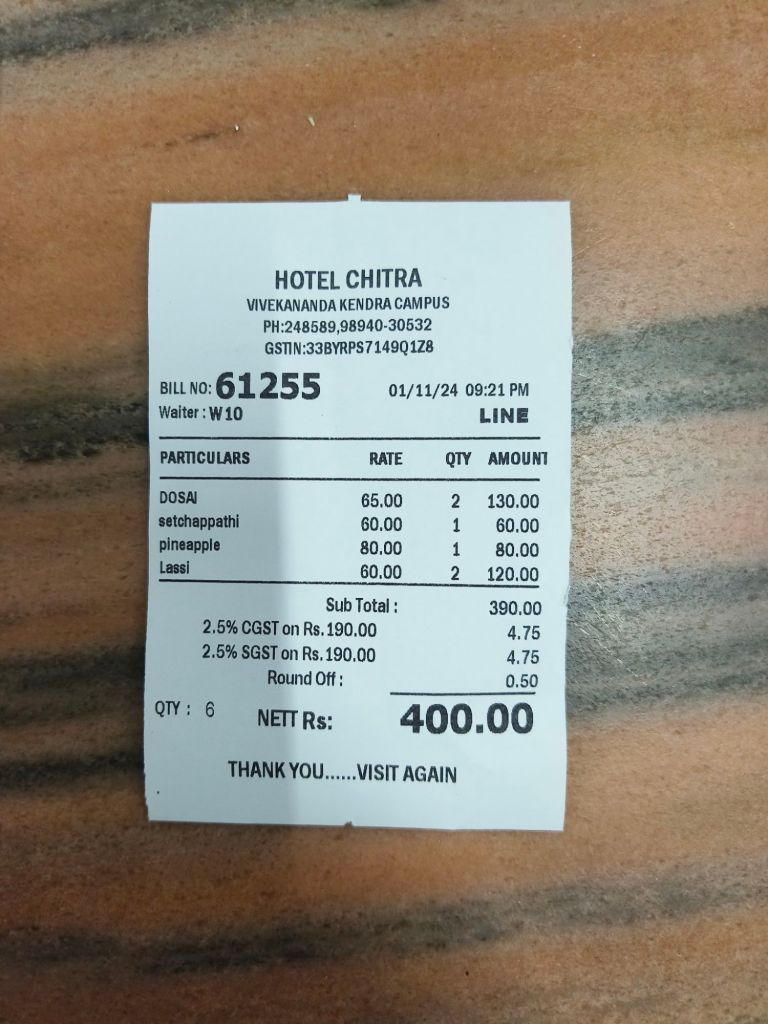
Our quest for dinner was almost comical. We tried Shantha Bhavan, but after being told it would take 30 minutes with no guarantee of availability, we moved on. Pure veg options were scarce, and seafood spots dominated the area. Finally, we found Hotel Chitra tucked inside Vivekananda Ashram. It had an old-world charm and college-hostel vibe, and to our delight, the simple dishes—dosa, chapati, and fresh juices—were delicious.

Back at the hotel, the kids settled in for the night, already planning tomorrow. They were adamant about another pool day, but I’d promised a visit to Poovar. Yamuna hinted at returning home early to rest before Monday. Whether the kids or Yamuna win that debate will be tomorrow’s story, but for now, it’s lights out.