When Dreams Turn Into Daggers


When the hand that built the dream holds the knife that kills it.

In 2008, six of my friends did something most people only dream about.

They walked away from cozy jobs, steady paychecks, and the warm security of “playing safe” to build something bigger. Something worth remembering. They were all in their late 20s, brimming with fire. They took loans, emptied savings, and pledged the prime of their lives to a single dream.

The world of entrepreneurship, however, wasn’t the romantic adventure they imagined. It was brutal, unforgiving, and often lonely. They worked sleepless nights, took no salary for months, and when they finally did, it was far below what they could have earned elsewhere. They traded comfort for survival, and survival for the hope of victory.

And slowly, painfully, they built a brand — a brand that became a name others admired, a story that inspired.

But today… that story has a bitter ending.

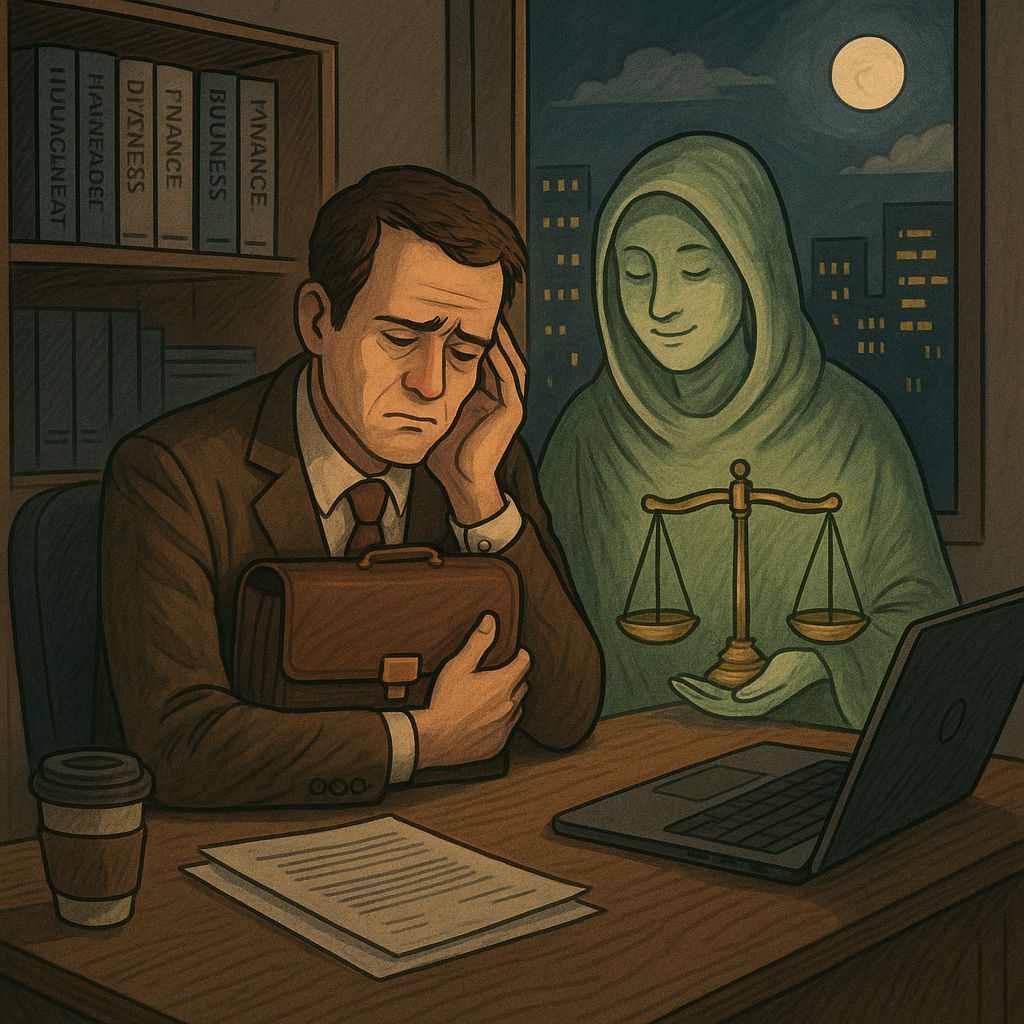
One person’s greed — one — has turned all of that sweat, sacrifice, and shared hardship into ashes.
Three of my friends, who bled for this company for 15 long years, have been thrown out. Not because they failed. Not because they lacked value. But because the man they trusted — a friend — decided he wanted it all.

Money. Power. Control.

The irony? That man is my friend too. And watching him walk the same path as my ex‑business partner is like déjà vu wrapped in heartbreak. I’ve lived through betrayal. I’ve woken up to the taste of iron in my mouth, knowing someone I trusted had buried a knife in my back. I know the hollow it leaves inside you.

He needs to understand — really understand — what it means to crush the very people who carried you through the storms.
He needs to know that the applause he hears today will fade… and karma has the longest memory of all.

And to my friends who were wronged —
I want to tell you this:
Believe in yourself. Stay the course. Don’t let the poison of betrayal seep into the veins of your purpose. Karma takes time, yes… but when it moves, it never misses. I have seen it with my own eyes.

Success built on betrayal is a glass palace. It may look beautiful now, but the cracks are already forming.
And one day, when it shatters, the shards will cut deeper than any knife.

Entrepreneur Karma: The Invisible Balance Sheet


While you chase numbers, karma quietly balances your true ledger.

You can pivot your business, but you can’t pivot your karma.

An entrepreneur’s life is like sailing in a stormy ocean. You chart your route on glossy pitch decks, you shout “growth” from your deck, and you dream of finding treasure islands called “unicorns.”

But while you’re chasing your horizon, something else silently follows you — karma.

Your silent co-founder

Karma is your silent co-founder.
It doesn’t ask for equity.
It doesn’t sit in boardrooms.
But it audits your soul every night.

Your team, your mirror

If you lead with greed, you’ll breed seeds of speed — people who flee when you bleed.
If you lead with heart, you’ll build an army that won’t fall apart.

Customers — your echo

Treat them like transactions, and they’ll vanish like distractions.
Treat them like humans, and they’ll become your loudest hymn.

Shortcuts cut your soul

You can lie to investors and the world. But when the lights go out, only karma sleeps beside you.
Quick wins often echo as lifelong sins.

Energy never expires

You think that unpaid intern forgot?
You think that co-founder betrayal is buried?
In the ledger of karma, no line item is ever fully written off.

“You can exit your company, but you can’t exit your karma.”
“Your valuation may fade, but your vibration stays.”

So dear entrepreneur, build your karma balance sheet as carefully as your P\&L.
Because at the end, it’s not the shares you hold, but the souls you touch that become your true legacy.

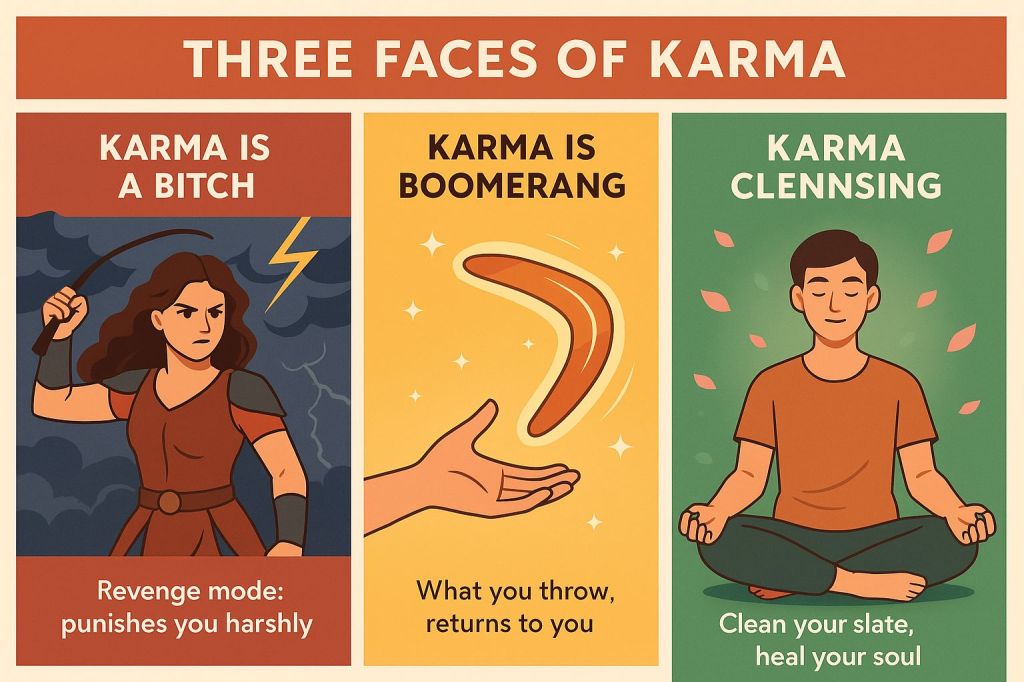
Karma: The Bitch, The Boomerang & The Cleansing — My Take


There was a time when I thought karma was just some cosmic revenge system — a way to sleep peacefully after someone wronged me. You know, that comforting phrase we throw around: “Karma is a bitch.”

We say it when someone cheats and loses everything, or when that arrogant boss finally gets fired. It’s a bit of a guilty pleasure, like watching a villain get slapped in a movie. But the truth? This is karma in its most raw, vengeful form — the “bitch” side of karma.

Then there’s the other version we don’t talk about enough: “Karma is a boomerang.”
Throw out love, it comes back. Throw out hate, it comes back too. Unlike the bitchy version, this is not about punishment. It’s about balance. The universe simply mirrors what you put out, no drama, no extra seasoning.

And finally, there’s the silent warrior: Karma cleansing.
This is for those who decide they’re done with the loop of reaction and revenge. It’s about intentionally cleaning your slate — not by just sitting and waiting for karma to do its thing, but by consciously choosing acts of kindness, forgiveness, meditation, or service. It’s less about “waiting for them to fall” and more about “rising above my own past mess.”

Three perspectives, one principle: What you give is what you get.
Whether you want to see karma as a fierce lady with a whip, a simple returning boomerang, or a chance for deep soul detox — the choice is yours.

At the end of the day, karma is not just about punishing others. It’s a mirror, a teacher, and sometimes, the friend who gives us a much-needed slap or a hug at the right time.

Your karma, your choice. How do you want to play this game?”

Karma and Justice: A Conversation with My Scars


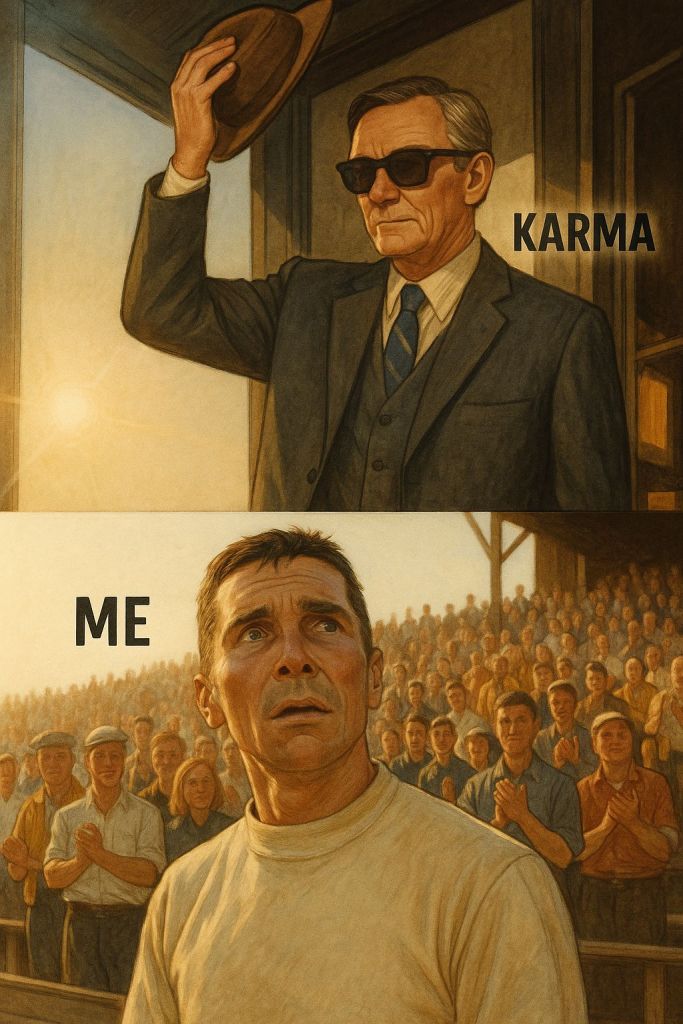
When karma tips its hat, I simply watch — scarred, healed, and finally free.

I grew up hearing the phrase justice delayed is justice denied.” In my younger days, it sounded so powerful, so sharp — a perfect line to quote when you felt wronged or betrayed.

I believed justice meant someone should pay for hurting me, and they should pay now. I carried this belief with me, holding it close every time I felt cheated or double-crossed.

When I was betrayed, I felt an almost animal-like hunger for revenge. I would replay moments in my head, craft imaginary confrontations, and wish that karma would strike them down while I was still raw and bleeding.

But as time passed, something changed.

Life didn’t stop for my pain. The people who hurt me moved on, sometimes even seeming happier than before. I stayed stuck in a loop of anger, frustration, and helplessness, waiting for karma to arrive like a superhero and save me from my inner chaos.

Years later, karma finally did visit them. Two of the people who had hurt me so deeply faced their consequences — harshly. But by then, something unexpected had happened to me: I had healed.

When I heard about their downfall, it felt like reading an old news headline. There was no thrill, no moment of triumph, no fireworks. Just a quiet nod inside me, as if my soul whispered, “See? Life balances itself.”

In that moment, I realized: karma is not my personal lawyer. It’s not designed to heal my wounds or bring me peace. It’s not even meant to satisfy my sense of timing.

Unlike our legal system, where “justice delayed is justice denied” because victims need relief here and now, karma operates on a different plane altogether. Karma doesn’t arrive on our schedule. It doesn’t rush to fix our pain. Instead, it patiently restores balance in its own mysterious, universal way.

By the time karma acts, the raw wound has already become a scar. And when it does, it often feels like a distant echo rather than the roaring justice I once imagined.

I used to think that if karma didn’t act fast enough, it was as good as denied. But today, I see it differently. Karma is not about me; it is about the larger flow of life, the unseen balance sheet of actions and consequences that spans beyond my small circle of feelings.

Looking back, I understand now that healing was never karma’s job. Healing was mine. Karma didn’t come to save me — I had to save myself, stitch up my own wounds, and learn to walk forward carrying my scars with pride.

Those scars? They’ve taught me more than any revenge ever could. They taught me resilience, boundaries, patience, and — above all — the power of moving on.

So today, when I think about those who wronged me and finally “paid” for it, I feel nothing more than a gentle nod to the universe: Thank you for doing your part. I had already done mine.

What I’ve learned

  • Don’t wait for karma to heal you.
  • Don’t put your peace on hold waiting for someone else to fall.
  • Your healing is your responsibility; karma is just the universe keeping its own books.

In short

“Justice delayed is justice denied” is about human systems.
“Karma delayed” is not karma denied — because karma is not about providing you justice, but about cosmic balance.

From Wounds to Scars: A Lesson in Karma and Healing


There was a time when betrayal felt like an open wound. When someone cheated or double-crossed me, I didn’t just feel hurt, I felt an almost animalistic urge for revenge. I wanted blood. I wanted them to feel the pain I was going through.

Other times, I felt like a helpless victim. I moved away quietly, carrying my heartbreak and frustration like a heavy bag I couldn’t put down. And as I carried it, that pain slowly turned into a deep sense of anger, depression, and a silent scream that no one else could hear.

Years passed. The sharpness of those wounds dulled. They turned into scars, they are always there, but no longer bleeding. Life went on, and I learned to walk forward with those scars stitched into my story.

And then, life did something unexpected.
Within this year, two of the people who had wronged me, the very people I once wanted revenge against had finally faced the consequences of their actions. Karma, as we like to call it, had arrived.

But here’s the surprising part: it didn’t make me feel victorious. It didn’t bring me the happiness or relief I thought I’d feel a decade ago when those wounds were raw.

Instead, it felt like reading a piece of news. Just information. A passing moment of, Oh, I see. Life has its own way of balancing things out.

I realized something important in that moment:
I had outgrown my need for revenge.

Back then, revenge felt like the only closure that could heal me. But healing never really waited for karma. Healing happened inside me, as I moved forward and rebuilt myself piece by piece.

Karma didn’t come to heal me; it simply came to do its job. The person I am today is no longer the same person who once stayed up at night imagining ways to “even the score.” Today, I find peace in knowing that I survived, that I grew stronger, and that my life is no longer defined by those betrayals.

The scars? They remain. But they are no longer a source of pain, they are reminders of how far I’ve come.

If karma had arrived ten years ago, it might have felt like a victory. Today, it feels like a gentle whisper from the universe: “Keep going. You’re already free.”

Don’t wait for karma to heal you.
Don’t wait for someone else to hurt for you to move forward.

Your healing is yours — and the most powerful revenge is to build a life so full that you no longer look back waiting for justice.

What Is Karma Cleansing? And Why Do Good People Get Cheated?


Why do bad things happen to good people?
Why do cheaters prosper and the loyal ones suffer?

Enter: Karma cleansing, a spiritual and emotional practice that doesn’t erase the past, but helps free you from its grip.

What Is Karma Cleansing?

Karma cleansing is the process of releasing negative emotional, mental, and spiritual baggage from past actions, yours or others, so you stop carrying cycles of pain into your future. It doesn’t mean ignoring what happened. It means you don’t let it define you anymore.

Just like physical detox clears toxins, karma cleansing is about cutting karmic ties to those who wronged you — not to forgive them for their sake, but to free yourself from them.

Why Are There Cheaters and Cheated?

In a fair world, you’d expect balance. But reality isn’t always fair, it’s karmic.
   > Some people cheat because they haven’t evolved yet.
   > Some people get cheated on because they’re strong enough to grow through it.

It doesn’t justify betrayal. But it gives it context. Sometimes, your pain is not your punishment — it’s your push toward transformation. You’re clearing something deeper than just this life.

How Karma Cleansing Helps

  • Breaks emotional loops of revenge or resentment
  • Brings clarity: “It was their lesson, not my worth”
  • Helps stop attracting the same pain again
    Creates space for better relationships and energy.

You don’t have to “let it go” overnight. But you can begin to let it go from you.

Final Thought

If you’re reading this and you’ve been betrayed or hurt by someone who had no reason to hurt you, know this:

Their karma is theirs. Yours is how you rise, heal, and stop carrying their poison in your heart.

Let karma cleanse, not consume. 🌙

Karma Chameleon


Reincarnation: do I believe in it?
As someone who is born in India and raised with Hindu values then Karma & Reincarnation are integral part of my living. So,I do believe in Karma & Reincarnation…

I don’t want to get into the scientific facts for the belief, but believing in Karma makes me think good and do good… To that extent I’m happy to live with that belief…

Whenever I think something bad and run over the path of evel immediately my mind thinks of Karma… That was how I was raised…

Scientifically we are living our thought process… Every time when we do a wrong the thought process in Karma makes us prisoners  of guilt…

So, I believe in the concept called Karma, I’m proud to believe it and stay good..

Is leadership Skill or Trait?


Last two week I’ve been working with my Project Managers to understand;


Why there are slippages in delivery?

What they are unable to keep up to the commitments?


After throwing those two questions… They immediately wanted to defend them and came with many explanations and at last they explained their working process and their challenges… What I got from them took me by surprise and these are issues with them;

  •  They assume things and they create their own version about things…
  • They get contented on their own performance as well as their sub-ordinates… They never challenge themselves…
  • Then they said they have fear of Karma by being strict…

The third point took me by surprise and shock… But I forgot to understand the cultural values… In Hinduism Karma means getting back the bad deeds we do and mostly it is believed that we will get it back or our children will be affected…


I’m sure by conducting workshops I can help them to over first two blocks; but I’m not sure how I can make them understand / realize that cultural values are different from professional values…


Then I remembered a scene from Tony Jhaa’s movie where his mentor will tell him that “Killing and being merciless is the last trait of a leader”… Likewise I had to explain them that knowingly or unknowingly there is a culture created in IT and we have to be demanding and strict to be competitive…


I don’t know how far I can succeed in making them understand the difference between Cultural Values & Professional Values… If any of you have come across such challenge and if you have any solution please share it here…


So, I’m preparing a presentation for my leaders with example for them to overcome the challenges / blocks they have in the pursuit of becoming a leader… And my presenting will be mostly covering;


  • Communication which is very much important for their first challenge…
  • How excellent leaders challenged themselves and their peers to gain excellence…
  • Collecting clips from leaders to show them why they are successful as leader… Also explaining them about what Democratic, Autocratic & Laissez Faire leadership traits are…


And let me see how they understand it and transform…