
2008 didn’t just take away my company.
It took away people.
A partner I once called my best friend.
A love I believed was real.
Both gone.
Both unreal, as I painfully discovered.
That phase didn’t feel like loss.
It felt like being cut open… slowly… while still alive.
I still remember one day very clearly.
I got ready like any normal day — neatly dressed, wearing my Woodland shoes.
I told myself I’ll go watch a movie at Mayajaal. Maybe that would help.
I reached there.
But I couldn’t walk in.
Something inside me refused.
Instead, I just started walking.
No plan. No destination.
From Mayajaal… all the way to Mahabalipuram.
Tears didn’t stop.
Thoughts didn’t stop.
My mind kept replaying everything —
Was it all fake?
Was I living a dream that never existed?
How did everything collapse so fast?
At times, I don’t even remember parts of that walk.
There were moments of blankness… like my mind was shutting down to protect itself.
I don’t know how I walked that distance.
I don’t know how I came back.
I just did.
Years have passed.
Today, I have accepted what happened.
Life moved forward.
People moved on.
Even karma, in its own way, has done its job.
But acceptance is not the same as understanding.
Some questions never got answers.
Why did it happen?
Why did people change?
Was I blind… or just trusting?
I don’t carry anger anymore.
But I carry those questions.
Silently.
Because sometimes in life…
you don’t get closure.
You just learn to live without it.
Tag: resilience
The Year I Stopped Chasing and Started Compounding
The Year I Stopped Chasing and Started Compounding
For most of my life, I was chasing something.
Chasing revenue.
Chasing validation.
Chasing the next big idea.
Chasing people who didn’t even know they were being chased.
And I thought that was ambition.
If you are reading this from New York, Texas, California or even from a small Midwest town, you know this culture. Hustle. Scale. Optimize. 10X. Exit. Repeat.
We celebrate velocity.
But nobody talks about durability.
The American Dream vs The Compounding Dream
The American Dream is powerful. Build something from scratch. Work hard. Make it big.
But somewhere along the way, “make it big” quietly replaced “make it sustainable.”
I learned this the hard way.
There was a time in my life when everything collapsed at once. Business, relationships, reputation. It felt like falling from the sky without a parachute. And what shocked me was not the fall.
It was the realization that I had built speed, not strength.
Speed impresses.
Strength survives.
The Quiet Power of Compounding
Compounding is boring.
It does not trend on Twitter.
It does not go viral on Instagram.
It does not get you invited to podcasts.
But it changes everything.
Compounding is:
Writing one thoughtful post every week
Investing small amounts consistently
Showing up for your family even when you are tired
Learning one concept deeply instead of ten concepts superficially
In finance, compounding turns 100 dollars into millions over decades.
In character, compounding turns small discipline into unshakeable confidence.
In relationships, compounding turns simple trust into lifelong loyalty.
Why This Matters in 2026
We live in a time of:
AI shortcuts
Overnight creators
Instant monetization
Algorithm driven fame
But the world is also quietly rewarding consistency again.
Businesses that survive are not the loudest. They are the most resilient.
Creators who last are not the most viral. They are the most authentic.
Leaders who endure are not the flashiest. They are the most grounded.
Compounding does not care about geography.
It works the same in Silicon Valley and in a small town in India.
That is the beauty of it.
My Shift
The year I stopped chasing:
I stopped saying yes to everything
I stopped trying to prove my worth
I stopped running behind fast money
Instead:
I built systems
I reduced unnecessary risk
I invested in health
I rebuilt trust
I chose fewer, deeper relationships
Nothing dramatic happened overnight.
But something powerful happened slowly.
Stability.
The day you stop chasing and start compounding is the day your life begins to feel less fragile and more intentional.
Three Ways to Become ‘Successful’ — Sweat, Setback, or Shaadi?
There are three kinds of “successful” people in this world.
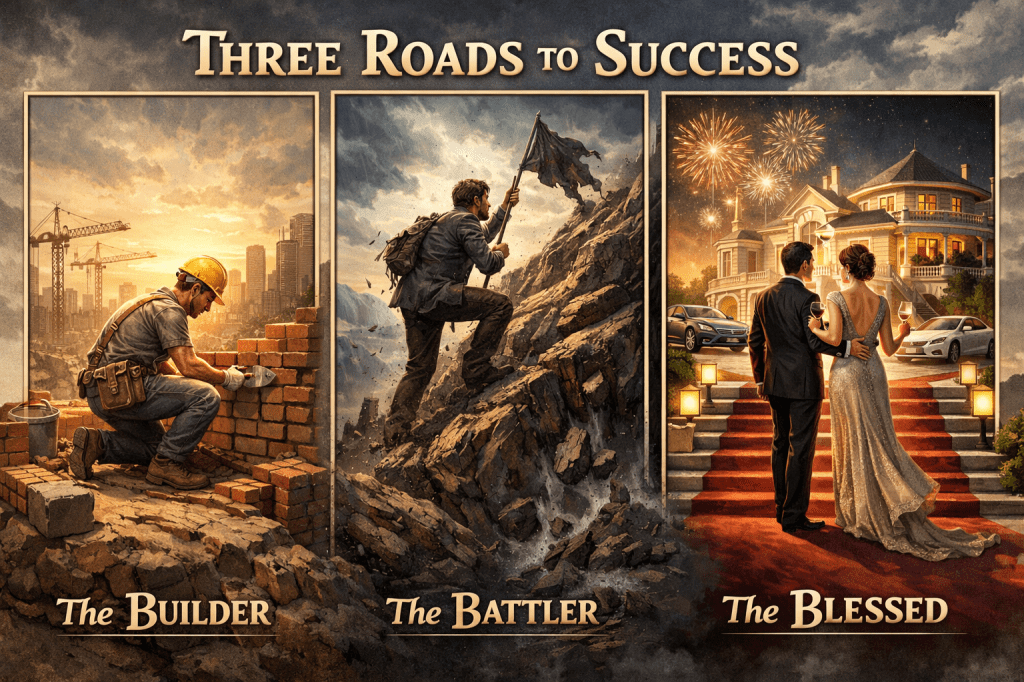
The first kind works hard. Relentlessly. They wake up before sunrise, sleep after midnight, build, rebuild, and keep building. They believe in compounding effort. They trust process.
And they grow.
Not explosively. Not dramatically.
Just steadily.
“They don’t trend. They endure.”
Their life is less fireworks, more sunrise. Not flashy — but dependable. They are the kind who build brick by brick. Slow growth, strong roots.
The second kind works just as hard.
Maybe harder.
They sacrifice sleep, relationships, comfort. They dream big. They bet everything. And sometimes… they lose.
Market shifts. Partners betray. Timing misfires.
And the fall is brutal.
“Hard work guarantees growth of character, not always growth of bank balance.”
These are not failures. They are warriors with scars. They carry depth. They understand gravity. They are the ones who know what it means to fall from the sky and still stand up again.
Empathy belongs here. Respect belongs here.
Because trying and failing builds a different muscle — resilience.
And then… there is the third kind.
The lucky ones.
They marry into wealth.
They inherit position.
They hold property in someone else’s name.
They wake up rich on a Tuesday.
No sweat. No scars. Just destiny saying, “Beta, VIP entry.”
“Some people climb mountains. Some start at the top.”
To be fair, luck is also a skill — mainly in choosing the right wedding venue.
But here’s the humour hidden in truth:
Luck can open doors. It cannot build capability.
And life eventually tests everyone.
In the long run, success is not about how fast you rose.
It is about whether you can stand when the wind changes.
The slow builder? Stable.
The fallen warrior? Stronger than before.
The lucky one? Depends.
Because borrowed power shakes.
Built power roots.
And if you ask me —
I’ll bet on the one who knows how to rebuild.
From Restless Waiting to Divine Pause
One thing I’ve always hated is waiting. The second — dropping someone off and hanging around until they return.
As a teenager, my mom often insisted I drop my sister at her tuition classes. I’d grumble, resist, and still end up doing it. Sometimes even my cousin hopped on, and I became the unwilling chauffeur. I’d scoot back home, only to rush again to pick them up. When my grandmother scolded me for complaining, I’d shrug it off and continue hating the waiting.
Fast forward to today — I’m a father. And life, with its irony, has placed me in the same shoes. My daughter goes for her Hindi classes, and the new normal is this: drop her, wait for an hour and a half, pick her back.
I don’t enjoy it. I still hate waiting. But parenting isn’t about what I like — it’s about responsibility.
Yet, something surprising happened. Behind this uncomfortable routine, I discovered a new kind of experience. Since her classes are in downtown Madurai with no cafés or hangout spots nearby, I started spending that waiting time in a famous temple close by.
And there, waiting turned into something else.
The temple’s silence, the chants, the fragrance of incense, and the sight of strangers in prayer gave me peace I didn’t expect. The restless ticking of time became a pause — a divine pause.
Now, I don’t complain. I stand there, soaking in the positive energy, observing life in its simple rhythms, and walking away lighter than I came in.
Maybe waiting isn’t wasted time after all. Sometimes, it’s God’s way of slowing you down.
When Control Slips Away, Fear Steps In
I’ve always believed fear doesn’t come from ghosts in the dark or thunder in the skies. Fear creeps in when you realize life is no longer in your hands — when control quietly slips away.
I felt it most sharply during the two years my dad was hospitalized. Suddenly, the reins of my father’s life weren’t in my grip — they were in the hands of doctors and fate. Every beeping machine, every delayed report, every late-night call felt like a reminder that I had no say in what would happen next. That helplessness was fear in its purest form.
I felt it again during the late evenings when most of my friends were getting married. I feared loneliness — not because I didn’t want marriage, but because it was not in my control. No matter how much I tried, the timelines didn’t align with my wishes. The steering wheel of my life seemed hijacked by something larger.
Legal battles brought their own flavor of fear. I might have been the one fighting, but the reality was — attorneys, judges, and systems controlled the pace and outcome. I was just a passenger waiting at every bend.
And that’s the cruel trick of fear — it feeds on our urge to control. The more we cling to it, the tighter fear grips us.
What I’ve Learned
You can’t control everything. What you can do is:
- Prepare yourself mentally to accept uncertainty instead of resisting it.
- Focus on your response, not the situation — resilience is the only lever you always own.
Because at the end of the day, fortune favours the bold.
Same Room, Different Battles
We all sat in the same classroom, didn’t we? Same chalkboard, same dusty carpet, same lessons on how to spell “success.” The timetable was identical, but life had a different curriculum waiting for each of us.
Some of us went on to be praised, some forgotten, some mourned, some judged, and some completely misunderstood. Behind those identical desks were lives that would one day scatter into destinies no textbook ever dared to predict.
And that’s the truth most of us overlook—the curriculum we were taught barely scratches the surface of what shapes a human being. We learned math, grammar, a little history. But did anyone teach us resilience? Did anyone show us how to process grief, manage anxiety, or break free from generational cycles? We memorized formulas, but no one gave us the tools to heal from invisible wounds.
Life’s real exams aren’t written on paper. They’re the sleepless nights when bills pile up, the quiet battles with self-doubt, the weight of losses no report card ever reflected.
So before you envy someone’s outcome or criticize another’s downfall, pause and remember: we all sat in the same room, but we were fighting very different battles. And no classroom, no syllabus, no chalkboard ever prepared us for that.
The Stranger Who Changed My Battles
In business and in life, sometimes help comes from the most unexpected places.
Back in 2021, I was caught in a storm. A real estate syndicate blocked me from selling my own house for nearly 18 months. Every attempt failed, and the weight of financial struggle only grew heavier. My pride was bruised, my options shrinking.
And then, this person walked into my life. He had no money, no connections in the city, no reason to fight my battle. Yet, he did.
In just two months, staying in a place where he was a complete outsider, he managed to sell the house. That single act salvaged not only my finances but also my pride. For me, it wasn’t just a transaction—it was liberation.
But the story didn’t end there.
When I built Advaith’s Nest, people laughed at my conviction. “The rent is too high,” they said. “Nobody will pay this much in this neighborhood.” The whispers were everywhere.
But this man believed in me. He didn’t just believe—he executed. He went out, found tenants who trusted the value we demanded, and in doing so, we wrote history for that locality. What everyone thought was “too expensive” became the new normal. The neighborhood had never seen such rentals before, and suddenly, Advaith’s Nest became proof of what was possible.
Looking back, it wasn’t just about the house sale or the tenants. It was about what we proved together—that conviction, backed by the right execution, can rewrite narratives.
Sometimes, it isn’t the crowd that validates your dream. It’s that one person who stands by you, executes when everyone doubts, and changes the script for good.
The Day I Hired My Destiny
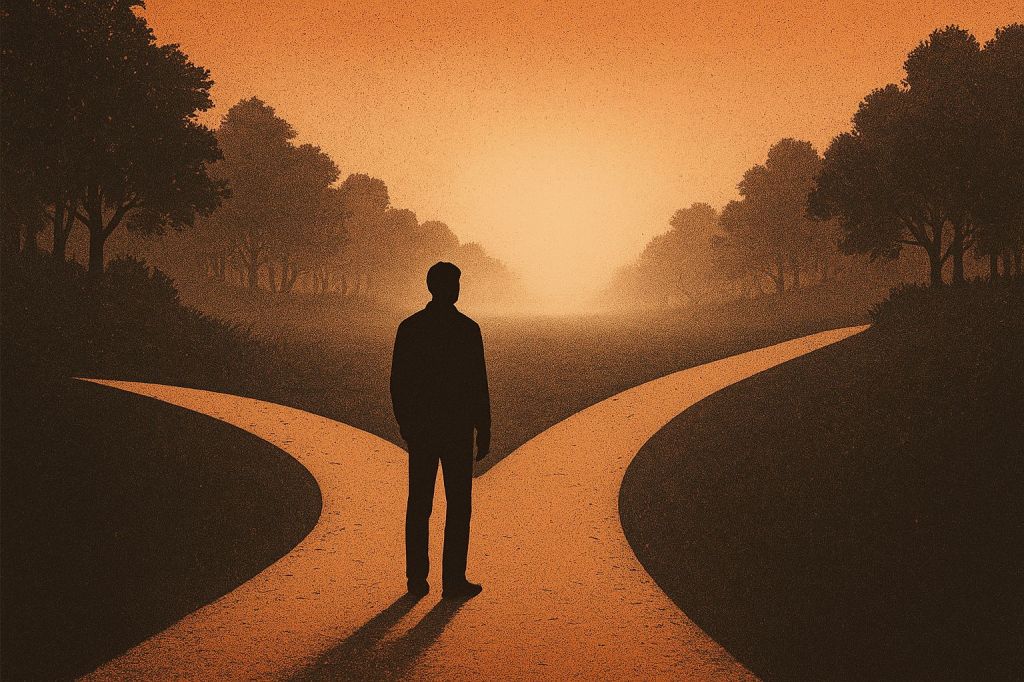
They say life is nothing but a series of choices — some we make in seconds, some after years of thought. But it’s the unexpected ones, the small decisions on seemingly ordinary days, that end up shaping our destiny the most.
In 2004, I made such a choice.
I hired someone.
That’s it. A routine decision. A resume, a handshake, a promise of a new beginning — it felt like just another Monday on the entrepreneurial calendar.
She was from a small town, working in a call center, holding an MBA in HR but desperate for a break. I saw that raw hunger and decided to offer her a platform — I thought I was enabling a young professional’s dream. Maybe, in some corner of my mind, I even saw a reflection of my own past struggles — that same raw desperation to make it.
I had built my first venture with a dear partner, brick by brick, dream by dream. We didn’t have connections, we didn’t have family money cushioning our falls. All we had was ambition that kept us awake at night and a silent promise to each other that we would make it, no matter what.
But sometimes, we forget — when you open your door wide for someone, they might walk in carrying not gratitude, but greed.
She wasn’t cunning or a mastermind. She was simply short-sighted, hungry for quick luxury, blinded by instant pleasures. While we were busy building a company to stand the test of time, she was busy living in borrowed moments, chasing dinners, perfumes, designer labels — things that glitter only till the lights are on.
In her desperate rush for the high life, she didn’t just stumble — she pulled down everything in her path.
She rattled a ship that was floating on the fragile balance of two young dreamers. She planted doubts, sowed jealousy, whispered false comforts — and before I knew it, the dream I had once guarded like a newborn was thrown out with me.
In 2008, I was pushed out of my own creation. My partner too slowly fell into a pit he couldn’t climb out of. The venture that had so much promise, that spark in our eyes — it all vanished like an unfinished verse in a torn diary.
But the tragedy didn’t spare her either.
The same greed that fueled her steps ultimately consumed her life. She ended up as lost as we were broken — a stark reminder that shortcuts don’t just ruin roads, they erase destinations.
Years later, people still ask me, “What went wrong?”
I don’t blame fate, nor do I hold the world accountable. My only mistake? Hiring the wrong person on that one day in 2004. That single signature on a simple appointment letter shifted the course of twenty-one years of my life.
If I could ask God for just one gift, I wouldn’t ask for money, fame, or even a second chance.
I would simply ask Him to make me dream backwards — just for one night.
A dream where I go back to that fateful day, fix that one decision, and erase that moment when I hired her.
A dream where I see myself and my partner, two young boys with fire in their eyes, running a company that’s recognised, respected, and celebrated by all.
A dream where we are still fighting side by side, laughing over cheap tea, planning crazy ideas that kept us up all night, watching our tiny dream grow into an empire that even we can’t believe we built.
And in that dream, I want to see us standing on a stage, receiving awards, hearing applause, hugging each other with tears in our eyes — whispering, “We did it, against all odds.”
I want to wake up in the morning and still taste that dream, feel its warmth in my veins, carry its fragrance in my mind.
But life doesn’t give us that luxury.
So, I move forward — with scars, with lessons, and with the silent prayer that no one else ever has to learn it the way I did.
Time and Tide Wait for No Man — But They Flow With You

They say time and tide wait for no man. With that belief, I started my rookie entrepreneur run. I had my ups and downs, and today I stand at a point of realization: you will have your time. Put in your efforts, balance your life, and things will happen in their own time.
As a rookie, in just 8 years, I created a business empire that brought the envy of many. I ran ahead of seasoned players who had been around for decades. It felt like I had cracked the code — until I hit the fall.
After that struggle, I started seeing new rookies beating me. People who were once behind me moved ahead. It felt hopeless at times, watching the race from the sidelines. But as I sat back and truly analyzed it, I saw the pattern:
The illusion of permanent success
We often think success is a peak — climb it once, and you’re there forever. But it’s not.
Success is like a series of waves. Today you’re ahead, tomorrow someone else. Then someday you rise again. It’s a continuous, flowing cycle.
Everyone has their reversals
Everyone who sprints ahead will eventually need to slow down. Every empire, every champion, every star performer — they all have their reversals. Some gracefully, some painfully, but all inevitably.
That doesn’t make them failures. It makes them part of life’s natural rhythm.
Effort, balance, and patience
The more I reflect, the more I realize that raw speed isn’t everything. Balance matters more. Effort matters more. Staying patient and showing up consistently matter more.
It’s no longer just about outrunning everyone else; it’s about lasting, evolving, and staying true to yourself.
Your own rhythm
Those rookies overtaking me today? They are in their own prime, their own sprint phase. Some will last, some will fade. Just like I did. Just like everyone does.
There is no permanent “ahead” or “behind.” There’s just your story, your learnings, and your rhythm.
Final thought: Time and tide wait for no man — but they flow with the one who flows with them
So I keep reminding myself: do your part, stay true, keep your balance, and your day will come. Again and again, in different forms.
Founder Wellness Framework: The Asset We Forget to Protect

When we talk about entrepreneurship, we love to throw around big words — hustle, grind, passion, risk. We romanticize late nights, skipped meals, endless meetings, and that elusive “big win.”
But here’s the bitter truth I learned the hard way: the biggest asset in your startup isn’t your product, your team, or even your funding — it’s you.
As founders, we become our startup’s first sacrifice. We skip meals, work until we doze off at our desk or in the car, ditch workouts, and pile up stress like it’s a badge of honor. We tell ourselves, “Once I close this round… Once we hit this milestone… Then I’ll fix my health.” But that day rarely comes.
I’ve been there — poor eating habits, no fixed sleeping schedule, mind always racing at 200 km/h, pulling my family into a life of constant uncertainty. I realized one thing: building a business shouldn’t mean breaking myself down.
So, I decided to flip the narrative. Here’s my simple Founder Wellness Framework — a survival kit for anyone crazy enough to chase a dream and bold enough to protect themselves in the process.
Treat your health like an investor meeting
If you wouldn’t miss a call with your top investor, don’t skip your health appointments or workouts.
Block time in your calendar for walks, workouts, or at least a few stretches. Move like your runway depends on it — because it does.
Eat to fuel, not just to fill
No one expects gourmet meals or fancy diets, but choose real food over packet snacks.
Keep fruits, nuts, or home-cooked options at arm’s reach instead of biscuits and chips.
Remember: a well-fed founder thinks better, decides better, lives better.
Protect your sleep like your IP
Your mind is your most valuable intellectual property. Sleep is the best free maintenance service for it.
No “just one more mail.” No working till you doze off at your desk or in your car. Shut it down. Recharge. Next day, show up like a human, not a zombie.
Build your emotional safety net
Talk to friends, mentors, or even a professional if needed.
Don’t carry every failure and every setback like a private burden. Share it, release it. You’ll be surprised how many others are silently going through the same.
Protect your close ones from your chaos
Entrepreneurship is your chosen roller coaster, not theirs. Be mindful not to drag them into every loop and drop.
Check in with your family. Show up at dinners. Put the phone down and listen — truly listen. You’ll build more than a company; you’ll build a legacy they’ll want to be part of.
The real hustle
The real hustle isn’t just about 100-hour weeks or raising millions. The real hustle is building something without losing yourself in the process.
We can’t pour from an empty cup. Our dreams are big, but they deserve a founder who’s strong enough to see them through.
So to every founder out there: build your product, scale your team, delight your customers — but above all, build and protect yourself.
That’s the only way the story you’re writing today becomes the legend you’ll tell tomorrow.
“The founder is the first investor, the first employee, and the last line of defense. Protect that asset at all costs.”
 AnandNataraj